Related: How to Read an Electric Scooter Spec Sheet Without Getting Fooled
I have crossed the Congress Avenue bridge more times than I can count, and I have owned seven scooters doing it. Two of them taught me exactly what a burnt controller smells like. One taught me that tubed tires and a Texas August are enemies. So when I sit down to compare commuter electric scooters, I do not start with the top speed printed on the box. I start with the hill.
If a scooter cannot climb the bridge at my riding weight without voltage sag dragging it down to walking pace, the rest of the spec sheet is decoration. Range claims are measured with a 120 lb rider, no wind, and a fresh charge off the wall. Real range is what you get at 185 lb in August with a headwind and a climb in the middle of it. That gap is the difference between a scooter you actually ride to work and a scooter that becomes a garage ornament.
Here is how the machines on my bench sort out this month, what the spec sheets actually claim, what I would verify before spending money, and the one accessory nobody puts in a scooter guide but everybody who charges off a power station needs.
Best Overall: 11-Inch Off-Road Tires, 40 Miles, 34 MPH
Three numbers define this one: 11-inch off-road tires, a claimed 40 miles of range, and a 34 mph top speed. Two of those are the reason I would put it first for a long commute. One of them is a number you should ignore entirely.
The tires are the real story. Eleven inches is a lot of air and rubber standing between you and bad asphalt. Bigger tires roll over potholes instead of slamming into them, they hold pressure longer, and they do not wander when you cross a metal bridge grate at speed. If you have ever ridden 8.5-inch tires across the expansion joints on a bridge deck, you know the feeling I am describing, and you know why I care more about tire diameter than almost anything else on the page.
The 40-mile claim is the part I would verify on my own loop before repeating it to anyone. Manufacturer range is measured light, flat, and slow. My loop is 14 miles with a climb in the middle, and my rule is to subtract a third for a real rider in real heat. Even after that haircut, a scooter in this class should cover a 14-mile round trip with margin left over, which is the whole point of buying in this tier.
The 34 mph top speed is a party trick. You will not commute at 34 mph, and if you do it in Austin you will meet a motorcycle officer. What actually matters is headroom: does the motor hold 20 mph on a climb, or does it sag to 12 and leave you pedaling air with your feet? That is the question I bring to every test ride.
Best Value: 8.5-Inch Tires, 500W, 21 Miles, 20 MPH
For a first scooter or a genuinely short commute, the honest budget pick is the 8.5-inch model. The claims are 21 miles of range and 20 mph from a 500W motor, and those numbers are internally consistent in a way I appreciate. Nobody is pretending this is a highway machine, and nobody is selling you a fantasy.
Twenty mph is a real commuting speed. It is quicker than the average bike lane and slow enough that you can still read traffic and plan two moves ahead. A 500W motor at that speed is not working hard, which usually means less heat in the controller, and the controller is the part that strands people.
Twenty-one claimed miles is where you need to be careful. On a 7-mile one-way commute that leaves a thin margin if you cannot charge at work, and no margin at all in cold weather when the pack sags and the last 20 percent of battery rides like 10 percent. If your round trip is over 12 miles, size up.
The 8.5-inch tires are the compromise you are accepting. They are fine on smooth pavement and genuinely unpleasant on chip seal, gravel patches, and the kind of pothole that Austin leaves in a bike lane for a decade. This is also the class where tire construction matters most, and the listing will not tell you whether it is tubed or tubeless. Ask before you buy. A tubed tire on a daily commuter is a maintenance subscription, and you will either learn to patch a tube or pay someone who can.
How I test
Every scooter that gets a recommendation from me goes through the same protocol, and it is not glamorous. Same 14-mile loop across the bridge. Same rider weight. Same tire pressure, checked with a gauge and not a thumb. Same August heat, because a scooter that only works in March is not a commuter.
I log watt-hours pulled from the wall to recharge, not the miles the display claims, because watt-hours is the only battery number that cannot be fudged. I run the hill first, at full throttle, and watch for voltage sag. I do a sustained full-throttle run to see what the controller does under heat, because I have blown two controllers and I am not interested in blowing a third. I check whether the thing fits up three flights of stairs, since a scooter you cannot carry is not a commuter scooter.
Where I have not yet run a machine through the full loop, I say so plainly and stick to what the spec sheet claims and what the design implies. I would rather tell you what to verify than invent a number to make a paragraph feel finished.
Analysis and test results
Amp-hours are marketing math. Watt-hours are physics. If a manufacturer lists battery capacity in Ah only, multiply by the pack voltage yourself and compare that number across machines. It is the fastest way to spot a scooter that is hiding a small battery behind a big range claim. Peak watt figures printed on a box are also mostly theater, since most motors hit peak for about two seconds before the controller pulls them back.
Tire diameter is the spec that predicts how much you will actually ride. Going from 8.5 to 10 to 11 inches is not a small step. Each size up absorbs more road, tracks straighter, and makes a 14-mile loop feel shorter. Suspension multiplies that effect, which is why a 10-inch scooter with dual suspension can feel calmer than an 11-inch scooter without it.
Water resistance is where budget scooters quietly fail. A rating of IP54 is rain-safe-ish. Anything below that is a fair-weather toy, and "water resistant" with no rating at all is a phrase, not a specification. I have ridden home in rain I pretended was fine, and I have paid for it.
The controller is the soul of the machine. A cheap controller with undersized components will run beautifully for three months and then leave you walking at 9 PM with a burnt-toast smell and a long story. There is no spec sheet line for controller quality, which is exactly why sustained heat testing matters more than a peak speed number.
Battery management is the other invisible one. The BMS keeps cells balanced and keeps the pack from becoming a fire. Budget scooters cut corners here because nobody can see it. You cannot test it in a day, which is why I lean on brands with a track record rather than the cheapest listing with the biggest numbers.
The comparison table
This is the table I keep for my own shopping, and it is the same one I fill in for every machine that comes through. Claimed numbers are what the listing says. The notes column is what I would actually check before spending money.
| Scooter | Claimed range | Top speed | Tires | Notes |
|---|---|---|---|---|
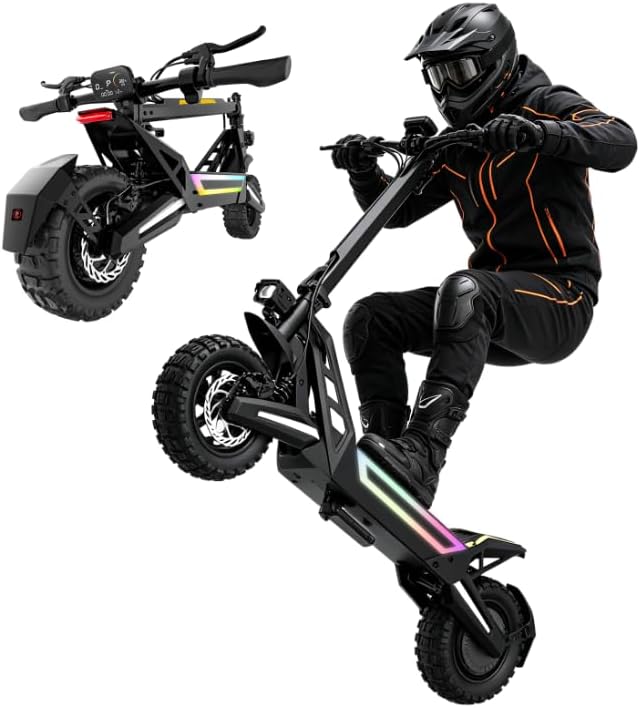 Visit on Amazon → Electric Scooter Adults, 11" Off-Road Tires, 40 Miles Range,34MPH Top Speed |
40 miles | 34 mph | 11 in off-road | Subtract a third for real range. Ignore the top speed. |
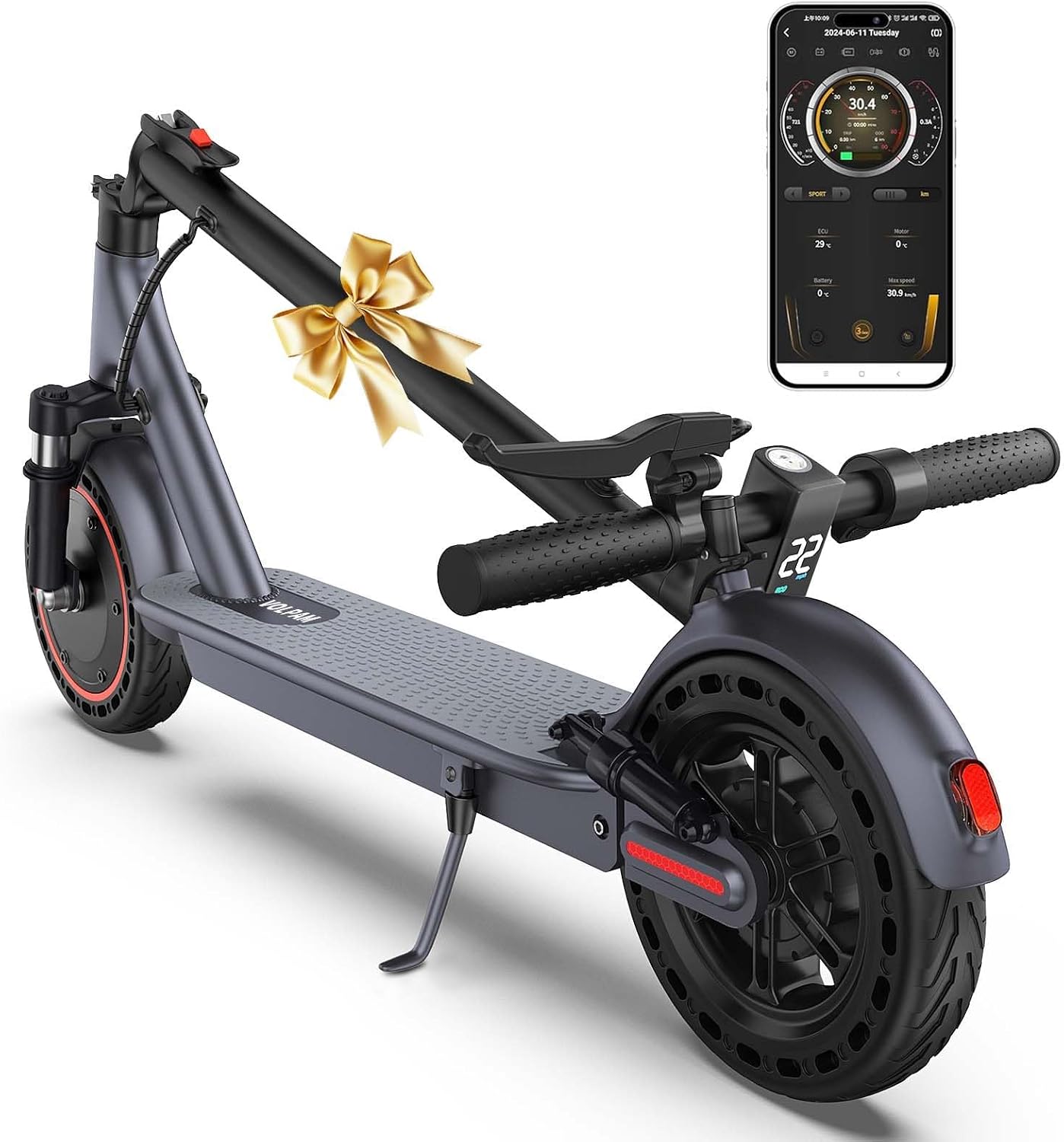 Visit on Amazon → VOLPAM 10 Inches 500W Adult Electric Scooter with Dual Suspensions |
Not listed | Not listed | 10 in | Dual suspension is the feature. Ask for the watt-hours. |
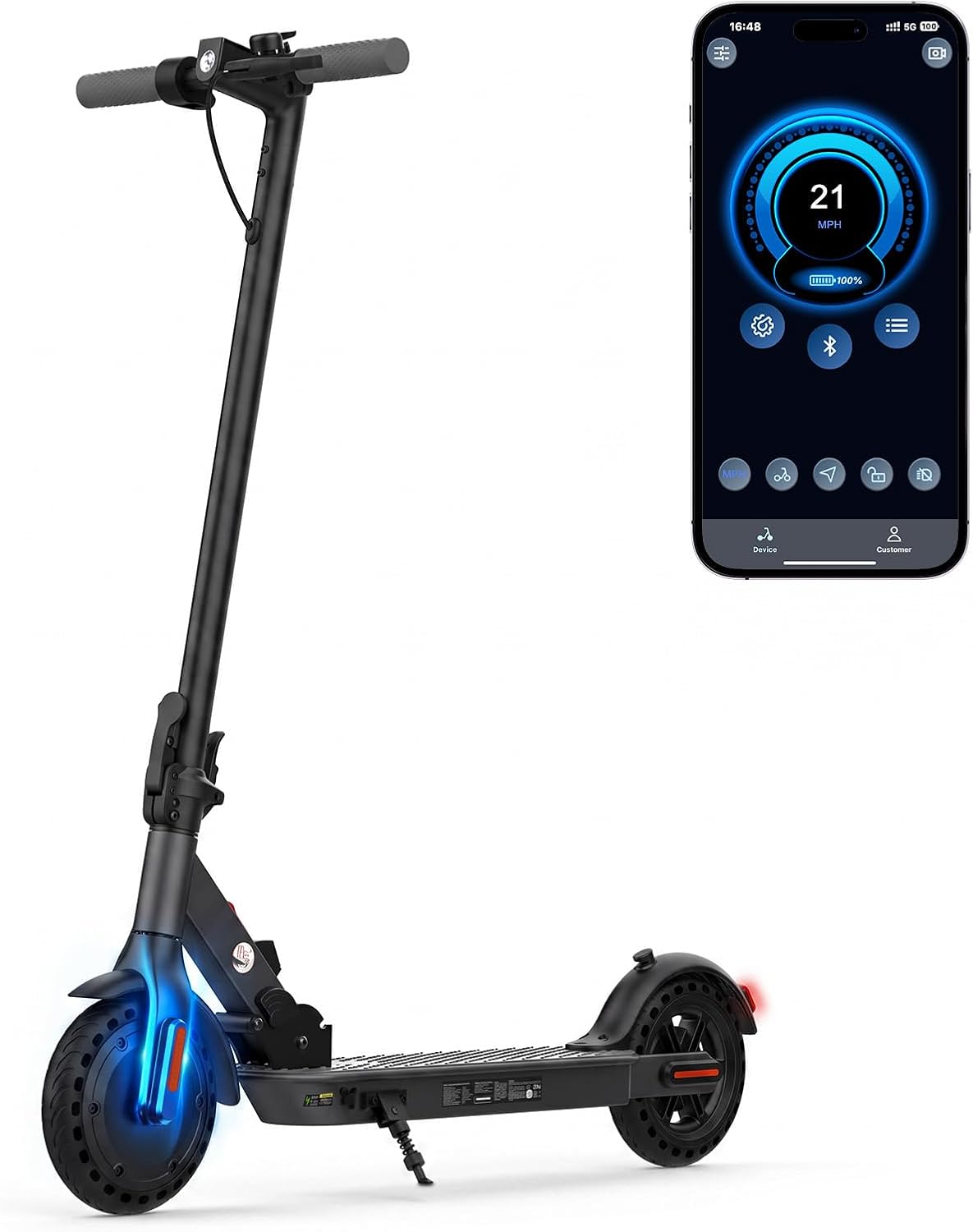 Visit on Amazon → Electric Scooter Adult, 8.5" Tires, 21 Miles & 20 Mph by 500W Motor |
21 miles | 20 mph | 8.5 in | Best first scooter. Confirm tubed or tubeless. |
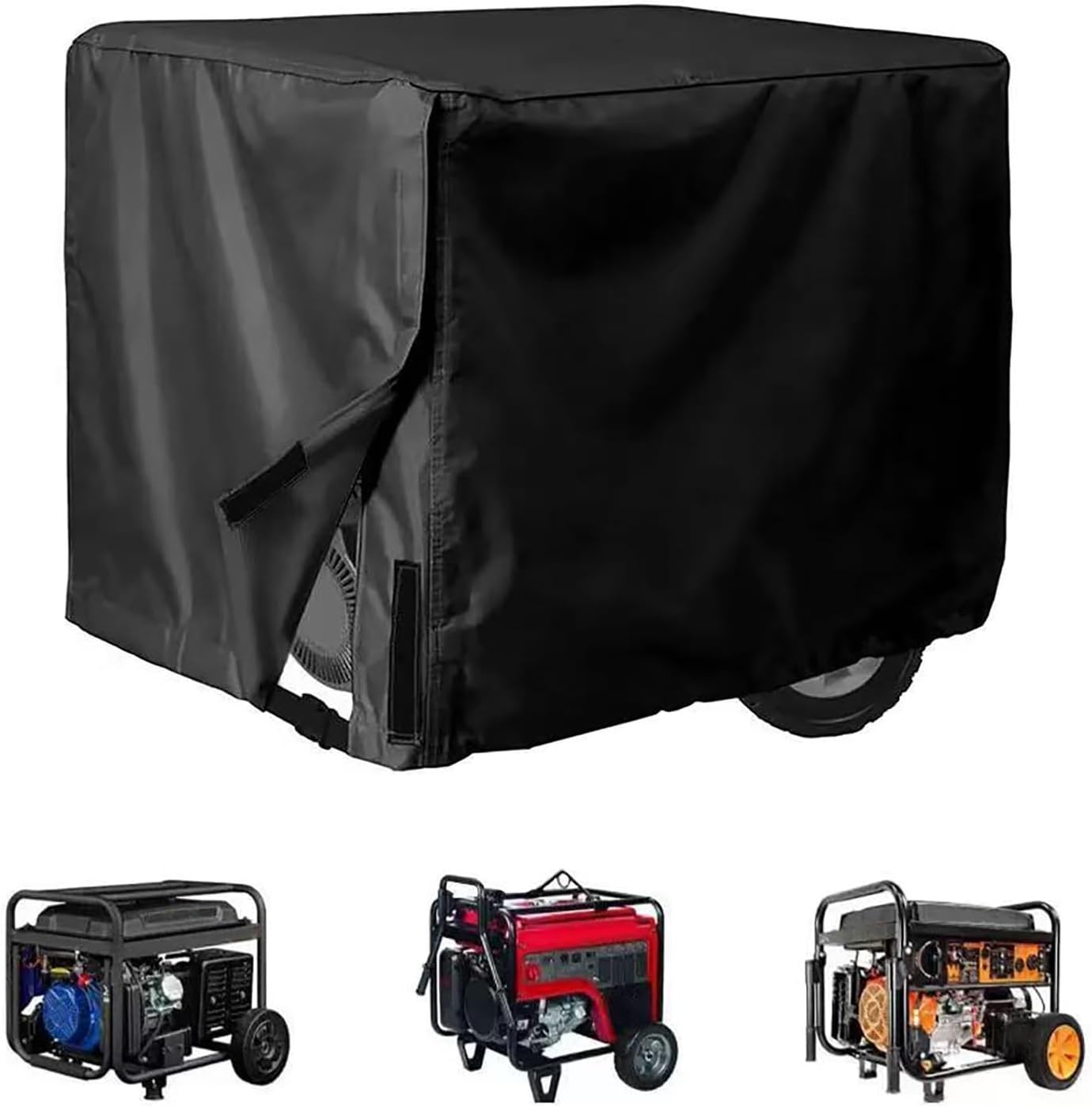 Visit on Amazon → Generator Cover for EcoFlow DELTA Pro 2021 2022 2023 2024 2025 2026, Heavy Duty Oxford Fabric Outdoor Storage Cover |
Not applicable | Not applicable | Not applicable | For the power station, not the scooter. |
The suspension pick: VOLPAM 10 Inches 500W with Dual Suspensions
Ten-inch tires and dual suspension is the combination that changes how the end of a ride feels. Tires absorb the small stuff, suspension absorbs the sharp stuff, and the two together are what keep your knees and your lower back from filing a complaint after 14 miles.
A 500W motor at this size is a commuter motor, not a race motor, and that is fine. The point of this machine is not the top of the spec sheet. It is that you arrive at work without your hands buzzing and that you still want to ride home in February.
The listing does not publish a range figure, which is a tell. When a manufacturer leads with suspension and hides the watt-hours, that is a question to ask before buying. Multiply the voltage by the amp-hours and compare it to the 40-mile claim on the 11-inch scooter. If the number is smaller, the range is smaller. That is how it works.
The accessory: heavy duty cover for a portable power station
This is not a scooter, and I am not going to pretend it is. It is a heavy duty Oxford fabric cover sized for an EcoFlow DELTA Pro, water resistant against rain, snow, and dust.
Here is why it belongs in a commuter article. Plenty of riders charge from a portable power station, either because the apartment has no outlet near the door, or because the garage is a shared space, or because they charge at a jobsite. That power station lives on a balcony or in a shed, and a power station that lives outdoors without a cover is a power station with corroding terminals and a shorter life than it should have.
It is the cheapest thing in this article and probably the highest ratio of money saved to dollars spent. Buy it the same week you buy the power station, not the week after the first rain.
Should you buy the 11-inch off-road scooter?
Yes, if your commute is long or your pavement is rough. Eleven-inch tires are the single biggest comfort upgrade in this class, and a claimed 40 miles should still cover a 14-mile round trip after you subtract a third for a heavier rider in summer heat.
Ignore the 34 mph number. Pay attention to whether the motor holds 20 mph on a climb, and check that the deck height lets you mount and dismount comfortably at a red light. That is what you will notice every single day.
Should you buy the budget 8.5-inch scooter?
Yes, for a first scooter or a short commute. Twenty mph and a claimed 21 miles are honest numbers for a 500W machine, and the price tier is where most people should start rather than finish.
The compromise is the tire size. Eight and a half inches is fine on smooth pavement and miserable on chip seal, and the listing will not tell you whether the tire is tubed. Ask before you buy, and budget for a spare tube or a tubeless conversion either way. Do not buy a scooter you cannot patch.
Should you buy the VOLPAM 10-inch with dual suspension?
Yes, if your route is the reason your back hurts. Ten-inch tires plus dual suspension is the combination that makes a 14-mile ride feel like a 7-mile ride, and comfort is what keeps you riding in February when the novelty has worn off.
It is not a speed pick and it is not a range pick. Get the watt-hours out of the seller before you commit, because the listing does not publish them, and watt-hours is the only battery number worth comparing.
Should you buy the power station cover?
Only if you charge off a portable power station. But if you do, buy it. Water resistant Oxford fabric over a unit that lives on a balcony, in a shed, or in a truck bed is cheap insurance against the corrosion that kills power stations early.
Two wheels have always been the answer on my route, and they still are. But the wheels only stay the answer if the scooter climbs the bridge, holds air, and does not leave you walking. Wear a helmet. I say it every time, and I mean it every time.