I have been car-free in Austin for four years, which means I have crossed the Congress Avenue bridge at 7:40 a.m. more times than I can count and I know exactly which scooter parts fail first. In that time I have owned seven scooters, blown two controllers, patched four tubes, and replaced one deck. So when I line up electric scooters for commuting, I do not start with the top speed printed on the box. I start with watt-hours, tire construction, brakes, and whether the thing can climb a bridge without voltage sag turning a full battery into a half-power ride.
For most people who want one scooter for a daily commute, the Segway Ninebot E2 Plus II/E2 Pro/E3 Pro is the safest default here, because it is the only scooter in this group whose listing carries both UL 2272 and UL 2271 certification. The ASKGO is the one to look at if your route runs over rough pavement and you want the biggest battery of the three, and the Gyroor C1 is the pick if you would rather sit than stand. None of these is a 60 mph toy, which I consider a feature.
That is the short version. The long version is the table, followed by how I read each spec sheet and where each scooter gives something up.
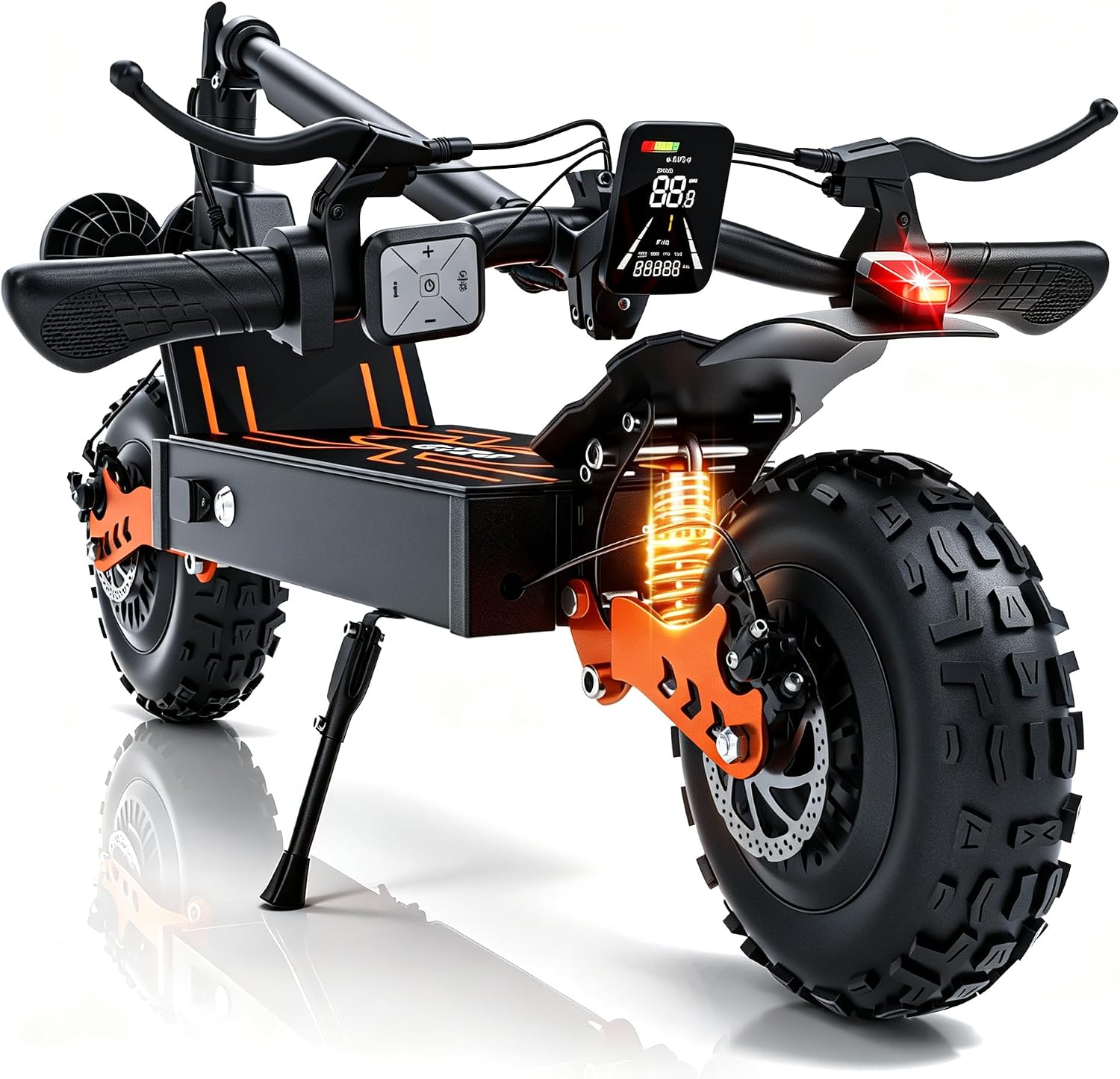
ASKGO Electric Scooter for Adults
Biggest battery in the group on paper, 48V 12Ah, plus 11 inch fat tires that shrug off chip-seal and potholes
Off-road positioning and a 28 mph claim mean more scooter than a bike-lane commute needs, and more weight to carry
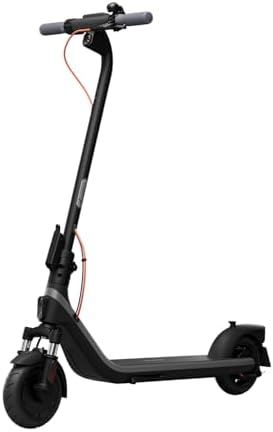
Segway Ninebot E2 Plus II/E2 Pro/E3 Pro Electric Scooter
Only scooter here with UL 2272 and UL 2271 certification listed, plus a dual braking system and a foldable frame
One listing covers three trims, so you have to confirm which version you are buying, and there is no seated option
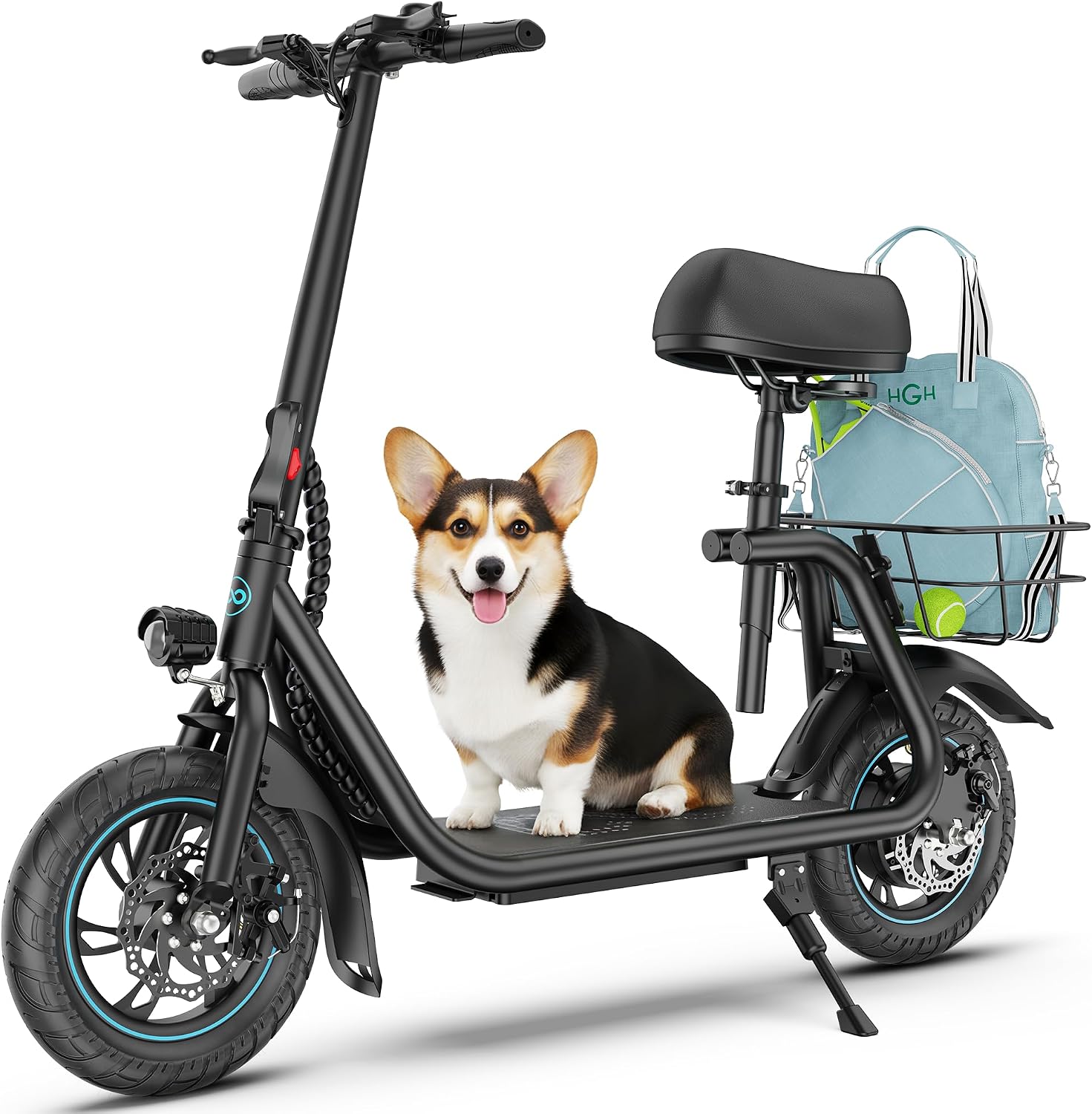
Gyroor Electric Scooter with Seat for Adults C1
The seated option in this group, 450W motor with a 20 mile range claim, for riders who do not want to stand for the whole trip
A seat takes your legs out of the suspension equation and adds weight and bulk when you have to carry it
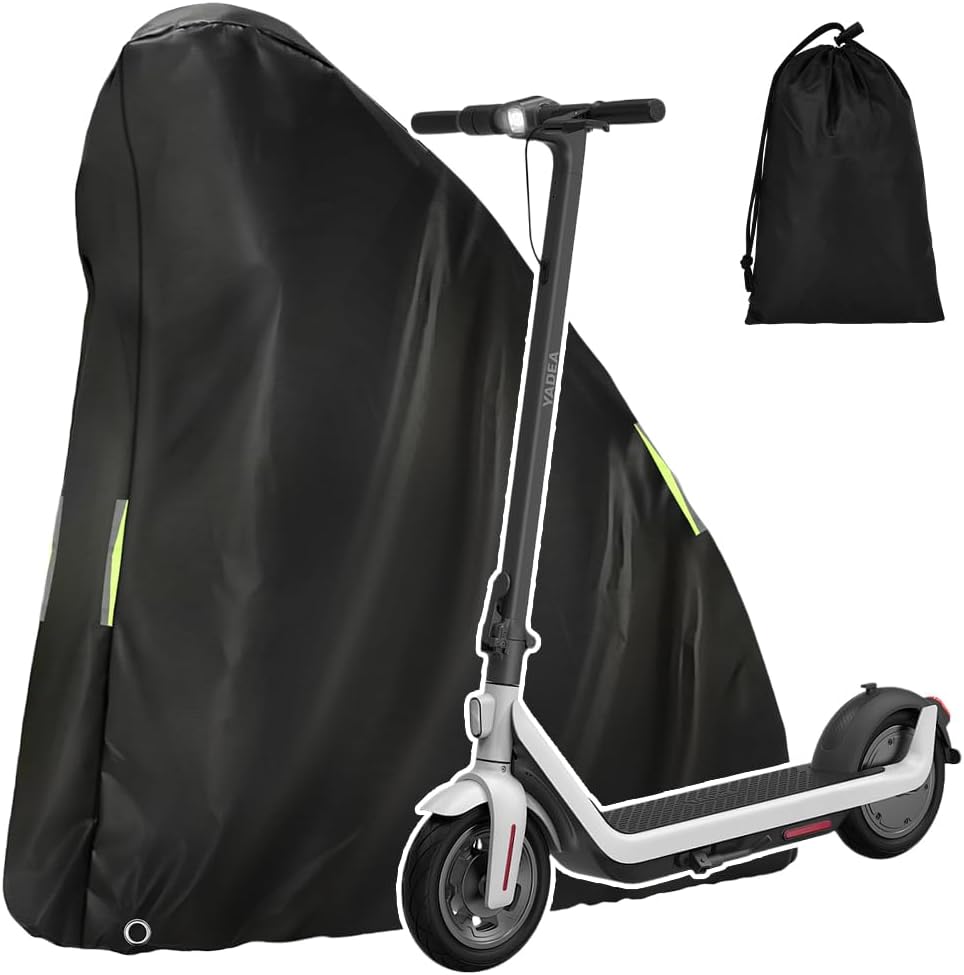
flintronic Electric Scooter Cover
Waterproof universal cover with a reflective strip and a storage bag, the cheapest way to slow down weather damage
It is not a scooter and it does nothing for you while you are riding
Prices and availability were captured from Amazon Creators API and may change.
How I read a commuter scooter spec sheet
Watt-hours is the only battery number that matters. Amp-hours are marketing math, because 12Ah means nothing until you know the voltage. The ASKGO lists a 48V 12Ah pack, which multiplies out to 576 Wh, and that is the number I would compare against any other scooter. If a listing hides the voltage or the watt-hours, that is a choice the manufacturer made, and not one in your favor.
Range claims are the other place to slow down. Every range figure on every box was measured with a lighter rider, no wind, and a freshly charged battery on flat ground. At my weight, in August, with a headwind and a bridge to climb, real range comes in well under the claim. A 25 mile claim is not a 25 mile commute unless your commute is flat, cool, and downhill both ways.
Tires decide how much maintenance you sign up for. Tubed tires pinch-flat on potholes and turn every puncture into an afternoon project. Tubeless is the upgrade I recommend to anyone who rides daily. None of these three listings spells out tire construction, so if you cannot confirm it, assume tubed and budget for it.
Brakes and the controller are what keep you out of trouble. Dual braking means two independent ways to slow down, which matters far more than a top speed you will rarely use. And the controller is the soul of a scooter: it is the part that converts battery power to motor power, and it is the first thing to die on a cheap build. A cheap controller strands you at 9 p.m. with a burnt-toast smell and a long walk home.
Finally, certification. UL 2272 covers the electrical system and UL 2271 covers the battery pack. A cheap BMS on an uncertified pack is how scooters end up in the news.
ASKGO Electric Scooter for Adults: the long-range, fat-tire pick
The ASKGO is the outlier here. An 800W motor, a 48V 12Ah battery, 11 inch fat tires, a 28 mph claim, a 25 mile claim, and a foldable frame built around off-road riding. On paper that 576 Wh pack is the largest in this comparison, and if your commute is long and your pavement is bad, that combination is exactly what you want.
Fat tires are the closest thing to suspension without suspension. Austin roads are chip-seal and patched asphalt, and an 11 inch fat tire rolls over both without transmitting every crack into your wrists. The trade-off is rotating mass: fat tires are heavier, they cost more to replace, and they make the scooter harder to carry up stairs.
I would also treat the 28 mph number as a ceiling, not a target. Peak watts and top speed are party tricks. What matters is whether the scooter holds its speed on a climb without voltage sag dragging you down, and whether the controller survives a sustained full-throttle run. This one has the motor and the battery capacity to make that plausible.
Segway Ninebot E2 Plus II/E2 Pro/E3 Pro: the certification-first commuter
Segway is the name I trust most in this category, and the reason is boring: engineering that holds up. I put a year of abuse on a Ninebot Max and never had a single unplanned repair, which is not something I can say about most scooters I have ridden.
This listing is the sensible default of the three because it is the only one carrying UL 2272 and UL 2271 certification in its product record. That is not a marketing bullet. It means the electrical system and the battery pack were tested to a recognized standard, and given how many scooter fires start with an unbalanced cheap pack, it is the spec I would pay for first.
It also lists a dual braking system, which means two independent ways to slow down, and a foldable frame. For a 14 mile round trip with a bridge in the middle, dual braking is worth more than another few miles per hour. The one thing to watch: this listing spans the E2 Plus II, E2 Pro, and E3 Pro, so confirm which trim you are actually buying before you check out. They are not the same scooter.
Gyroor C1: the seated option
The Gyroor Electric Scooter with Seat for Adults C1 is the only seated scooter in this group, and it exists for a real reason. Standing on a deck for 40 minutes is fine. Standing on a deck for an hour with a backpack is not, and a seat solves that. A 450W motor with a 20 mile range claim is enough for errands and shorter commutes.
Here is the honest trade-off. Standing gives you your legs as suspension: you absorb potholes by bending your knees, and you can shift your weight before a bad patch. Sitting takes that away, so every expansion joint goes straight into your spine. A scooter seat post is also not a bicycle saddle, and it will not feel like one after mile ten. Add the weight and bulk of the seat and frame, and this becomes a scooter you ride rather than a scooter you carry.
If your route is smooth, your trip is short, and standing is the thing keeping you off a scooter, this is the one to look at.
The cover nobody budgets for
The flintronic Electric Scooter Cover is the least exciting item in this article and probably the one that saves the most money. It is a waterproof universal cover with a reflective strip and a storage bag, and it costs less than a tank of gas.
Parked scooters die slowly from weather. Texas UV bakes plastic, fades displays, and hardens grips until they crack. Rain works its way into throttles, charge ports, and display housings, and water inside an electrical connector is how you get a controller that quits three weeks later. A cover handles all of that for the price of lunch.
Two caveats. A cover is for parking, not riding: it does not make a scooter waterproof on the road, and an IP rating is the number that tells you what a scooter can handle in motion. And a universal cover fits a universal range of scooters, so a fat-tire model with a wide deck will fill it out more than a slim commuter will. The reflective strip is a nice touch when your scooter lives in a garage or a bike room. The storage bag means it can live in your backpack instead of on a shelf.
Where each one gives something up
Battery: the ASKGO's 48V 12Ah pack is the only one here I can turn into a real watt-hour figure, 576 Wh. The Segway's long range claim and the Gyroor's 20 mile claim are both unquantified in the records, so I would ask for watt-hours before trusting either.
Weight and carry: fat tires plus a big battery equals a heavy scooter. If you have stairs at either end of your commute, that matters as much as range does.
Brakes: only the Segway lists a dual braking system. On a scooter that will see 20 mph in traffic, two braking systems is not a luxury.
Tires: fat tires are comfortable and expensive to replace. Slim tires are cheap and punish bad pavement. Pick your poison.
Seat: comfort for your back, a harder ride for your spine, and more scooter to lug around.
Certification: one of these three lists UL 2272 and UL 2271. That is the tiebreaker for me, every time.
Who should buy which
If you ride a bike lane to work, lock up outside, and carry your scooter up stairs, get the Segway Ninebot E2 Plus II/E2 Pro/E3 Pro. Confirm the trim, then stop shopping.
If your commute is long and your pavement is rough, and you want the largest battery in the group with tires that can take a beating, the ASKGO is the one.
If standing is what has kept you off scooters entirely, the Gyroor C1 with its seat is the entry point, as long as your route is smooth and your distances are modest.
Whoever you are, buy the flintronic cover on the same order. It is the cheapest line item here and the one that keeps the other three out of the repair shop.
One last thing, and I mean it: no scooter gets ridden without a helmet. I have talked to an ER nurse about what a scooter crash without one looks like, and I have worn one on every ride since. Pick your scooter on watt-hours, brakes, and tires, then ride it like the traffic around you is not paying attention, because it is not.