Four scooters and one scooter cover landed in this comparison, and only three of them are things you ride. I run every commuter electric scooter comparison the same way: the same 14-mile loop, the same bridge, the same 185 lb rider, the same tire pressure, and zero patience for a range number that was measured on a treadmill with the wind at the rider's back. This group is interesting because it spans the whole budget commuter spectrum, from a first-scooter classic on solid rubber to a 48-volt seated machine on fat off-road tires, plus the one accessory almost nobody buys until their scooter has been rained on twice.
Here is the short answer before the long one. For most people commuting under 8 miles each way, the Aovowheel folding scooter is the pick, because it folds, it stops with two brakes, and it comes in enough tire sizes to match your pavement. But if your route has a real climb in it, the only scooter here with a battery worth talking about is the seated 48V model, and on a bad hill I would rather sit than walk.
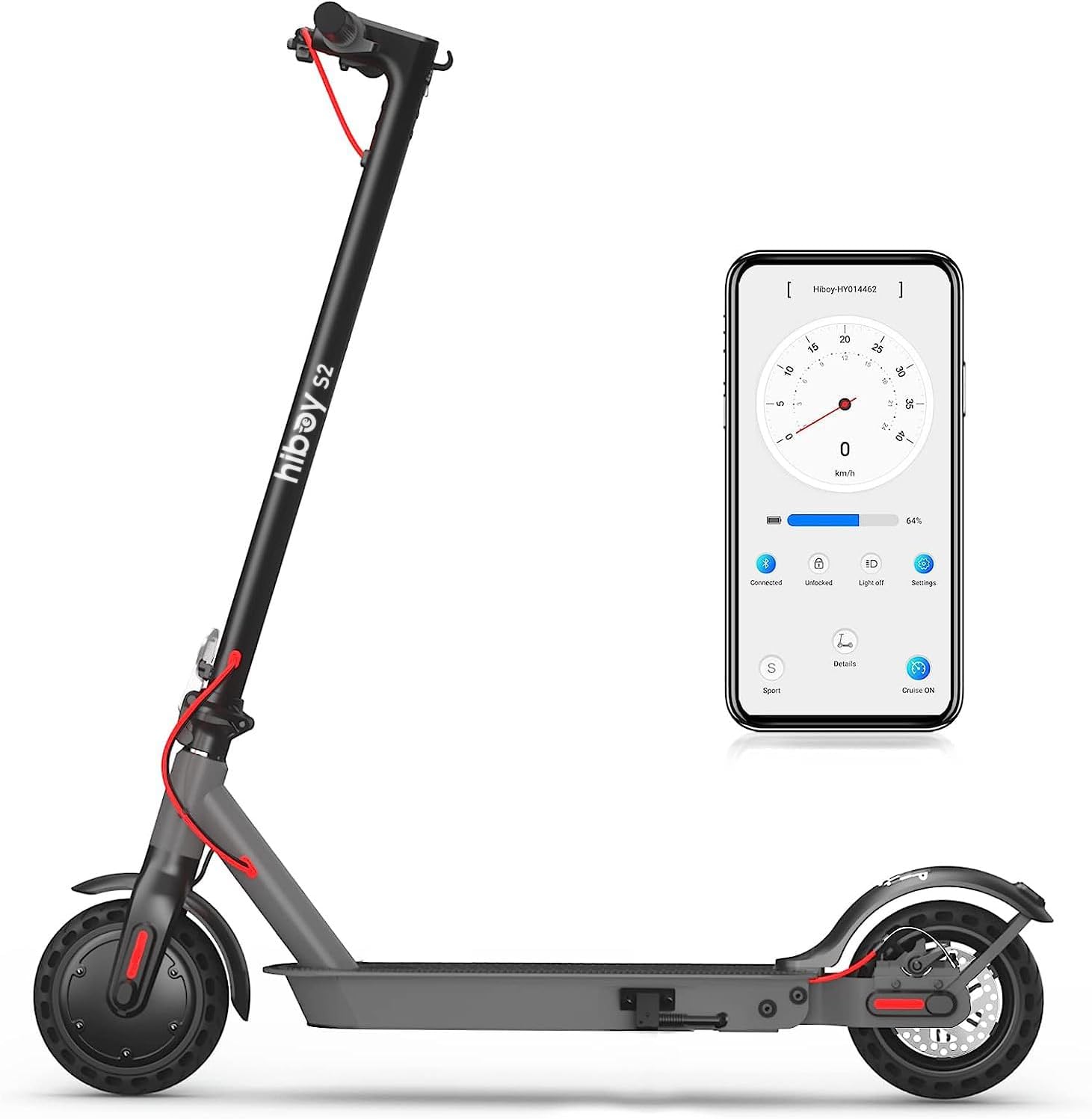
Hiboy S2 Electric Scooter - 8.5" Solid Tires - Up to 17 Miles Long-Range
Solid 8.5 inch tires mean no tubes to patch, and the folding frame keeps ownership simple for a first commuter
The shortest claimed range in this group, and solid rubber rides harsh on chip-seal roads
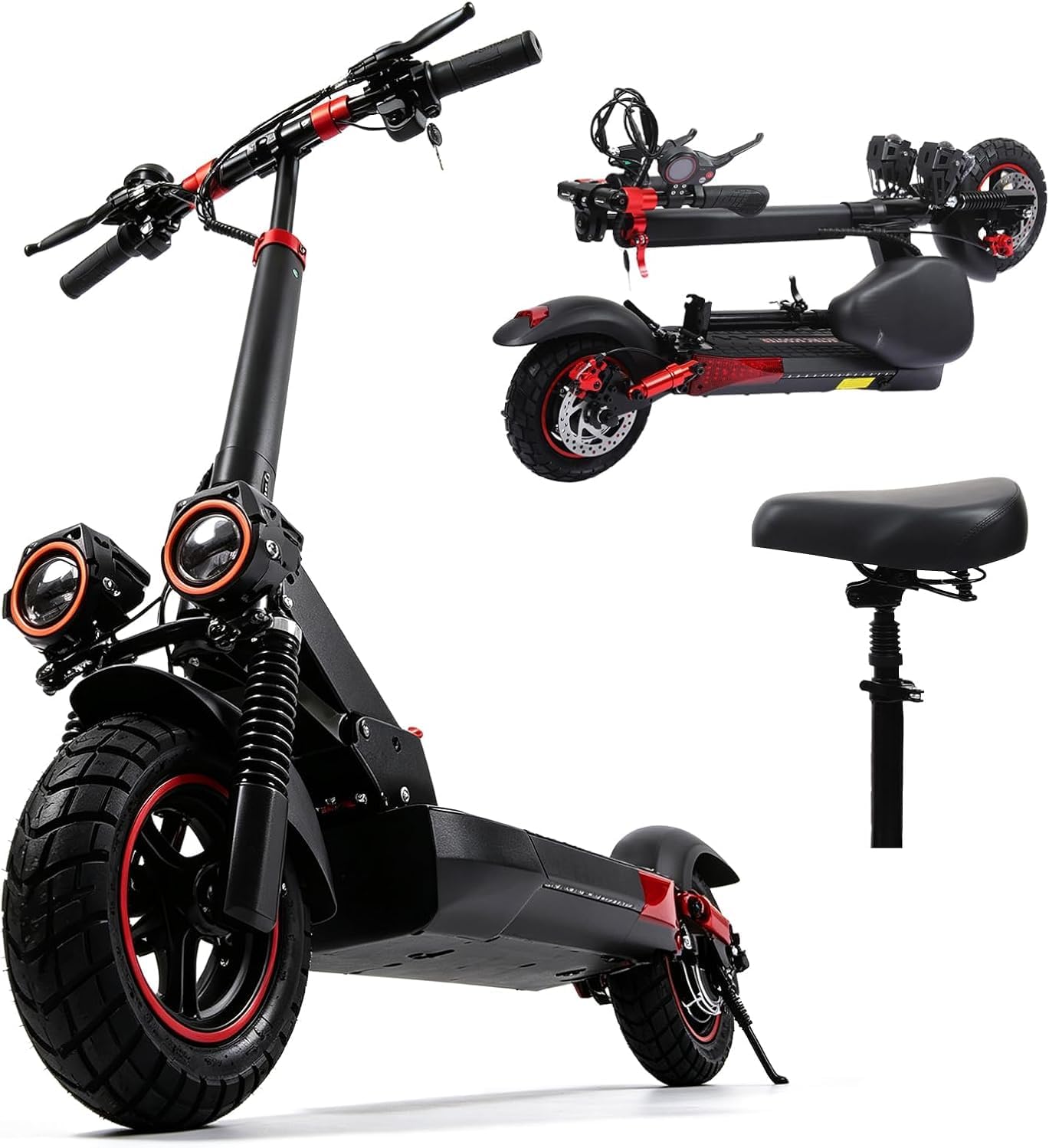
Electric Scooter for Adults with Seat,1200W Motor Up to 28 MPH, 48V 15Ah Battery, 26-28 Miles Long Range, Dual Disc Brakes with EABS, 10" Off Road Fat Tires Fast Adults E-Scoote
48V 15Ah works out to 720 Wh, the only battery here that supports a genuinely long commute, plus dual disc brakes and 10 inch fat tires
A seat and off-road rubber make it heavy and awkward to carry, and 28 mph drains that pack fast
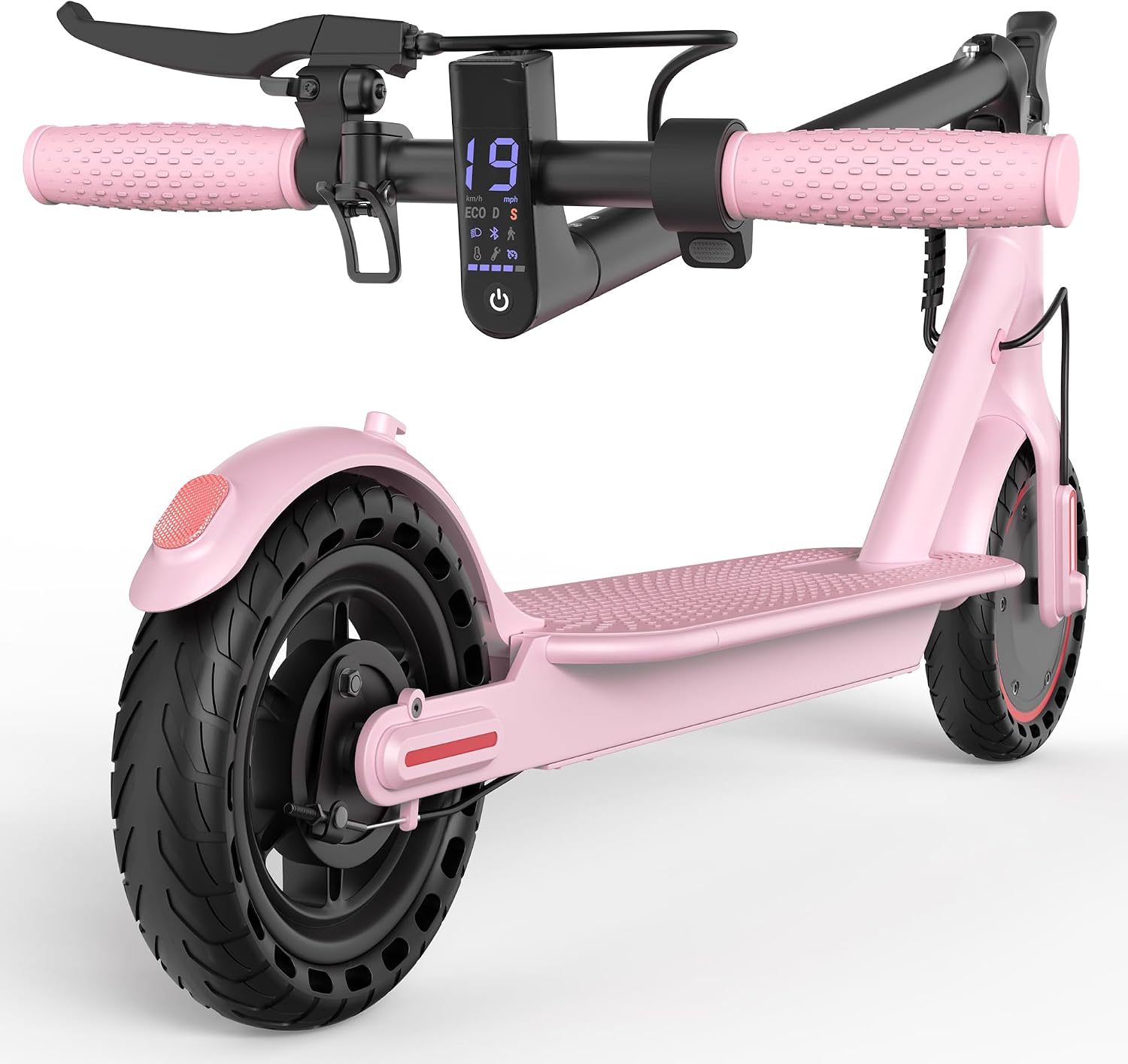
Aovowheel Electric Scooter for Adults, Folding E Scooter with 250W-500W Motor 16-24 Mph Top Speed, Max 15-60Miles Long Range,Commuting Scooters with 6.5''/8.5''/10''/14'' Tires, Dual Brakes
Folds, runs dual brakes, and offers tire sizes from 6.5 to 14 inches so you can match it to your roads
A 250W to 500W motor rating and a 15 to 60 mile range claim that covers every variant in one listing
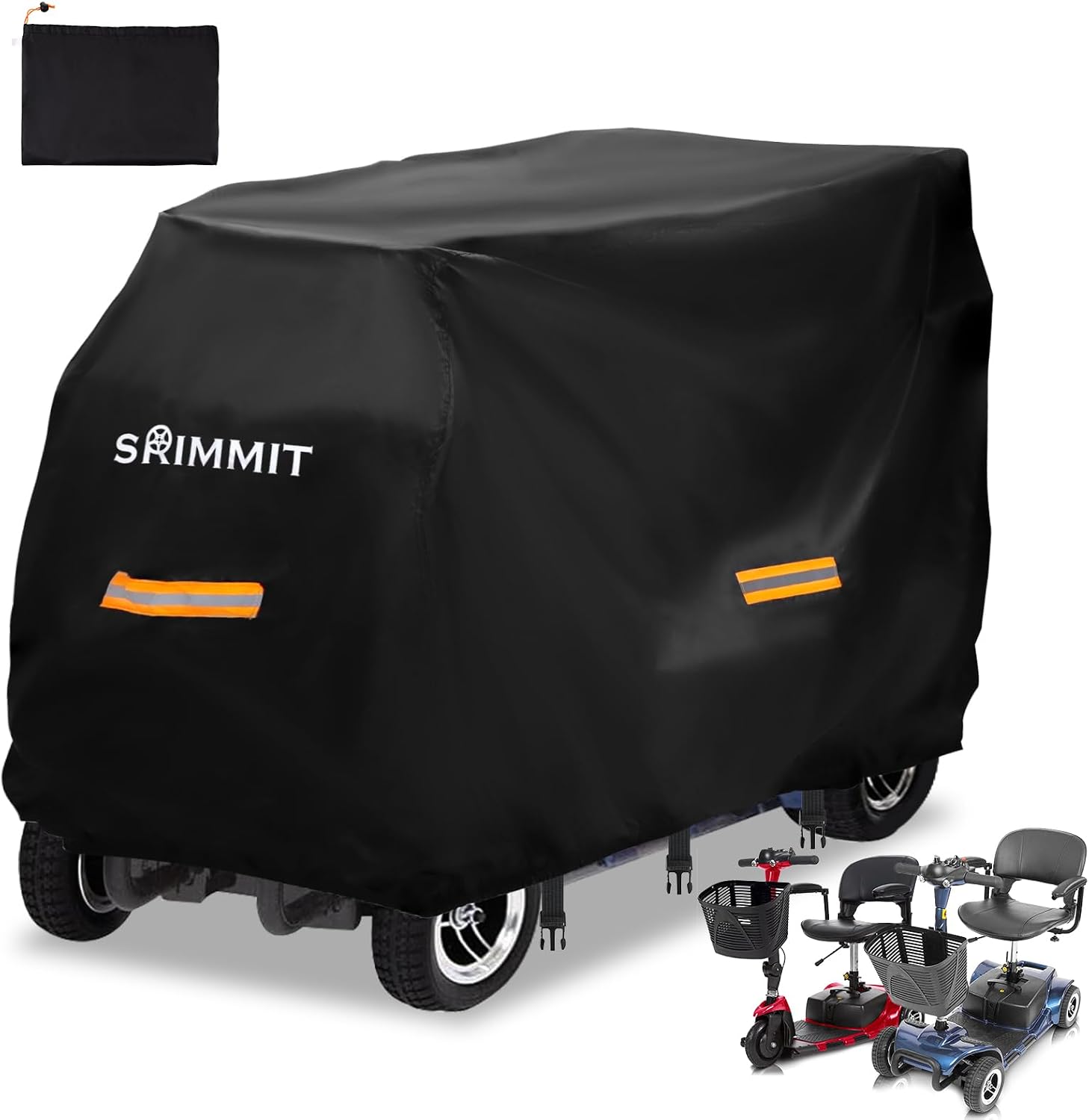
420D Mobility Scooter Cover Waterproof for 3-4 Wheel Scooter L49x23x39in
420D waterproof shell sized for 3 and 4 wheel scooters, the cheapest way to keep rain and dust off anything parked outside
It is an accessory, not a scooter, and the listed 49 x 23 x 39 inch fit needs checking against your folded dimensions
Prices and availability were captured from Amazon Creators API and may change.
How I judge a commuter scooter
Hill performance first. Always. A scooter that cannot climb the Congress Avenue bridge at my weight without voltage sag drama does not matter, because I have to get to work, not to a downhill photo shoot. The second test is watt-hours, because watt-hours is the only battery number that compares across brands. Amp-hours are marketing math. Voltage times amp-hours gives you watt-hours, and once you have that number you can stop arguing about who claims more miles.
Third is tires, because tires are the maintenance subscription you either understand or pay for. Fourth is the controller, the part that fails first on cheap hardware and the part nobody tests. Fifth is whether I can carry the thing up three flights of stairs, because a scooter that lives in a garage is not a commuter scooter, it is a garage ornament.
And no scooter gets ridden without a helmet. That is not a spec, it is the rule I have kept since an ER nurse explained what a scooter accident without one looks like.
The first-scooter classic: Hiboy S2
Hiboy is the brand I have the most history with, and not all of it is good. The Hiboy I owned ran tubed tires, and tubes and Texas heat are a bad marriage. This S2 runs 8.5 inch solid tires instead, which is a genuinely different deal. Solid rubber means no pinch flats, no patching on the sidewalk at 9 PM, and no spare tube in your backpack. For a first scooter, that is a real gift, and it is the single biggest reason I would hand this to a beginner over something prettier.
The trade is ride quality. Solid tires transfer every expansion joint, every crack, and every patch of rough asphalt straight into your wrists and knees. They also grip less in the wet, so if you ride in rain you pretend is fine, corner slower than you think you need to.
The claimed range is up to 17 miles. That number was measured somewhere with a lighter rider and a flatter world than mine. At 185 lb in August with a headwind and a climb, plan for meaningfully less and charge at the office. If your commute is flat and under 5 miles each way, this is a perfectly reasonable place to start. If you have a bridge on your route, keep reading.
The value folder: Aovowheel
The Aovowheel listing is the one that makes me put my data-geek hat on, because it reads like four scooters sharing one page. The motor is listed as 250W to 500W, the top speed as 16 to 24 mph, the range as 15 to 60 miles, and the tires as 6.5, 8.5, 10, or 14 inches. That spread is not a spec, it is a menu. It means the listing covers multiple variants, and it means the first thing you should confirm before buying is exactly which motor, which battery, and which wheel size you are actually getting.
What I like regardless of variant: it folds, which matters more than any spec on a scooter you have to carry into an apartment or onto a train, and it runs dual brakes. After hill performance, brakes are what I care about most, because regen is a rounding error and a single brake on a wet Austin morning is a gamble.
What I do not like is 250W nominal at my weight on a climb. That is not a motor problem in isolation, it is a voltage sag problem: on a long grade with a heavy rider, the battery sags, the controller pulls less, and the speed you were promised quietly becomes a speed you are not getting. Buy the bigger variant of this scooter if your route has hills, and buy it from a listing that tells you the watt-hours outright.
The seated outlier: 1200W with a 48V 15Ah battery
Here is the scooter in this group I would actually trust on a long commute. The battery is listed as 48V 15Ah, and that is the one number on any of these pages that I can work with. Do the math the manufacturer should have done for you: 48 volts times 15 amp-hours is 720 watt-hours. Nothing else in this comparison comes close, and 720 Wh is what pays for the bridge climb without the sag drama.
The rest of the spec sheet backs it up. A 1200W motor, up to 28 mph, dual disc brakes with EABS, and 10 inch off-road fat tires. The claimed 26 to 28 miles is plausible at moderate speeds, and if you actually hold 28 mph you will not see it, because speed is the most expensive thing you can do with a battery. Call it roughly 25 to 30 watt-hours per mile at real commuter pace, and you can estimate your own range instead of trusting a box.
The seat is the dividing line. Sitting is more comfortable over distance, especially on fat tires that already smooth out rough pavement, and the fat rubber matters more here because a seated rider cannot stand up to absorb a pothole. But a seat plus off-road tires plus that battery means weight, and the listing does not tell you what it weighs. Treat this as a machine you park in a garage, not one you carry up three flights.
EABS is worth a note: electronic braking saves your pads and helps on long descents, but it is not a replacement for the two discs. Two discs plus EABS is a real braking package. EABS alone is not.
The accessory: a waterproof cover for whatever you park outside
This one is not a scooter, and I want to be honest about that. It is a 420D waterproof cover sized at 49 x 23 x 39 inches for 3 and 4 wheel scooters, which is mobility scooter territory. That means two things. First, if you own a mobility scooter, it is a straightforward fit. Second, if you own a folding e-scooter, measure your folded length, width, and height before you buy, because a cover that flaps in the wind is a cover that pools water and scratches paint.
Used correctly, it solves a real problem. Most budget scooters do not carry an IP rating I would bet a controller on, and a cover is the cheapest insurance you can buy for a scooter that sleeps on a patio, a porch, or a garage floor. Water on a display and water in a controller are two different disasters, and the controller is the part that strands you.
It does not fix a bad IP rating, and it is not for riding. It is a parking solution, and at accessory money it is the lowest-risk purchase in this entire article.
What the spec sheets are hiding
Amp-hours. Ah is marketing math. Multiply voltage by amp-hours and you get watt-hours, the only number that lets you compare a 48V pack against a 36V pack. One scooter here gives you both numbers. The others make you guess.
Peak watts. A peak number printed on a box is a party trick, usually good for a couple of seconds. Nominal watts is what you actually climb with.
"Up to" range. Up to means "under ideal conditions with a lighter rider, no wind, and a freshly charged pack." Range claims are tested at 120 lb with the wind at the rider's back. Real range is what you get at 185 lb, in August, with a bridge to climb.
Tire menus. When a listing offers 6.5, 8.5, 10, and 14 inch tires, you are looking at a family of products, not one product. Confirm the variant.
Tire type. Solid tires never flat and ride hard. Tubed tires ride better and will flat, and you will learn to patch a tube or pay someone who can. Tubeless is the upgrade I recommend to anyone who commutes seriously.
Tire pressure. PSI is the most ignored spec on any scooter. Ten PSI low costs you range, top speed, and tube life at the same time.
Which one should you actually buy
- Flat commute, first scooter, tight budget: the Hiboy S2. Solid tires mean no flats, and the ownership experience is the simplest here.
- Mixed pavement, need to fold, want brakes: the Aovowheel. Pick the largest motor and battery variant your budget allows, and confirm which wheel size you are buying.
- Long or hilly commute, comfort matters: the seated 1200W scooter. 720 Wh is the only capacity here that supports a real 10 mile each way ride.
- Parking outside or in a damp garage: the waterproof cover. Measure first, then buy it for whichever scooter you choose.
What I'm testing next
Two things are on my bench right now. First, a controller torture test, because I have blown two of them and nobody on the internet seems to test the component that actually fails. Sustained full-throttle runs, thermal logging, and a hard look at what happens at minute twenty. Second, more real range logging on the 14-mile loop, measured in watt-hours pulled rather than miles claimed, with the same rider weight and the same PSI every single run.
If a scooter cannot survive a 105-degree Tuesday commute and get me home, it does not get a recommendation from me, no matter how good the spec sheet looks.