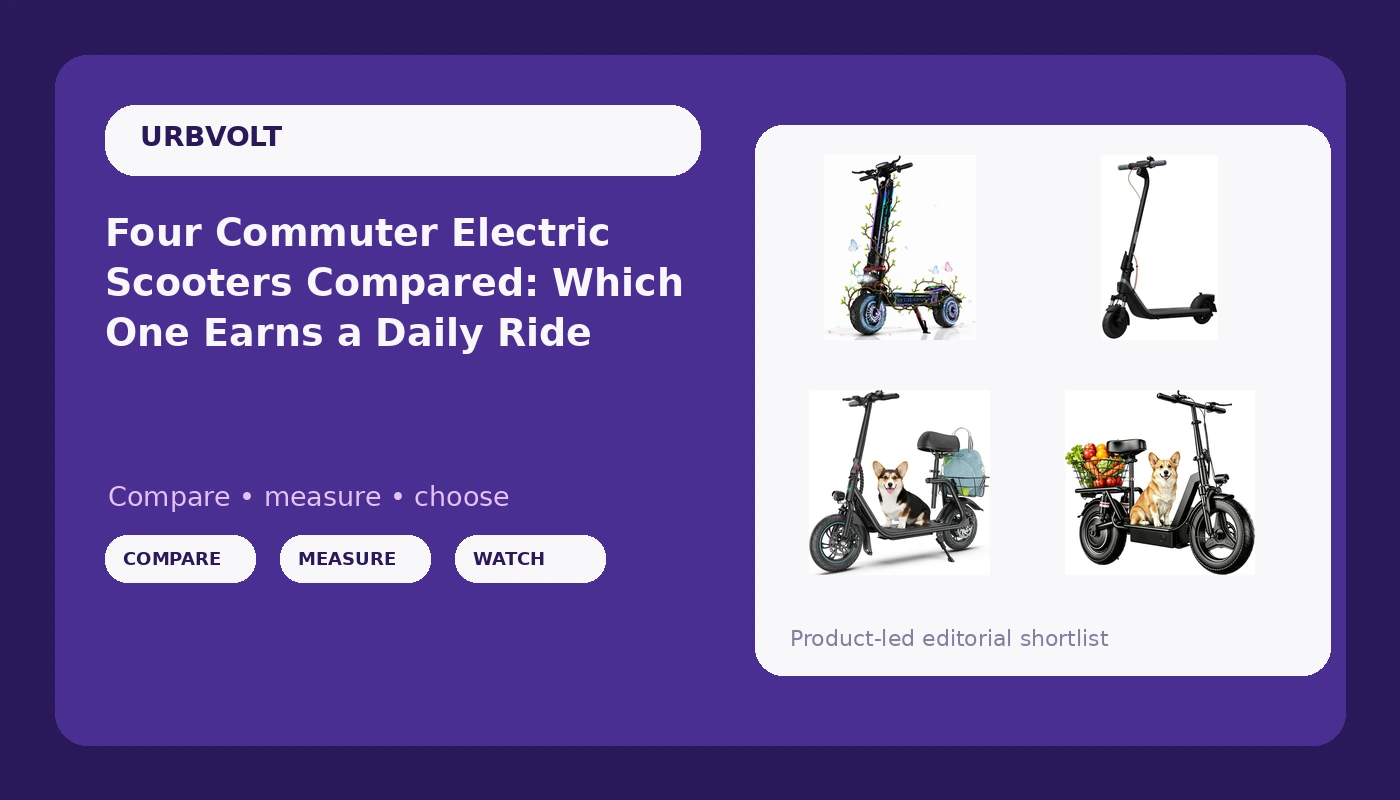
I have crossed the Congress Avenue bridge at 7:40 on a Tuesday morning more times than I can count, and I can tell you that the spec sheet and the scooter you actually commute on are two different machines. That gap is why this commuter electric scooter comparison exists. Four listings, four very different answers to the same question: does it get you to work and back without leaving you walking?
Two of these have seats. One is a Segway Ninebot from a brand that has been building scooters long enough to have a real service footprint and a real certification file. One claims up to 8,000 watts of peak motor and a top speed near 58 mph. Those are not four flavors of the same product. They are four different arguments about what a scooter is for, and the argument matters more than any single number printed on the box.
For most people commuting under 10 miles each way, the Segway Ninebot E2 and E3 line is the safest buy in this group, and the seated 650W model with the 14 inch wheels is the one I would hand to a rider who wants to sit down. The hyper motor scooter is a different category of vehicle and should be treated like one.
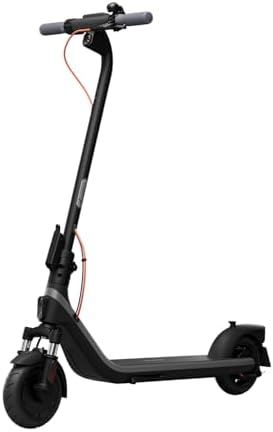
Segway Ninebot E2 Plus II / E2 Pro / E3 Pro
UL 2272 and UL 2271 certified, dual braking, foldable, and backed by the brand with the longest track record in this group
Slowest and least powerful option here, and the variant naming makes it easy to order the wrong battery

Electric Scooter with Seat, 650W peak, 14 inch wheels
A seat, 14 inch wheels, dual suspension, dual brakes, and a 35 mile claimed range in one package
Seated scooters are heavier and slower to maneuver, and 650W is a peak figure, not a sustained one
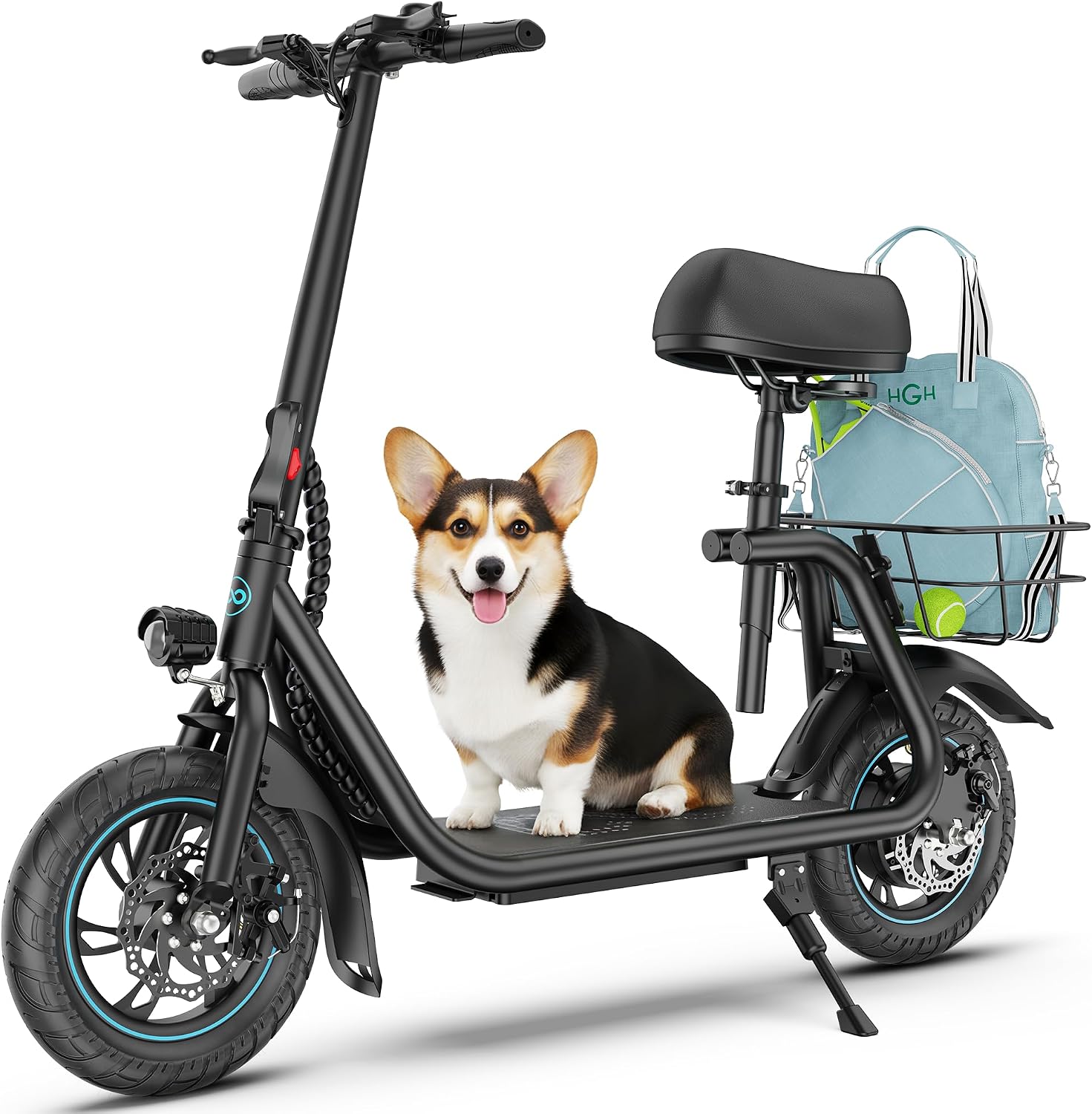
Gyroor Electric Scooter with Seat C1, 450W
The lowest-commitment way to try a seated commuter, with a 450W motor and a 20 mile range claim
A 450W motor and a 20 mile claim point to a short, flat commute, and it gives up wheel size to the other seated option

Electric Scooter Adults, 3500W/7000W/8000W single or dual hyper motor
Tubeless 10.5 and 12 inch tires, up to 58 mph, and a claimed 75 mile range on the largest battery configuration
Peak wattage is a marketing number until a controller proves it can sustain it, and this is not a bike lane vehicle
Prices and availability were captured from Amazon Creators API and may change.
What I check before I trust a listing
Four things, in this order. Watt-hours, not amp-hours, because Wh is the only battery number you can compare across brands without doing algebra the manufacturer hoped you would skip. Tires, because tubed tires on a commuter are a maintenance subscription and you will either learn to patch a tube or pay someone who can. The controller, because a cheap one is the part that strands you at 9 p.m. with a smell like burnt toast. And weight, because a scooter you cannot carry up three flights of stairs is a garage ornament with handlebars.
Then I look at the hill. The Congress Avenue bridge is not a mountain, but it is a sustained climb with a headwind on the way home, and it is where voltage sag shows up first. If a scooter feels strong on flat ground and weak on that bridge, the battery is small or the controller is cheap. Neither of those shows up on the marketing page, and both show up on your commute.
The hyper motor scooter: 8,000 watts of peak and a real problem
The listing for the 3500W/7000W/8000W single and dual hyper motor scooter reads like a spec sheet flex: up to 58 mph, a claimed 75 miles of range on the biggest configuration, and tubeless tires in 10.5 and 12 inch sizes. As a machine, I have no doubt it is fast. I have also owned a used Kaabo that did 60 mph, and it taught me the lesson that applies here: top speed is a number you hit once, and braking distance is a number you live with on every single ride.
Two things I would want verified before spending hyper scooter money. First, whether those peak watt figures are the two-second party trick kind or something the controller can sustain on a long climb without heat soaking. Second, the brakes. At 55 mph on 10.5 inch tires, dual hydraulic discs are not a luxury, they are the entire safety system, and the listing's dual brake setup is the line item I would read most carefully.
Who is it for? Not a commuter in a bike lane, honestly. It is for someone with a closed course, full gear, and a clear understanding that a 58 mph scooter on public streets in Austin gets you pulled over long before it gets you to work.
The Segway Ninebot E2 Plus II, E2 Pro, and E3 Pro
One caution before anything else: this is a single listing with several variants. The E2 Plus II, E2 Pro, and E3 Pro differ in battery capacity and motor output, so read the option you are actually selecting before checkout. The naming is not generous to shoppers.
What I like here is the boring stuff. UL 2272 and UL 2271 certification covers the electrical system and the battery, and that certification is the clearest line between a real product and a fire risk sitting in your hallway. A dual braking system on a scooter that tops out well below the hyper machine is the right engineering priority. Foldable matters more than people admit, because it is the difference between bringing the scooter inside and leaving it locked on the street.
Ninebot is also the brand that survived a full year of my abuse on an older model without a single unplanned repair, which is the highest compliment I can pay a commuter scooter. The trade-off is honest and simple: this will not win a drag race, and it is not built for someone who wants to ride at 30 mph. It is built for the ride you actually do five days a week.
Seated scooters: two different bets
The seated category is where most riders should look harder than they do. The 650W peak seated model with 14 inch wheels is the more interesting of the two. Fourteen inch wheels roll over potholes and expansion joints in a way that 8 inch wheels simply do not, and dual suspension matters more on a seated scooter because you sit through every bump instead of absorbing it with your knees. Dual brakes, a claimed 35 miles of range, and a storage box round out a package that reads like someone actually thought about errands.
The Gyroor C1 is the lower commitment version of the same idea: a 450W motor and a claimed 20 miles. That combination tells me it is a short, flat commute scooter, not a bridge climber. At 185 lb on a sustained grade, a 450W motor is where I would expect to feel the battery sag first.
Both give up agility. A seated scooter is heavier, slower to turn, and awkward on stairs. But if you have a knee that complains, or a route that is long and flat, a seat changes the whole calculation.
Tires, tubes, and August in Texas
Tubeless tires are the single biggest quality of life upgrade on any scooter I have owned, and the hyper motor listing is the only one in this group that advertises them outright. Tubeless tires do not pinch flat on a pothole the way tubes do, and they hold up better in heat. If you end up on a scooter with tubes, budget for the reality: you will patch them, or you will pay a shop to patch them, and Austin summer is when it happens.
Wheel size is the second half of the story. The 14 inch wheels on the seated model and the 12 inch option on the hyper scooter will both handle rough pavement far better than a small commuter wheel. That is a comfort and safety difference, not a cosmetic one.
Range math: 75 miles is not 75 miles
Every range number in this article is a claim made by a manufacturer, and every one of those claims was produced by a lighter rider, on flat ground, with no wind and a freshly charged pack. Real range is what you get at your weight, in August, with a headwind and a bridge to climb. Expect a meaningful fraction of the advertised figure and plan your route around the worst day, not the best one.
Voltage sag is the other half of range that nobody advertises. The last 30 percent of a battery does not ride like the first 30 percent, and on a small pack the difference is dramatic. That is why I care about watt-hours, the actual measure of capacity, more than any miles claim on a product page.
Controllers, brakes, and water resistance
The controller is the soul of a scooter. It converts battery power into motor power, and it is the first thing to die on a cheap build. Peak watt ratings mean nothing if the controller cannot sustain them without cooking itself on a long climb.
On brakes, the pattern is consistent: mechanical discs are fine at commuter speeds, hydraulic discs are what you want above 30 mph, and regenerative braking is a nice bonus that mostly saves your pads rather than your battery. On water resistance, an IP rating of IP54 is rain safe-ish, and anything less is a fair weather toy. If the listing does not state an IP rating, assume the worst and ride accordingly.
Who should buy which
- You commute under 10 miles each way and want the least risk: the Segway Ninebot E2 and E3 line, with the UL certifications and the dual braking system.
- You want to sit down and your route has rough pavement: the 650W peak seated model with 14 inch wheels and dual suspension.
- You want to try seated riding for the least money and your commute is short and flat: the Gyroor C1 at 450W.
- You want speed and you have a closed course and full gear: the hyper motor scooter, with the tubeless tires as its strongest real world feature.
The helmet thing, again
I say this in every article and I will say it here. No scooter gets ridden without a helmet, not the 15 mph commuter and not the 58 mph rocket. The nurse who told me what a scooter crash without a helmet looks like changed how I ride, permanently. If you are spending money on a scooter this month, spend some of it on a certified helmet in the same order.
The bottom line
Three of these four scooters are answering a commuting question, and one of them is answering a completely different question about how fast a person can go on two wheels. Buy the one that matches your actual Tuesday morning, not the one with the biggest number on the box. Check your tire pressure weekly, know your real watt-hours, and pick the scooter you can carry up the stairs.