Related: Best Electric Scooter for Commuting
I have ridden the same 14 mile round trip across the Congress Avenue bridge something like 900 times, and in that time I have learned that commuter electric scooters are sold on numbers that do not survive contact with a bridge, a headwind, or a 185 lb rider in August. Manufacturer range is measured in a lab with a light rider, no wind, and a battery that has never seen a Texas summer. So this is not a guide to the spec sheet. It is a guide to what happens on the third Tuesday in September when you are late for work, the battery reads 40 percent, and the bridge is still in front of you.
Four products are on the table: the Segway Ninebot MAX line, the Hiboy S2 Pro, a 1500W seated scooter with a 48V 25Ah battery, and a small portable range extender that promises to keep you moving. Two of them are real commuter tools. One is a starter scooter. One is a gadget that deserves a very specific kind of honesty before you spend anything on it.
Best Overall: Segway Ninebot MAX (G3 Plus / G3 / G2)
This is the line I trust with a workday. I rode a Ninebot MAX through a full year of abuse, rain, heat, bridge climbs, potholes, and it never once needed an unplanned repair. That is the whole argument, and it is worth more than any number printed on a box. The controller is the soul of a scooter, and the cheap ones die at 9 PM with a smell like burnt toast and a long walk home. The MAX line does not do that to me.
Two practical notes. The listing covers the G3 Plus, the G3, and the G2, so read the variant carefully before you add anything to a cart. They are not the same machine and the differences matter to your commute. UL certification is also listed, which sounds like fine print until your landlord or your building's front desk asks about it, or until something goes wrong with a battery and you want to know it was certified before it entered your life. Certification is not marketing. It is the difference between a battery you charge inside and a battery you charge on a balcony.
Nothing in this class is a featherweight, and that is the trade you make for a pack big enough to actually finish the ride. If your commute ends in three flights of stairs, budget for the carry. If it ends in a bike room or an elevator, you will stop noticing by week two.
Best First Scooter: Hiboy S2 Pro
This is the scooter I hand to people who ask me what to buy first, and I mean that as a qualified compliment. 500 watts, 10 inch solid tires, and a 25 mile range claim.
The tires are the interesting part. The earlier Hiboy I owned ran tubes, and tubes hate Texas heat and potholes. I patched four of them and learned to keep a pump in my bag. Solid tires delete the flat tire subscription, which is a real gift on a commuter. They also transmit every crack in the asphalt straight into your wrists, and on a wet bridge deck they feel skittish in a way that air does not. That is the trade: no patches, more buzz.
500 watts is enough for a flat commute and honest errands. It is not a bridge climber with a 185 lb rider and a backpack, and no spec sheet will tell you that. Treat the 25 mile claim as a lab number. Until you have your own data from your own route, plan the round trip so you finish with margin instead of a percentage you are watching nervously. Fine for a first scooter and nothing more. Most riders outgrow it in a month.
Best for Long Rides and a Seat: the 1500W Seated Scooter
This is a different animal: 1500 watts, a claimed 45 miles, 30 mph, a 48V 25Ah battery, 265 lb capacity, 11 inch off-road tires, dual disc brakes, a seat, and a folding frame.
Do the battery math yourself, because the listing will not do it for you. 48 volts times 25 amp hours is 1,200 watt hours, and watt hours is the only figure on that list that tells you anything real about distance. Amp hours are marketing math. Watt hours are range math. Anyone quoting range without quoting watt hours and rider weight is guessing, and you should read it that way.
A seat changes the category. You are no longer standing on a scooter, you are sitting on something closer to a moped, which is great for a long ride and awkward for every other part of micromobility. It is not going up three flights of stairs. It is not going on a bus rack. Dual disc brakes are the right call on a machine this size and this fast, and I would not buy a heavy scooter without them.
And 30 mph is both a claim and a warning. I own a fast scooter and I ride it at 18, because the door zone, the bike lane, and the driver turning left do not care what your top speed is.
The Range Extender Question: Portable Wind Generator
The listing reads like a cure for range anxiety: a 2 in 1 portable range extender with USB output, dual energy charging, an ABS and aluminum alloy body, 115 by 68 by 30 millimeters, one pack.
Here is the honest version. A USB output is a trickle, sized for a phone, a light, or a headphone case, not for a 1,200 watt hour traction pack. There is no version of the physics where something that fits in a jacket pocket refills a scooter battery on the shoulder of the road. That is not cynicism, it is arithmetic.
What it can do is top up your phone on a long ride, keep your lights charged, or give you a little emergency power in a bag. If you ride with a GPS-heavy phone and you are the kind of person who forgets to plug things in, it earns a pocket. It does not earn a place in your commute plan. Plan your range around the battery that came with the scooter and treat everything else as a bonus. For more on how packs behave in the heat, see my battery basics notes.
How I test, and how you should judge
Every scooter I write about gets the same loop: 14 miles round trip, same rider, same tires pumped to the same PSI, same August heat, with watt hours logged on the way out and the way back. I climb the Congress Avenue bridge at my actual riding weight, because a scooter that cannot climb it does not matter how fast it goes downhill. I carry it up three flights, because a scooter you cannot carry is a garage ornament. I run the controller hard and then smell for the burnt toast. I ride it in rain I pretend is fine, because that is what commuting is.
And I wear a helmet on every single ride. Not most rides. Every ride. The nurse who told me what a scooter crash without one looks like is the reason, and I will say it in every article I write.
You can run a version of this before you spend anything. Borrow or rent the class of scooter you think you want. Ride your actual route at your actual weight. Check the tire type, check the brakes, check whether it fits where you live. Then buy. Tire pressure is the other free upgrade, and my tire pressure notes explain why 10 PSI low costs you range, speed, and tube life.
Analysis: what actually decides whether you get to work
Watt hours and rider weight decide range. Everything else is decoration. If a listing hides the pack size in amp hours, multiply voltage by amp hours and compare that number across scooters instead of comparing marketing sentences.
Tire type decides your weekends. Solid tires never flat and always buzz. Tubed tires ride better and will eventually turn you into a person who patches tubes in a parking lot. Tubeless is the upgrade worth paying for on a daily commuter.
The controller decides whether you get home. Cheap controllers fail hot and fail suddenly, usually at the far end of your ride, which is the worst possible place for a failure. There is no spec for this on a box, which is why brand history matters more than any single number in a listing.
Brakes decide what happens when the driver ahead of you stops short. Disc brakes, and dual disc on anything heavy or fast.
Carry weight decides whether you actually use the thing. Certification decides whether you can charge it indoors with a clear conscience. A UL listing is not a bonus feature on a battery you park under your desk. It is the feature.
Commuter scooter reference table
Read this by column, not by row. Where a cell says see listing, that is because the listing is the only honest source for that number and I am not going to invent it for you.
| Scooter | Motor and claimed range | Tires | Battery math | Who it fits |
|---|---|---|---|---|
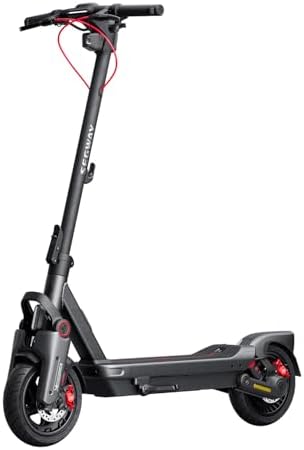 Visit on Amazon → Visit on Amazon →Segway Ninebot MAX G3 Plus / G3 / G2 |
See listing for the variant you are buying | See listing | See listing | The daily commuter who wants the line that survived a year of my abuse |
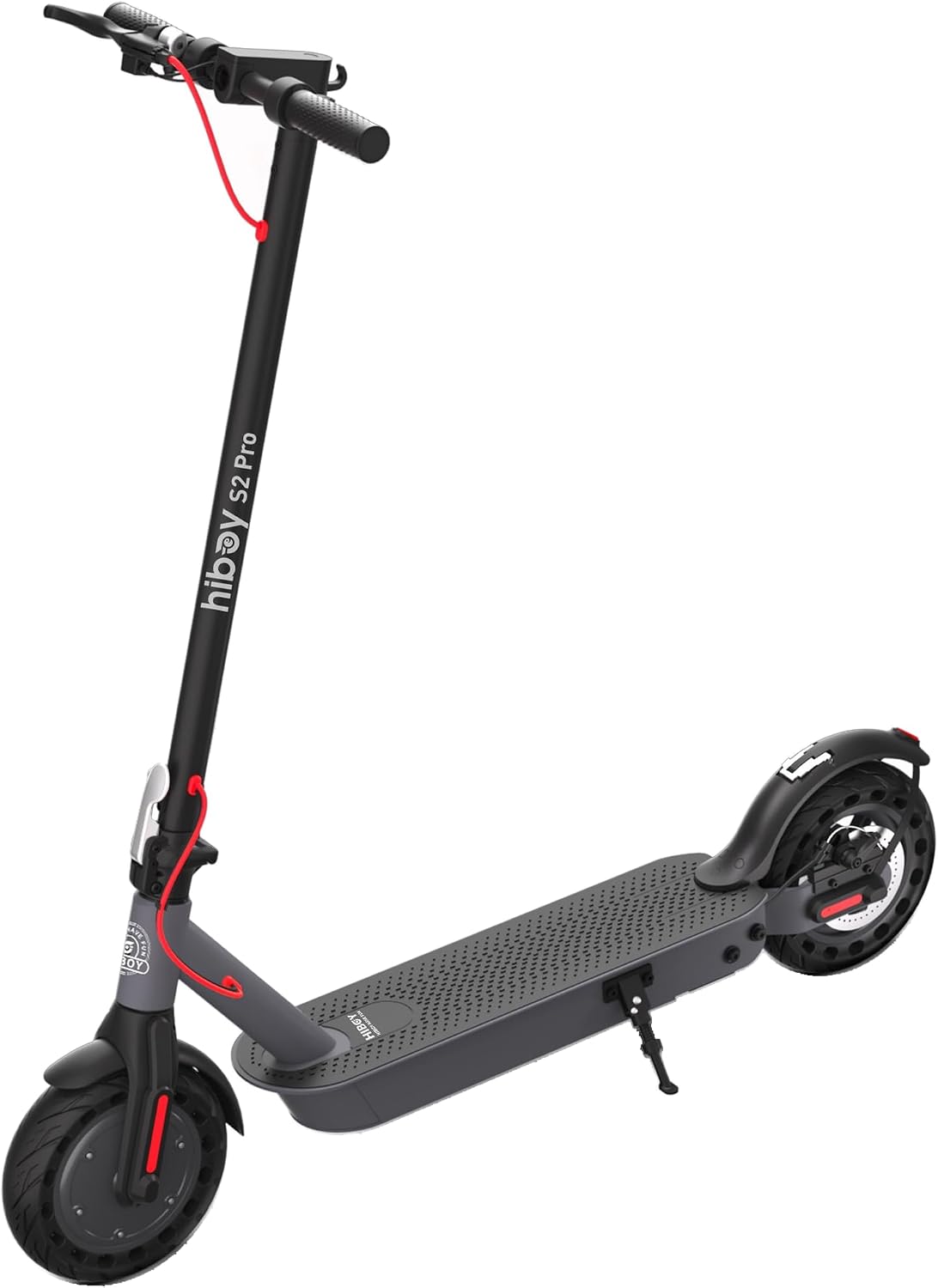 Visit on Amazon → Visit on Amazon →Hiboy S2 Pro |
500W, 25 mile claim | 10 inch solid | See listing | First scooter, short flat commute |
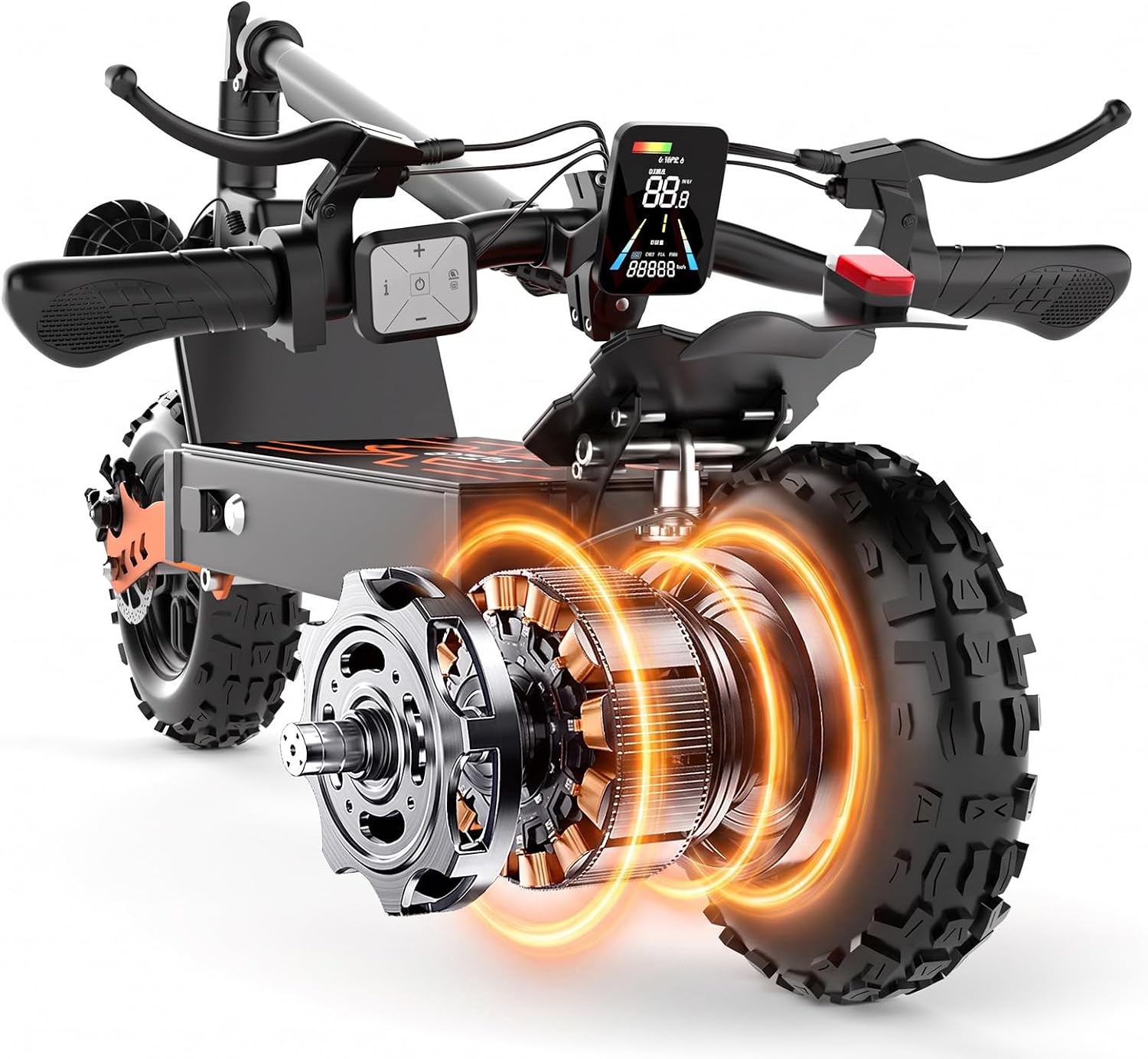 Visit on Amazon → Visit on Amazon →1500W seated scooter |
1500W, 45 mile claim, 30 mph | 11 inch off-road | 48V x 25Ah = 1,200 Wh | Long rides, riders near the 265 lb capacity, anyone who wants a seat |
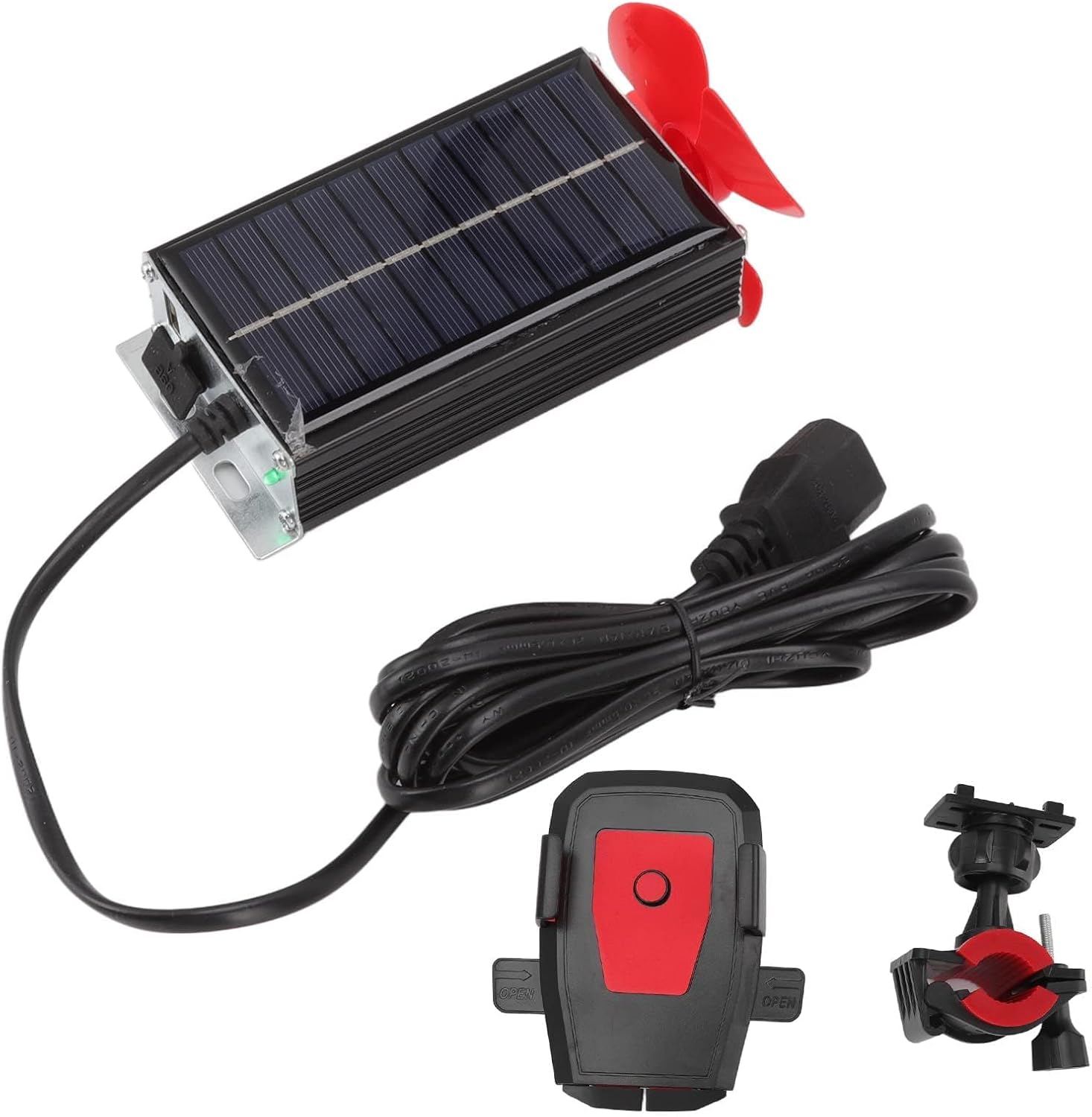 Visit on Amazon → Visit on Amazon →Portable wind generator range extender |
Not a scooter, USB output | Not tires | 115 x 68 x 30mm, ABS and aluminum alloy | Phone and light top-ups, not scooter charging |
The first column is the decision. If your commute is flat, short, and you have never owned a scooter, the second row is a reasonable place to start. If your commute is long, hilly, or you want a seat, the third row is the only row in this table that fits. If your commute is a real workday in traffic, the first row is the one I would buy with my own money.
Should you buy the Segway Ninebot MAX?
Yes, if your commute is the whole point. It is the line that survived a year of my abuse without an unplanned repair, the controller does not quit on me, and UL certification means I can charge it inside without a second thought. The listing spans three generations, so check which one you are actually buying and whether it fits your route and your stairs.
It is not the cheapest way to start, and it is not a featherweight. What it is, is the scooter I would hand a friend who needs to get to work on time every day for the next three years. That is the test I care about.
Should you buy the Hiboy S2 Pro?
Yes, if this is your first scooter and your route is flat. The 500W motor and 10 inch solid tires make it a low-drama way to learn, and solid tires mean you will not spend your first month patching tubes in a parking lot. The ride is firm, the range claim is a lab number, and it is not a bridge climber at my weight.
Buy it as a learner and expect to outgrow it. If you already know you are going to commute on it five days a week, put the money toward the MAX instead.
Should you buy the 1500W seated scooter?
Yes, if you want a seat, a long claimed range, and you have somewhere to park it that is not up three flights of stairs. The 48V 25Ah battery is 1,200 watt hours by the math, the 11 inch tires and dual disc brakes suit a machine this size, and the 265 lb capacity covers a lot of riders the lighter scooters do not.
Just be honest with yourself about the 30 mph claim and about the weight. Buy it for the long ride, not for the top speed.
Should you buy the portable wind generator range extender?
No, not as a range extender. As a small emergency power gadget for your phone and lights, sure, if that is a problem you actually have. But if you are buying it hoping it will rescue a dead scooter battery on the way home, you will be disappointed, and you will be disappointed on the shoulder of a road. Spend the money on a bigger battery instead.