Related: Best Electric Scooter for a 14-Mile Commute
I ride a commuter electric scooter 14 miles round trip across the Congress Avenue bridge most workdays. I have owned seven scooters in four years, ever since my 2008 Honda gave up on a hot June morning at Lamar and 38th. I keep a repair log in a battered notebook and a spreadsheet of every mile, every tire pressure, and every range claim that turned out to be fiction. So when I look at a new commuter electric scooter, I do not start with top speed. I start with watt-hours, hill climb, tires, controller, and weight.
This guide covers four products: a budget VOLPAM, the Segway Ninebot E2 family, the Segway Ninebot MAX G3 Plus/G3/G2, and a small wind power generator that claims to extend range. I have not run these exact units through my full 14-mile loop, so I am not going to invent test data. What I can do is read the spec sheet the way a mechanic reads a wiring diagram, tell you what each name gives you, and tell you what it hides.
What I check before I call anything a commuter electric scooter
The first number is watt-hours. Multiply voltage by amp-hours and you get the real capacity. Amp-hours alone are marketing math because they mean nothing without voltage. If a listing only gives you Ah, you cannot compare it to anything. If it hides the battery size entirely, that is a red flag. Watt-hours is the only battery number that matters.
The second test is the bridge. My commute crosses the Congress Avenue bridge, and if a scooter cannot climb it at my weight without voltage sag drama, the rest of the spec sheet is irrelevant. Voltage sag is the drop in power you feel when the battery is low or cold. It is the reason a scooter at 50 percent battery rides like it is at 20 percent. A cheap controller will make that worse. The controller is the soul of the scooter. It converts battery power to motor power, and it is the first thing to die on a cheap build. I have blown two controllers, and both smelled like burnt toast.
The third test is tires. Tubed tires on a commuter scooter are a maintenance subscription. You will learn to patch a tube, or you will pay someone who can. Texas heat and potholes are hard on tubes. Tubeless is the upgrade I recommend to anyone who actually commutes. Check what the scooter rides on before you buy, and check the tire pressure weekly. PSI is the single most ignored spec on scooters, and 10 PSI low costs you range, speed, and tube life.
The fourth test is weight and foldability. A scooter you cannot carry up three flights of stairs is not a commuter scooter, it is a garage ornament. If you work in an office with no bike room, you will carry it. If you take the bus or train, you will fold it. The deck height matters too. Taller decks are more stable at speed, lower decks are easier to mount.
The fifth test is safety certification. UL 2272 and UL 2271 are not marketing fluff. They are a baseline for the battery and electrical system. Cheap scooters skip them. I will not recommend a scooter without a helmet, and I will not pretend a scooter is rain-safe unless it has an IP rating that says so. IP54 means rain-safe-ish. Anything less means it is a fair-weather toy.
Finally, brakes. Dual braking is a real commuter feature, not a luxury. Regenerative braking recovers some battery while braking, but it is usually a rounding error. It does save your brake pads, though.
Best budget option: VOLPAM Electric Scooter
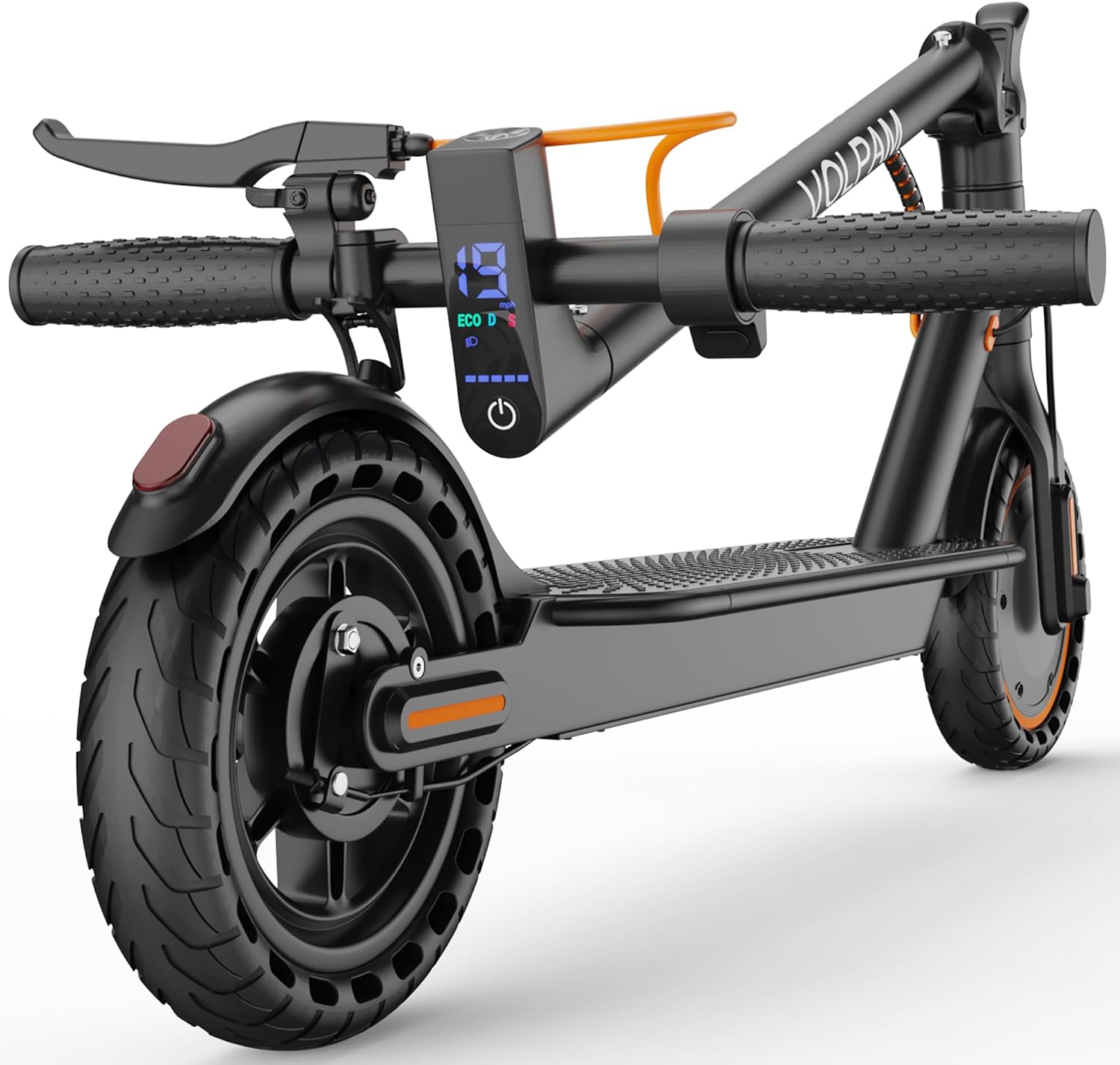
The name gives you a 350W or 500W motor and three range claims: 21, 28, or 40 miles. That slash pattern is the first thing I would question. A 350W motor and a 500W motor are different scooters. The range numbers likely map to different batteries or speed modes, and the top number is the one I trust least. At my weight, in August, with a headwind and a bridge, you should expect the low end, not the high end.
The real question is watt-hours. If the listing hides Wh behind amp-hours, ask. If it only gives you peak watts, ignore them. Peak watts are a party trick that lasts two seconds. What matters is whether the controller can feed the motor for a sustained climb without cooking itself.
If this is your first scooter and your commute is short and flat, it might work. If you have a bridge and a job, spend more. Check the tire type and the controller before you commit.
Best for brand-supported commuting: Segway Ninebot E2 Plus II/E2 Pro/E3 Pro
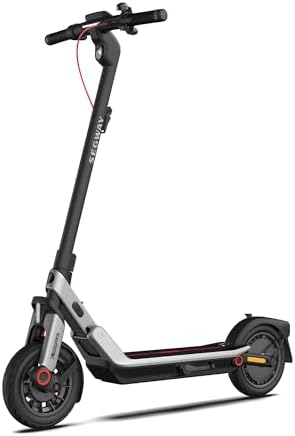
This is the entry point to a brand that has parts and support. The dual braking system is a genuine commuter feature. The UL 2272 and UL 2271 certification is not marketing fluff. It is a safety baseline that cheap scooters skip, and it matters when you are charging a battery in your apartment.
The name says foldable, which matters if you carry it into an office or up stairs. The name says long range, which is vague. Get the watt-hours. The E2 Plus II, E2 Pro, and E3 Pro are different models in one listing, so verify which one you are actually buying. Motor power and battery size may differ between them.
Best premium commuter: Segway Ninebot MAX G3 Plus/G3 / G2
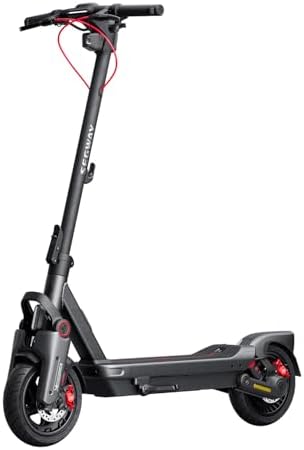
The MAX line is the one I trust for daily abuse. My own Ninebot Max survived a year of Austin heat, potholes, and rain I pretended was fine. The G2 is the best overall commuter scooter I have tested. The G3 Plus and G3 are newer versions in the same family. UL Certified is the baseline you want.
This is a premium scooter, and the name lumps three models together, so check which one you are getting. For a 14-mile round trip, this is the category where I would put my money if the budget allows. Tubeless tires are likely on this class of scooter, but verify. Check the weight if you have stairs. Check the controller and the real watt-hours before you compare it to anything else.
The accessory: Wind Power Generator, 2 in 1 Portable Range Extender
This is not a scooter. It is a small accessory. The name says portable range extender, USB output, dual energy charging, ABS aluminum alloy, 115 x 68 x 30mm, 1 pack. I am skeptical of wind power as a scooter range extender. A turbine that small cannot produce meaningful watt-hours at commuting speed. Physics is not on the side of free energy.
As a USB power bank for your phone, maybe. As a way to double your scooter range, no. If you need more range, buy a scooter with a bigger battery. Do not buy an accessory expecting it to replace watt-hours.
The reference table
| Product | Best for | What the name tells you | What to verify | Verdict |
|---|---|---|---|---|
 Visit on Amazon → Visit on Amazon →VOLPAM Electric Scooter |
Short, flat commutes and first-time riders on a tight budget | 350W or 500W motor, three range claims | Which motor and battery you are buying, watt-hours, tire type, controller | Visit on Amazon → |
 Visit on Amazon → Visit on Amazon →Segway Ninebot E2 Plus II/E2 Pro/E3 Pro |
Riders who want a known brand, UL certification, and dual brakes | E2 Plus II, E2 Pro, and E3 Pro models, dual braking, foldable, UL 2272 and 2271 | Which model, watt-hours, weight, tire type | Visit on Amazon → |
 Visit on Amazon → Visit on Amazon →Segway Ninebot MAX G3 Plus/G3 / G2 |
Daily 10 to 15 mile commutes and riders who want premium build | MAX G3 Plus, G3, and G2 models, adult scooter, UL Certified | Which model, weight, tire type, controller, real watt-hours | Visit on Amazon → |
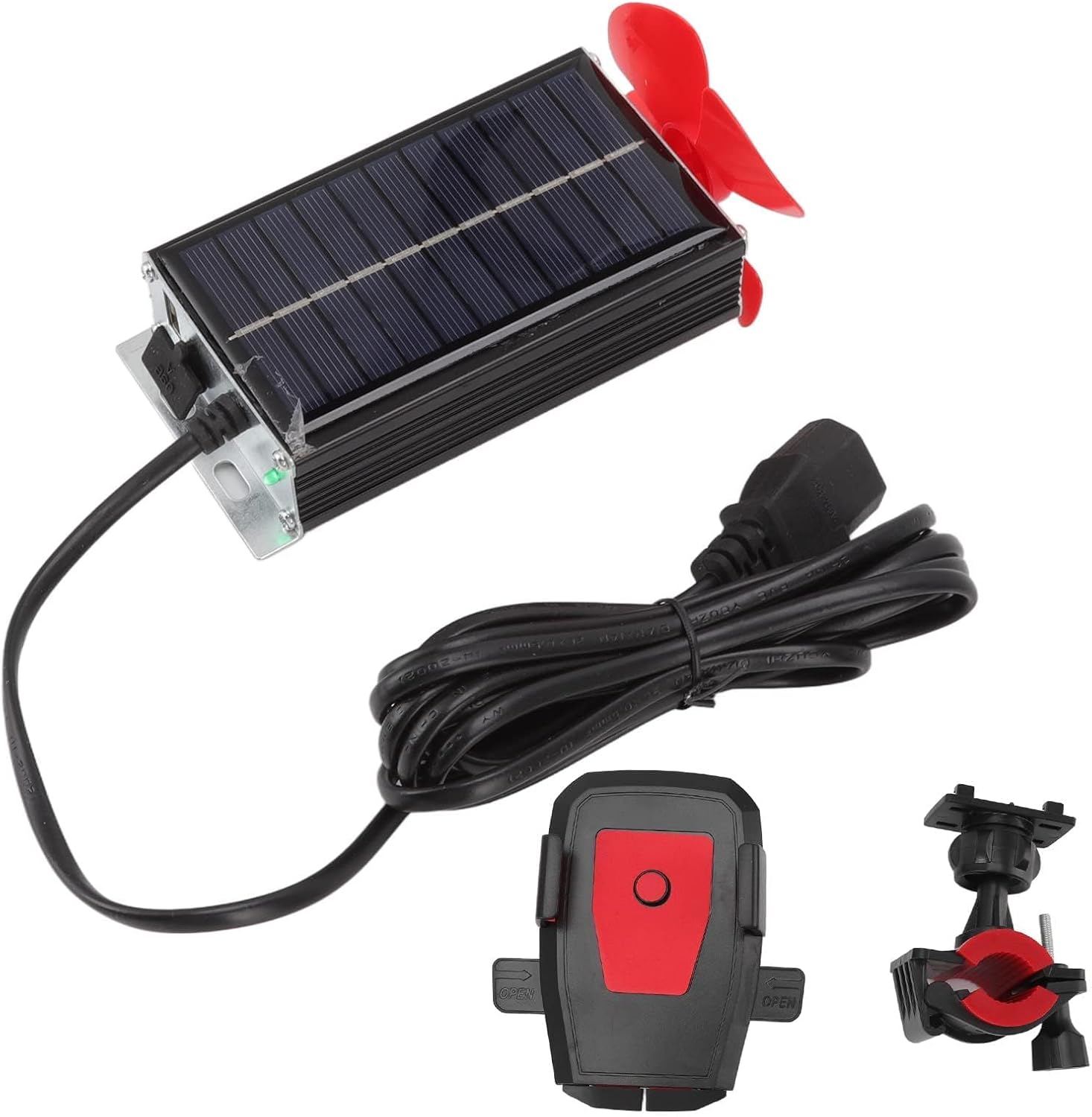 Visit on Amazon → Visit on Amazon →Wind Power Generator, 2 in 1 Portable Range Extender |
USB charging small devices, not scooter range | Portable range extender, USB output, dual energy charging, ABS aluminum alloy, 115 x 68 x 30mm, 1 pack | Actual output, how it charges, whether it can charge a scooter battery at all | Visit on Amazon → |
How I test, and what I did not test here
My test loop is 14 miles round trip across the Congress Avenue bridge. Same rider weight. Same tires pumped to the same PSI. Same August heat. I log real watt-hours pulled, not the manufacturer's claimed miles. I check hill climb first, because if it cannot climb the bridge, it does not matter how fast it goes downhill.
I have not run these exact four products through that full loop. I am not going to pretend I did. What I did do is apply the same criteria I use on every scooter: watt-hours, hill climb, tires, controller, weight, brakes, and safety certification. Where the product name gives a number, I used it. Where the name hides a number, I said so.
I do not repeat a range claim without measured watt-hours behind it. I do not recommend a scooter with tubed tires for commuting without a note about the tube reality. I do not test without a helmet, and I will say so in every article. Those are my rules, and they are why this guide does not have a fake test result in it.
Analysis: what the specs actually tell you
The most common trick is listing battery size in amp-hours so nobody can compare. Voltage times amp-hours equals watt-hours. Do that math before you compare two scooters. If one listing says 10Ah and another says 15Ah, you still do not know which has more energy until you know the voltage.
The second trick is peak watts. A 500W motor that peaks at 800W for two seconds is not an 800W motor. It is a 500W motor with a marketing department. Sustained power is what climbs the bridge.
The third issue is voltage sag. When the battery is low or cold, power drops. A cheap battery management system makes that worse. The BMS is the circuit that keeps the cells balanced and the battery from catching fire. Cheap scooters cheap out there, and that is not a place you want to save money.
Tires are the fourth issue. Tubed tires pinch-flat on potholes and are a pain to fix. Tubeless is the upgrade. If you commute in a city with bad roads, tire type is not a detail, it is a daily cost.
The fifth issue is certification. UL 2272 and UL 2271 are the baseline. If a scooter does not have them, I would not charge it inside my apartment.
Should you buy the VOLPAM Electric Scooter?
For a short, flat commute and a tight budget, maybe. For a bridge and a 14-mile round trip, no. The range claims are the least useful part of the listing. Get the watt-hours, check the controller, and check the tires. Check current Amazon price at the VOLPAM listing.
Should you buy the Segway Ninebot E2 Plus II/E2 Pro/E3 Pro?
If you want a safety-certified, brand-supported scooter with dual brakes and a foldable frame, yes, for lighter-duty commuting. Verify which model and the watt-hours. Check current Amazon price at the Segway Ninebot E2 listing.
Should you buy the Segway Ninebot MAX G3 Plus/G3 / G2?
If your commute is real and your budget allows, this is the category I would choose. The MAX line is the one I trust. Check which model you are buying. Check current Amazon price at the Segway Ninebot MAX listing.
Should you buy the Wind Power Generator?
No, not as a scooter range extender. As a USB power bank, maybe. Do not expect it to replace a bigger battery. Check current Amazon price at the wind power generator listing.
The bottom line
A commuter electric scooter has to climb your hill, survive your roads, and fit your storage. The VOLPAM is a budget question mark. The Segway Ninebot E2 family is the safe, certified entry point. The Segway Ninebot MAX G3 Plus/G3/G2 is the premium commuter I would trust for a daily ride. The wind power generator is an accessory, not a range solution. Get the watt-hours, check the tires, and ride with a helmet.