
Related: Best Electric Scooter for Commuting: Range, Hills, and What Fails First
I have crossed the Congress Avenue bridge on two wheels more than 900 times. Fourteen miles round trip, every workday, in Austin heat that turns a parking lot into a griddle by 9 AM. So when someone asks me to recommend electric scooters for adults, I do not start with top speed or the number on the box. I start with two facts: I weigh 185 lb, and that bridge has a grade that punishes optimism.
That is the problem with most scooter advice. Spec sheets are written by people who tested a machine with a 120 lb rider, a fresh battery, flat ground, and no wind. Your commute has none of those. Your commute has a headwind, a climb, 105-degree pavement, and a backpack.
This guide is not a list of the fastest or the flashiest. It is four products sorted by the job each one actually does: a mid-range off-road capable commuter, a genuinely cheap solid-tire runabout, a hyper scooter that belongs closer to a closed course than a bike lane, and the replacement battery board that keeps an older F-series scooter out of the landfill.
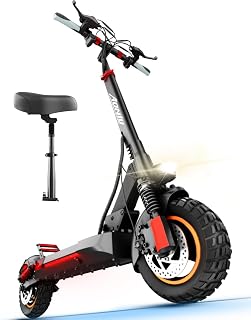
Best Overall: M4 Electric Scooter for Adults
If you want one scooter that covers a real commute without turning into a project, this is the one I would point a friend toward first. It is built as an off-road leaning commuter, which in practice means a wider tire, more suspension travel than a pure street scooter, and a frame that tolerates chip seal, gravel shoulder, and the random pothole that swallows a front wheel whole.
The off-road part matters more than it sounds. Most commuters never touch dirt, but they do ride over broken asphalt, tree roots lifting a bike lane, and the transition strips at driveway aprons. A scooter tuned for rough surfaces is simply more comfortable on the boring parts of your route, and comfort is what decides whether you ride in August or leave it in the garage.
Before you buy, check three things: the actual watt-hour capacity of the battery, not the amp-hour number, which is marketing math; the tire construction; and how the controller behaves under sustained load. Any scooter can hit top speed for 30 seconds. The question is minute 20, when the controller is hot and the battery has sagged. That is when cheap electronics announce themselves, usually with a burnt-toast smell and a long walk home. Weigh it too. A scooter you cannot carry up three flights is not a commuter scooter, it is a garage ornament.
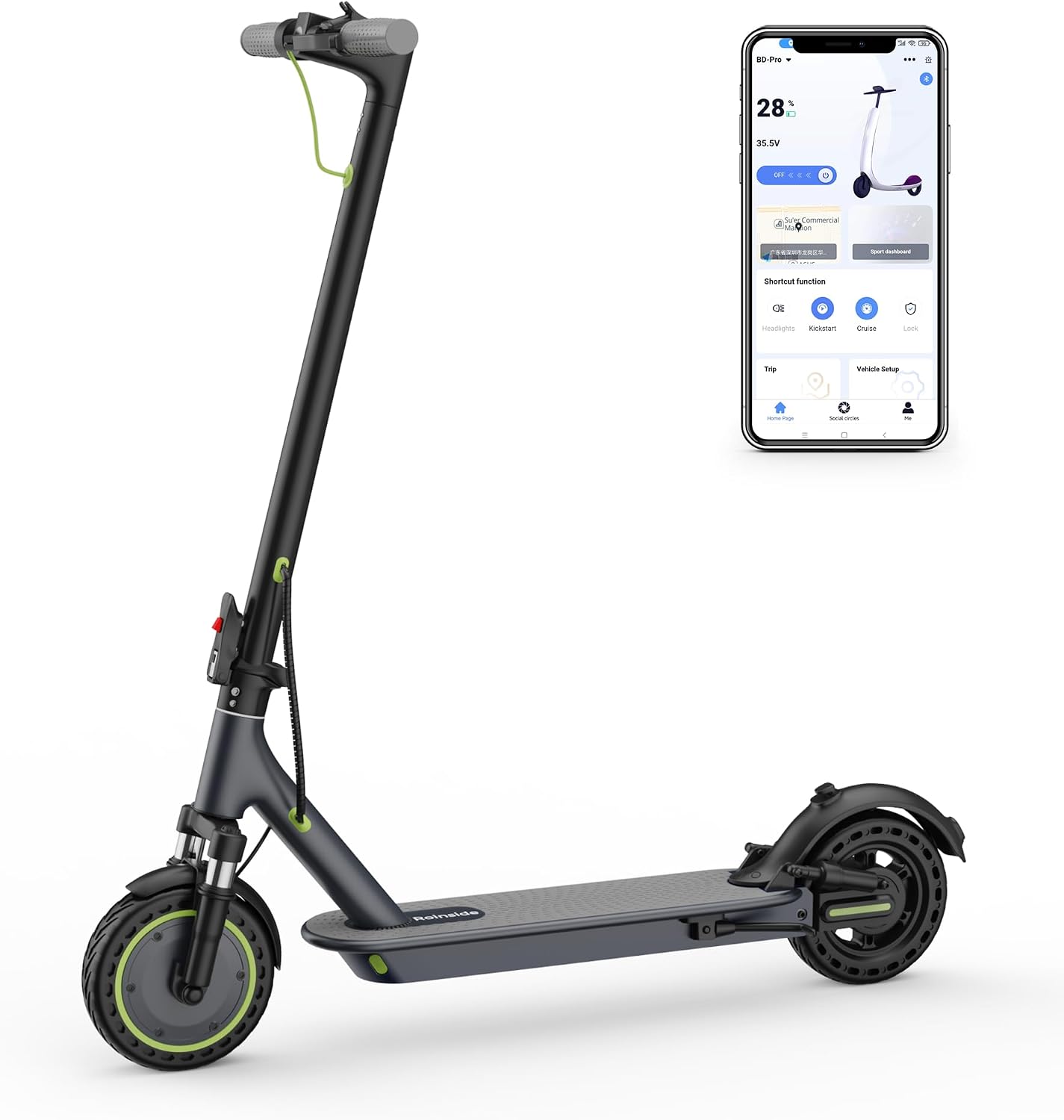
Best Budget: 350W/500W Solid Tire Commuting Scooter
Here is the honest case for a cheap scooter: most people do not know yet what they need. They think they want 40 mph, and what they actually want is to get to the train station two miles away without sweating through a shirt.
This one runs a 350W motor with a 500W peak on 8.5 or 10 inch solid tires, with a claimed 19 to 22 mph top speed and a claimed 16 to 23 miles of range depending on configuration. Read that range the way I read all of them: cut it substantially for a heavier rider in Texas heat with the battery below half. Voltage sag is real. A battery at 50 percent does not ride like 50 percent, it rides like 20 percent, and the last two miles home are always the slowest.
The solid tires cut both ways. No tubes means no pinch flats, no patching a tube on a hot sidewalk, and no maintenance subscription, which is a genuine win for a short, low-speed errand machine. Solid rubber also transmits every crack straight into your wrists and grips wet pavement and painted crosswalk stripes less confidently than air does. Short, paved, mostly under 20 mph: fine. Bridge expansion joints in the rain: not fine. The double braking system is a real plus at this price, because two independent ways to slow down is the difference between a close call and a hospital visit.
Best for Speed: 3500W/7000W/8000W Dual Motor Hyper Scooter
I have to be careful here, because this is the class of scooter that gets people hurt. Depending on configuration it claims 3500W, 7000W, or 8000W across single or dual motors, a 45 to 58 mph top speed, and 50 to 75 miles of claimed range on 10.5 or 12 inch tubeless tires.
Those are motorcycle numbers on a scooter platform. Two things are true at once. First, tubeless tires at this size are the right call, and I would take tubeless over tubed on any machine that sees real mileage. Second, a 75 mile range claim is a low-speed, light-rider, ideal-conditions number. At 45 mph into a headwind, expect a fraction of it. Watt-hours divided by real consumption is the only range math that survives contact with an actual commute.
Who is this for? Someone with a long, fast, mostly open route, real experience, and full protective gear. Not a first scooter. Not something you ride at 18 mph on a sidewalk. I learned that lesson on a used Kaabo, and it cost me a controller and some dignity. If your route is a 4 mile urban hop with a stoplight every two blocks, you are paying for capability you will never use while carrying the weight of it up your stairs every night. Check your local rules on speed and motor output before you buy anything in this class.
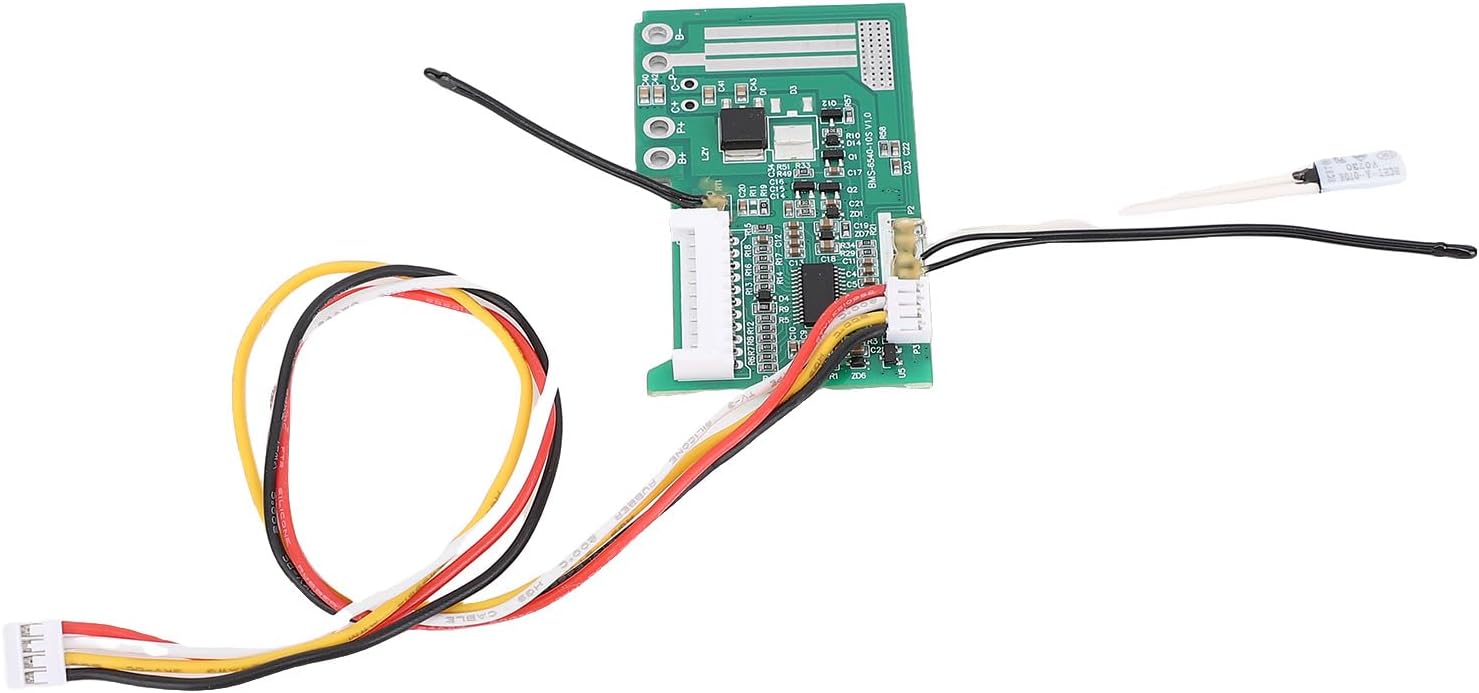
The Part That Keeps an Older Scooter Alive: Yoidesu Battery Protection Board
This is not a scooter. It is a battery protection board, built as a replacement for F30 and F40 electric scooters, and it is the most useful item in this guide for anyone whose scooter has stopped charging or has started cutting out under load.
The battery management system is where cheap scooters cut corners, because you cannot see it and it never appears on a spec sheet. It is the circuit that keeps individual cells balanced, prevents overcharge and over-discharge, and guards against the failure mode nobody wants to think about. When it dies, the scooter does not slow down gracefully. It stops, or it refuses to charge, or it shuts off mid-climb.
Replacing a board is a real repair, not a plug-and-play fix. It means opening the deck, disconnecting the pack, and soldering or re-terminating connectors. If you are not comfortable with a multimeter and an iron, pay a shop. If you are comfortable, this is the difference between a 15 minute repair and a replacement scooter. My repair log has more board swaps than tire patches, and I would rather swap a board than fight a tubed rear tire any day.
How I evaluate a commuter scooter
I do not trust a spec sheet. I trust a route. Every scooter question I get runs through the same five filters.
Real watt-hours first. Voltage multiplied by amp-hours gives watt-hours, and watt-hours divided by your actual consumption gives range. If a listing only offers amp-hours, that is a choice, and not one made in your favor.
The climb second. Can it hold speed up a real bridge grade at your actual weight without voltage sag turning the last third into a crawl? Hill performance is the first test, not the last.
Tires third. Tubed tires on a commuter are a maintenance subscription. You will learn to patch a tube or you will pay someone who can. Tubeless is the upgrade I recommend to everyone, and solid rubber is legitimate for short, slow, smooth routes only.
Controller fourth. The controller is the soul of the scooter. A cheap one strands you at 9 PM, and there is no number on the box that predicts it, which is why sustained heat behavior matters more than peak watts.
Carry weight fifth. Deck height, folded dimensions, and total pounds decide whether this thing goes upstairs with you or lives chained to a rack in the rain.
What the numbers actually mean
Peak watts are a party trick. A motor rated for a two second burst tells you almost nothing about a 20 minute climb, and it tells you nothing about how long the controller survives one.
IP ratings are the other trap. IP54 is rain-safe-ish. Anything less is a fair-weather toy, and "water resistant" without a number is a phrase, not a rating. If you ride in the rain like I do, buy the rating.
Range claims deserve the most suspicion of all. A manufacturer number assumes a light rider, a fresh battery, flat ground, no wind, and an eco mode you will never use. Your number is what you get at your weight, in August, with a headwind and a bridge to climb. Log it. I keep a spreadsheet of every mile and every tire pressure, and it has saved me from more bad purchases than any review.
Commuter scooter reference table
This is how the four products in this guide line up against the job each one does. Treat every range figure as a manufacturer claim, then cut it for your weight and your weather.
| Scooter | Best job | Tires | Claimed range | What to watch |
|---|---|---|---|---|
 Visit on Amazon → Visit on Amazon →M4 Electric Scooter for Adults |
Daily commuting with rough pavement | Not listed in the title | See product listing | Confirm watt-hours and tire construction |
 Visit on Amazon → Visit on Amazon →350W/500W solid tire commuting scooter |
Short paved errands under 20 mph | 8.5 or 10 inch solid | 16 to 23 miles claimed | Harsh ride and less wet grip |
 Visit on Amazon → Visit on Amazon →Dual motor hyper scooter |
Long, fast, open routes for experienced riders | 10.5 or 12 inch tubeless | 50 to 75 miles claimed | Motorcycle-class speed, check local law |
 Visit on Amazon → Visit on Amazon →Yoidesu Battery Protection Board |
Repairing an F30 or F40 that will not charge | Not applicable | Not applicable | Requires soldering and pack access |
Should you buy the M4 Electric Scooter for Adults?
For most riders with a real commute, yes. It is the pick that covers the widest range of routes without demanding a shop visit or a second mortgage, and the off-road lean is what makes bad pavement tolerable day after day. Confirm the real watt-hours, check the tires, and weigh it if stairs are involved.
Should you buy the 350W/500W solid tire commuting scooter?
Yes, if your route is short, paved, and slow. The solid tires eliminate the tube subscription that eats weekends, and the double braking system is a genuine safety feature at this price. Accept the harsh ride and the modest wet grip, and do not expect the claimed range at 185 lb in August.
Should you buy the 3500W/7000W/8000W dual motor hyper scooter?
Only if you have the experience, the gear, and the open road for it. The tubeless tires are the right choice for mileage, and the power is real. But the range claim assumes ideal conditions, and the speed puts it in motorcycle territory. If your commute is a short urban hop, this is capability you will pay for and never use.
Should you buy the Yoidesu battery protection board?
Yes, if you own an F30 or F40 that has stopped charging or cuts out under load, and you can open a deck and solder. The battery management system is where cheap scooters quietly cut corners, and a board swap is far cheaper than a new scooter. If you cannot do the work yourself, buy the part and hand it to a shop. Wear a helmet on every ride, including the test ride.