Related: Electric Scooter Tire Pressure: The Spec Nobody Checks
I have been car-free in Austin for four years, and my commute runs 14 miles round trip across the Congress Avenue bridge. In that time I have owned seven scooters, blown two controllers, patched four tubes, and replaced one deck. So when someone asks me what to buy, I do not start with top speed. I start with watt-hours, tire type, and whether the thing can climb a bridge at my actual riding weight.
That is the lens for this guide. Below are three scooters at three very different price points, plus one tire upgrade that solves the single most annoying problem in scooter commuting. For each one I will tell you who it fits and where it will let you down. If you are shopping for a commuter electric scooter, the honest answer is that the cheapest option is not automatically the worst and the most expensive is not automatically the best. It depends on your route, your weight, and how much you enjoy patching tubes in a parking garage.
One note before we start. I wear a helmet on every single ride, and I say so in every article I write, because the ER nurse who described what a scooter crash without one looks like did not soften a single detail.
Segway Ninebot S2 Electric Self-Balancing Scooter: The Engineering Pick
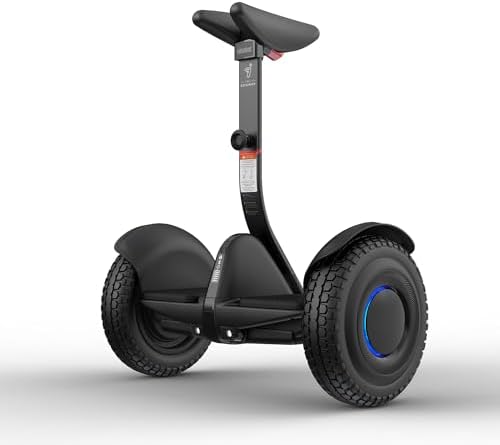
Segway earned my respect the hard way. A Ninebot Max survived a full year of my abuse without a single unplanned repair, which is more than I can say for most of the scooters that have passed through my garage. The S2 approaches micromobility from a different angle. It is a self-balancing machine on 10-inch tubeless tires, not a folding commuter you carry up three flights.
Those tubeless tires are the detail I care about most. Tubed tires on a commuter scooter are a maintenance subscription. Potholes pinch them, Texas heat cooks them, and you will either learn to patch a tube or pay someone who can. Ten-inch tubeless rubber handles curb cuts and rough asphalt with less drama, and the larger diameter rolls over the stuff that rattles a smaller wheel apart.
The trade is the format. A self-balancing transporter is wonderful for short hops, campus loops, warehouse floors, and the kind of errand where you step on and step off constantly. It is not what I would choose for 14 miles with a bridge in the middle, because standing still for that long on a machine that leans with you is a different kind of tired than standing on a flat deck.
Check current Amazon price. If your trip is short and you want the most polished engineering in this group, this is the one. Visit on Amazon.
WERHY Electric Scooter: Motor Headroom at a Budget Price
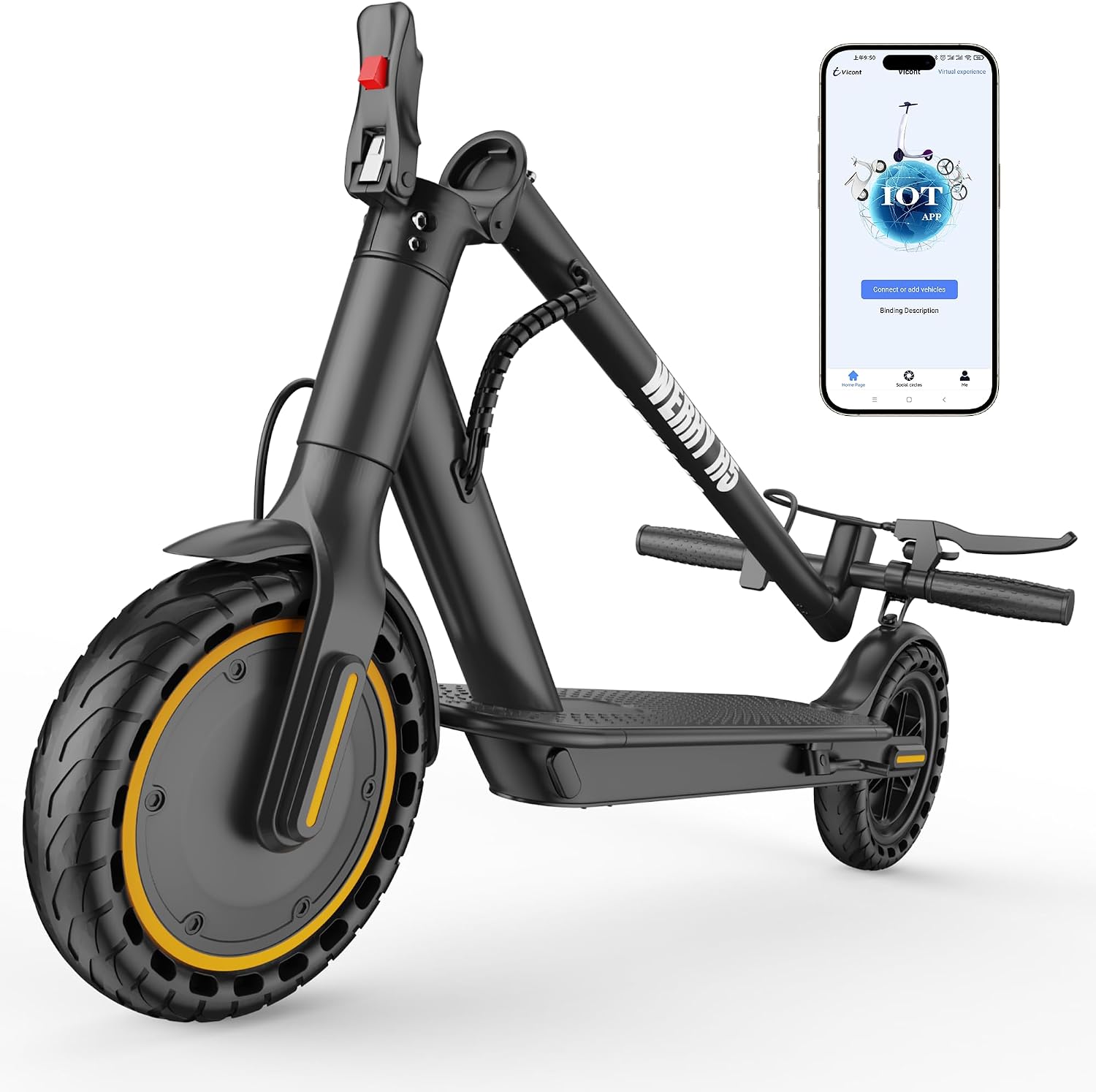
The WERHY listing offers a 350W or 500W motor depending on the version, with either an 8.5-inch or a 10-inch tire. Two specs on that line deserve unpacking, because both are places where manufacturers hide things.
First, motor watts. Peak watts printed on a box are a party trick. A scooter can hit peak for two seconds and then settle into something much lower. What I want to know is how the controller behaves under a sustained full-throttle run of 20 minutes, because that load is what cooks cheap MOSFETs and leaves you walking home at 9 PM with a burnt-toast smell in your nose. A 500W nominal motor on a light scooter can climb a bridge. A 350W motor carrying a heavier rider up the same bridge will sag, and voltage sag is the reason a battery showing 50 percent rides like 20 percent.
Second, tire size. Take the 10-inch version if you can. Bigger wheels are more stable, roll over expansion joints better, and are less likely to pinch a tube on the potholes that open up every spring on the side streets. The 8.5-inch option is fine, the way a compact car is fine.
Battery capacity is the number I would hunt for before ordering, and I would hunt for it in watt-hours. If the listing only gives you amp-hours, multiply by the pack voltage yourself. Amp-hours alone is marketing math that makes small packs look bigger than they are.
Check current Amazon price. Visit on Amazon.
Aovowheel Electric Scooter: The Folding Budget Commuter
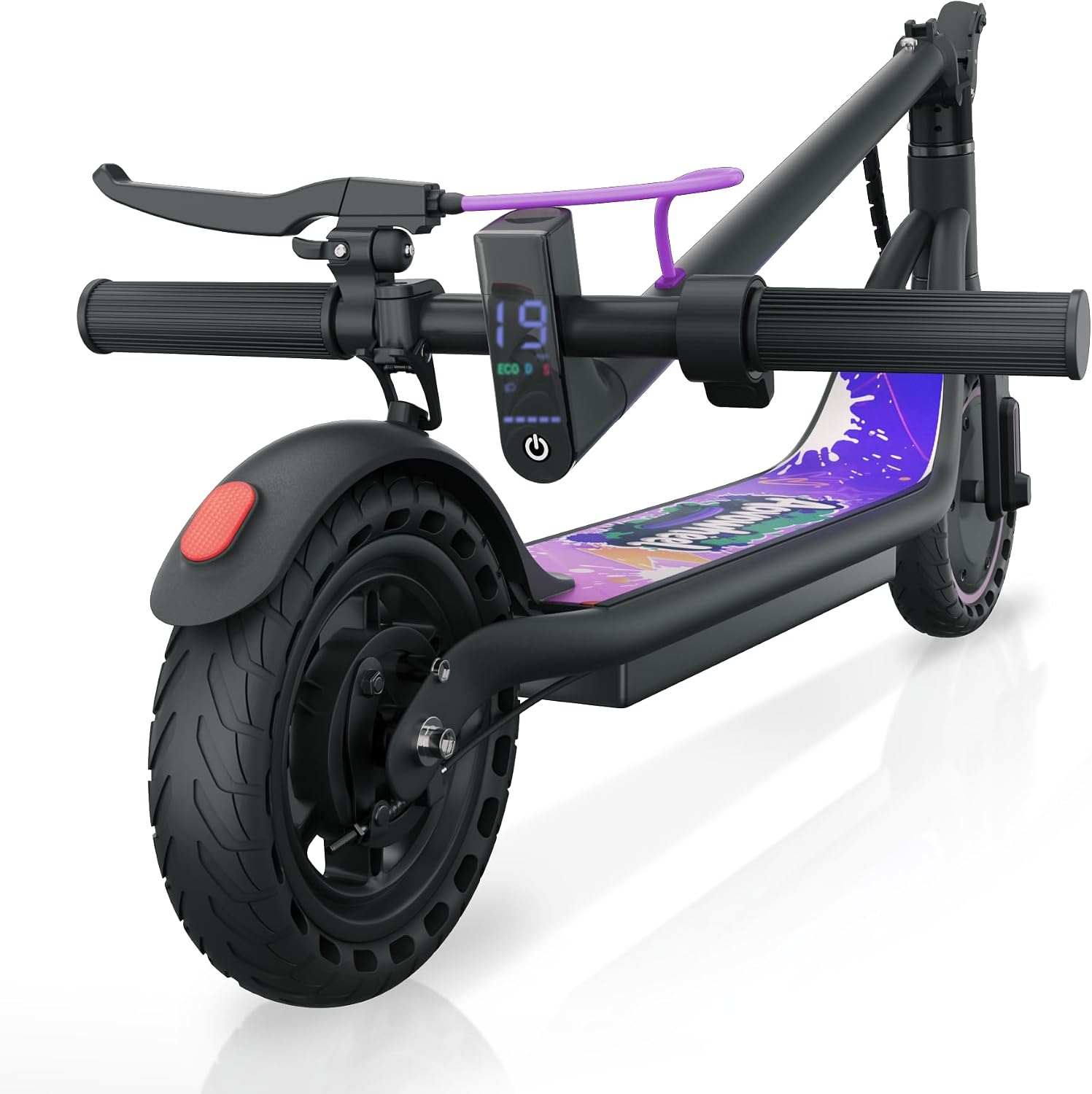
The Aovowheel is positioned as a folding commuter for adults, and that folding part matters more than people expect. A scooter you cannot carry up three flights of stairs is not a commuter scooter, it is a garage ornament. If your building has an elevator, ignore this paragraph. If it does not, folded dimensions and weight are specs, not conveniences.
At this end of the price range, expect compromises and know which ones you can live with. Deck flex shows up first for heavier riders. Brakes are usually mechanical, which is fine when adjusted and genuinely scary when ignored. And the tires on budget scooters are almost always tubed, so budget for a patch kit, a set of tire levers, and a spare tube from day one.
What budget scooters are good at is the first month of ownership. If you are not sure whether you will actually commute by scooter, spending less to find out is smart. Buy the inexpensive one, ride it to work for a month, then decide whether you want to spend real money on the machine you will keep. That path costs less than buying an expensive scooter you never ride.
Check current Amazon price. Visit on Amazon.
AR-PRO Solid Tires: The Upgrade That Ends Flat Tubes
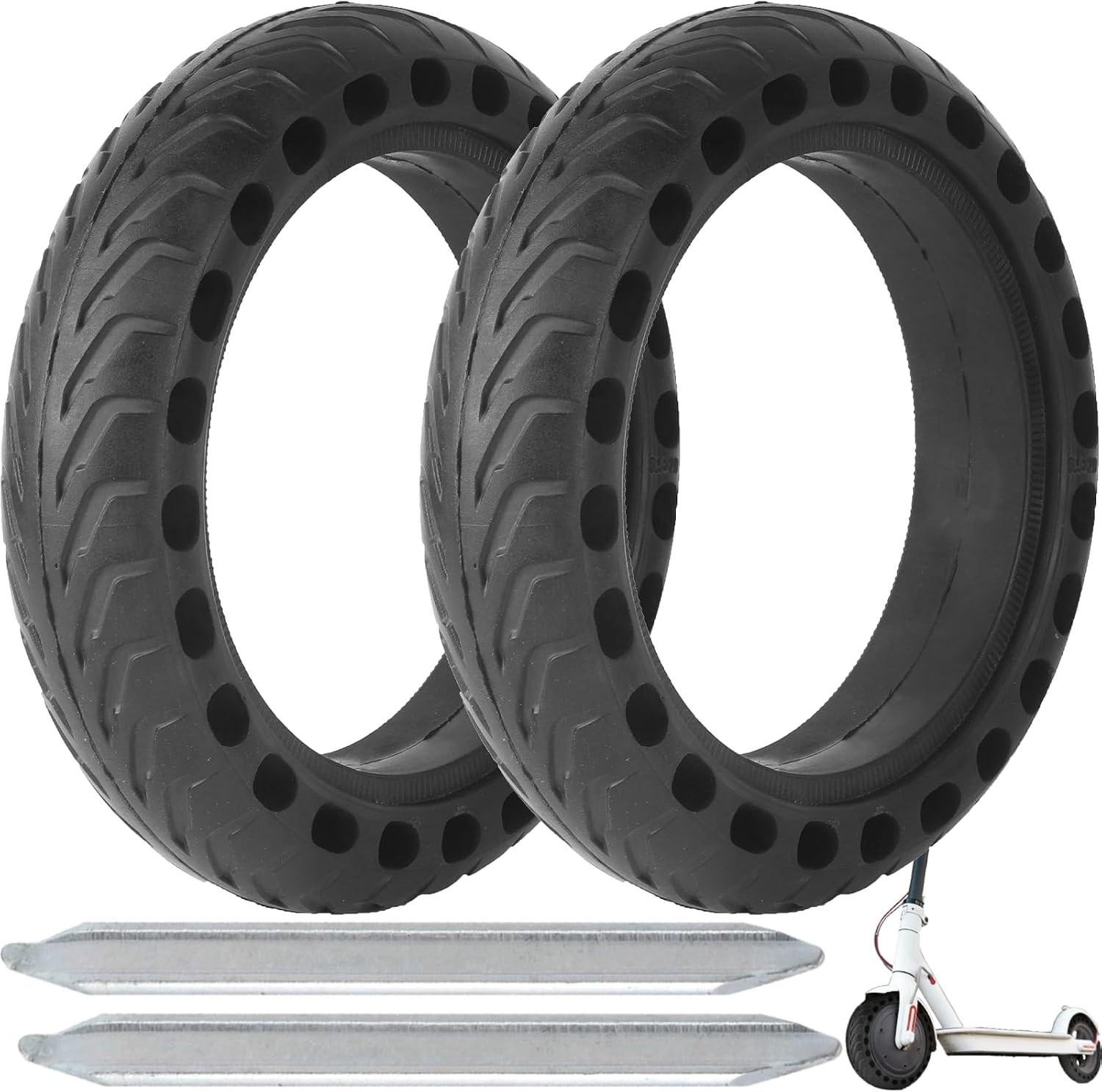
This is a two-pack of 8.5-inch solid replacement tires, sized 8 1/2 x 2, listed as compatible with several common models including the Gotrax GXL V2, the Gotrax XR, and the Xiaomi M365 and M365 Pro. Read that compatibility list carefully and measure your own wheel before ordering, because tire sizing is unforgiving and the wrong diameter is a very expensive mistake.
Solid tires answer a specific problem: you are tired of flats. They cannot be pinched, they cannot be punctured, and they do not care about the glass in the bike lane on Riverside. The cost is ride quality. Solid rubber transmits more of the road into the deck, so a scooter that felt plush on air tires will feel noticeably firmer. Wet grip is different too, and if you ride in rain the way I pretend is fine, you should lean into turns less aggressively.
For a commuter, I think the trade is usually worth it. A flat tube on the way to work costs you an hour and your dignity. A firmer ride costs you comfort and nothing else. If your route is smooth and your tires are healthy, keep the air tires and check your pressure weekly. If you have patched the same wheel twice, stop, and put solid rubber on it.
Check current Amazon price. Visit on Amazon.
How I judge a commuter scooter
I run the same loop every time, and the loop does not care what the box said. Fourteen miles, my real riding weight, tires pumped to the pressure I actually maintain, in August heat, with the bridge in the middle where the wind is always against you. If a scooter cannot get up that bridge without the power falling off a cliff, nothing else about it matters.
Then I look at the parts that fail. The controller is the soul of the scooter, and it is the first thing to die on a cheap one. Tires are the second, and the tire type tells you more about the next six months of ownership than any range claim. The battery management system is the third, and it is the one nobody advertises, because a good BMS costs money and a bad one costs you a fire.
Weight and fold time come last, but they come before you buy, not after.
What the specs actually tell you
Range numbers are fiction written in a lab with a light rider, no wind, and a fresh battery. Real range is what you get with a headwind and a climb in the middle. If a listing gives you range but not watt-hours, that is a deliberate choice, and it should tell you something about the rest of the spec sheet.
Water resistance is the other place to slow down. An IP rating is a real standard, and anything below the rain-safe range means you are looking at a fair-weather toy. I have ridden through weather I should not have, and I can tell you that water finds the controller eventually.
The tire spec is the one I trust most, because it is hard to fake. Tubeless is the upgrade I recommend to everyone who commutes, and it is why the Segway stands out here. Solid tires are the budget answer to the same problem. Air tubes are the thing you will end up maintaining whether you planned to or not.
The commuter scooter reference table
Same machines, side by side, with the tire reality called out, because that is the column that decides how your ownership actually goes.
| Product | Format | Tires | Best for | Price |
|---|---|---|---|---|
 Visit on Amazon → Segway Ninebot S2 |
Self-balancing | 10-inch tubeless | Short hops and polished engineering | $484.49 |
 Visit on Amazon → WERHY Electric Scooter |
Stand-up, folding | 8.5-inch or 10-inch | Riders who want motor headroom on a budget | $159.96 |
 Visit on Amazon → Aovowheel Electric Scooter |
Folding commuter | Air tires, budget spec | First scooter, first commute | $98.99 |
 Visit on Amazon → AR-PRO Solid Tires, 2-Pack |
Replacement tires | 8.5-inch solid | Ending repeat flats | $24.99 |
The pattern in that table is simple. The tires tell you how much maintenance you signed up for, and the format tells you how far you will actually want to ride.
Should you buy the Segway Ninebot S2?
If you want the best-engineered machine in this group and your trips are short, yes. Ten-inch tubeless tires, a brand with a real track record on durability, and a ride style that is genuinely fun for errands and campus runs.
Be honest about the format, though. If your commute is 14 miles with a bridge and a headwind, a self-balancing transporter is not the tool, no matter how good it is at what it does. Buy it for the short trip and enjoy it.
Should you buy the AR-PRO solid tires?
Yes, if you have already lost an hour of your life to a flat tube. A two-pack of 8.5-inch solid tires is one of the cheapest ways to remove an entire category of failure from your commute, and the compatibility list covers several of the most common scooters on the road.
Just confirm your wheel size and your model before ordering, accept the firmer ride, and adjust your cornering in the wet. Then stop carrying a patch kit you never wanted to learn how to use.