Most commuter electric scooters are sold on numbers that only survive a lab bench: a light rider, flat pavement, a fresh battery, and no wind. Real commuting looks nothing like that. You are carrying a bag, the pavement is patched, the bridge has a grade, and the last three miles happen on a battery that is already sagging under load. This guide compares six products that are genuinely aimed at that ride, from budget folding models with solid tires to an 800W fat-tire machine built for rough pavement, plus a waterproof cover for anyone who parks outdoors. The goal is simple: help you match a scooter to your actual route instead of to a marketing number.
Related: How to Read a Scooter Battery Spec Sheet
Quick answer
The Segway Ninebot E2 Plus II/E2 Pro/E3 Pro Electric Scooter is the strongest fit for daily commuting because it lists a dual braking system, a foldable frame, and both UL 2272 and UL 2271 certification, which is the electrical and battery safety standard worth insisting on. Choose the ASKGO Electric Scooter instead when your route includes rough or unpaved surfaces and you want an 800W motor with 11-inch fat tires.
Commuter electric scooters worth comparing
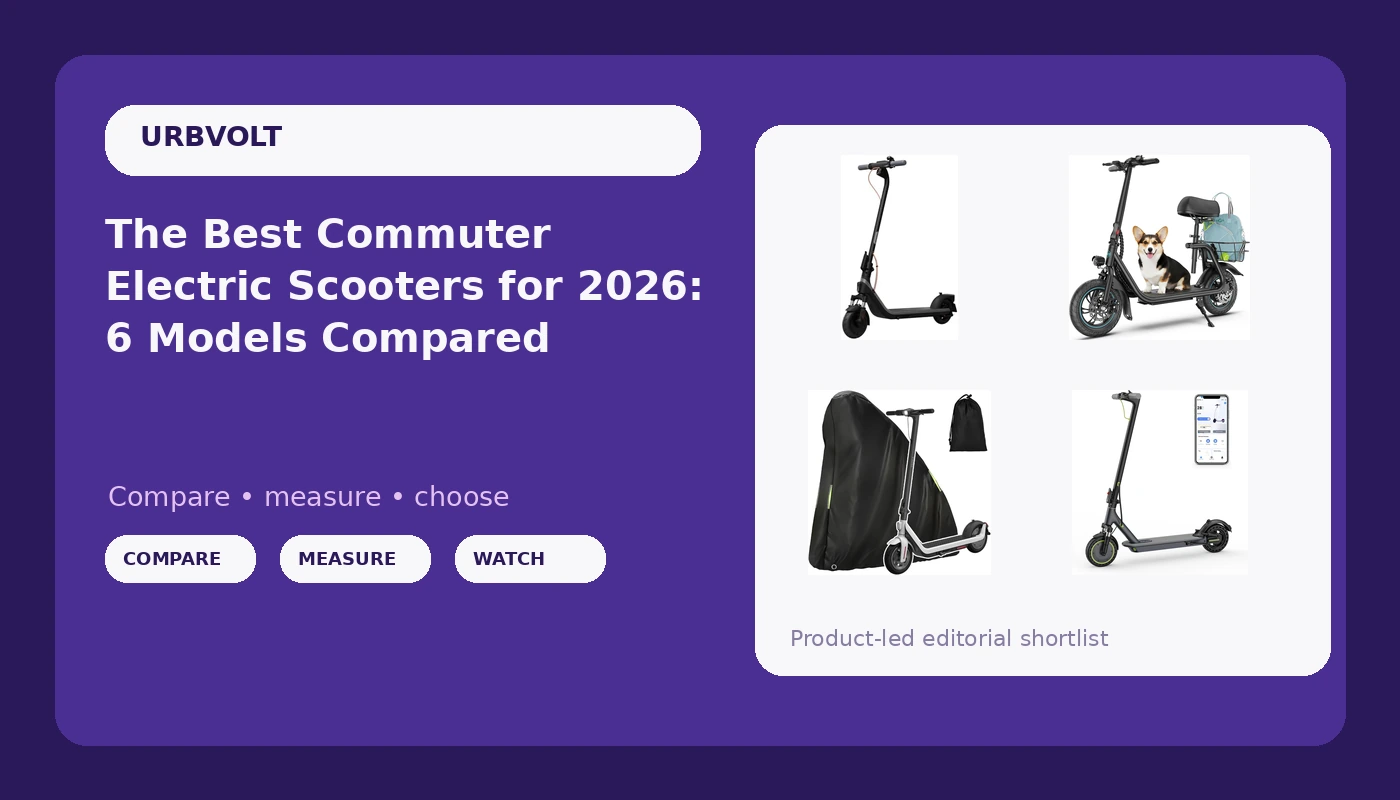
These six products cover what a commuter actually shops for: three complete scooters aimed at different routes, two budget solid-tire models, and one accessory that protects whatever you buy. Each card links to the exact product shown.
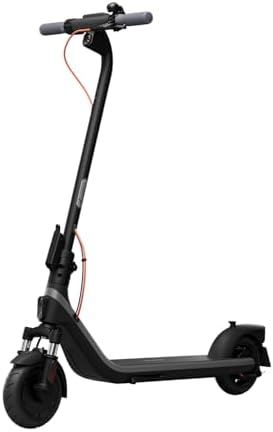
Segway Ninebot E2 Plus II/E2 Pro/E3 Pro Electric Scooter, Dual Braking System,Long Range,Foldable Adult Scooter, UL 2272 & 2271 Certified.
Check current Amazon price
A foldable adult scooter line with a dual braking system and a long-range battery, offered in E2 Plus II, E2 Pro, and E3 Pro versions. It carries UL 2272 and 2271 certification, which covers the electrical system and the battery pack.
Visit on Amazon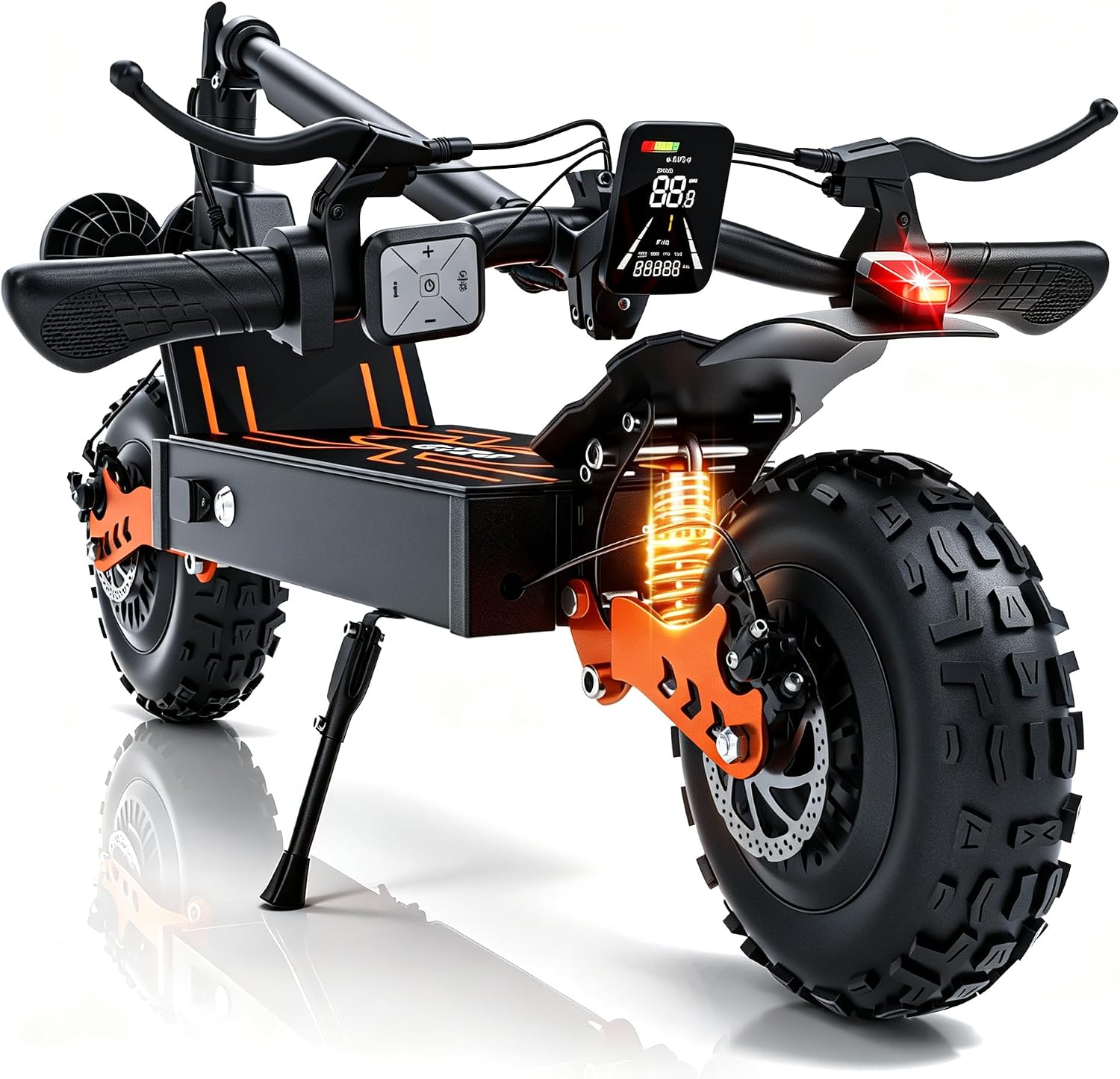
ASKGO Electric Scooter for Adults, 800W Motor, 25 Miles Long Range, 28MPH escooter with 48V 12Ah Battery, 11" Fat Tires, Foldable, Off Road Scooter for Commuting
Check current Amazon price
An 800W motor paired with a 48V 12Ah battery, a claimed 25-mile range, and a claimed 28 MPH top speed on 11-inch fat tires. It folds for storage and is positioned for off-road and rough-pavement commuting.
Visit on Amazon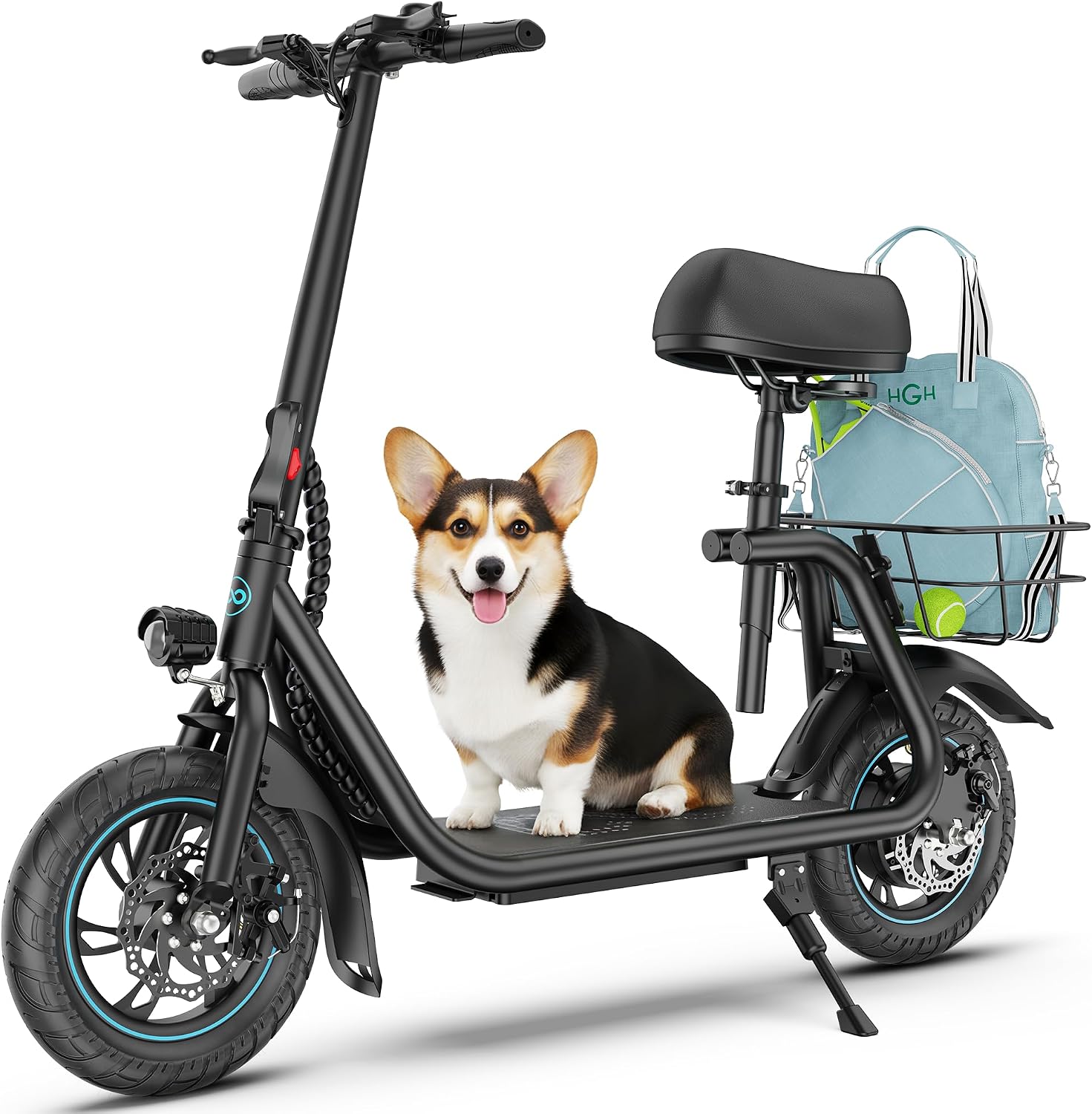
Gyroor Electric Scooter with Seat for Adults C1 450W Motor 20 Miles
A seated scooter with a 450W motor and a claimed 20-mile range. The seat changes the ride completely, which makes this a reasonable option for riders who would rather sit than stand for the whole trip.
Visit on Amazon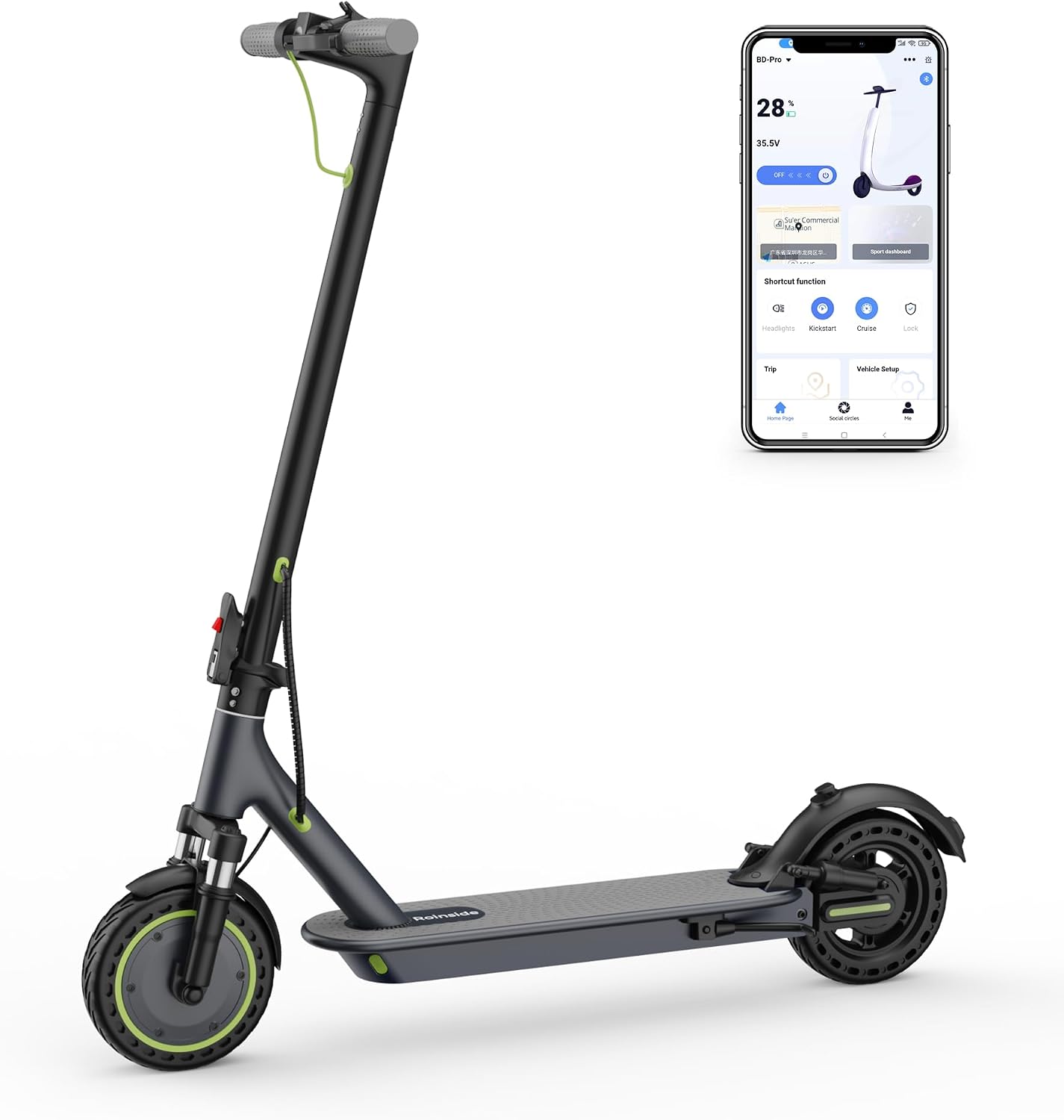
Electric Scooter - 350W/500W Motor, 8.5"/10''Solid Tires, Up to 19/22MPH& 16/21/23Miles Long-Range Portable Commuting Scooter for Adults with Double Braking System
Motor options of 350W or 500W with 8.5-inch or 10-inch solid tires, claimed speeds of 19 or 22 MPH, and claimed ranges of 16, 21, or 23 miles depending on configuration. It uses a double braking system and folds for commuting.
Visit on Amazon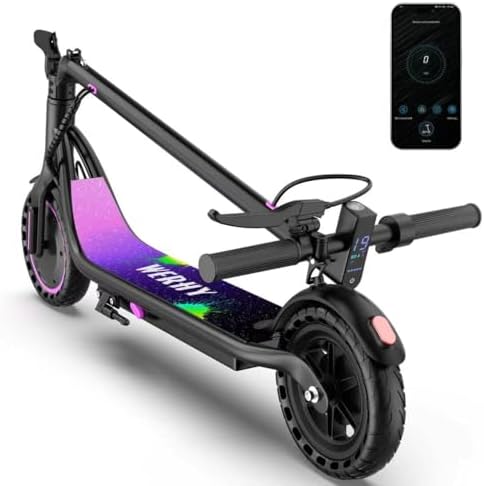
WERHY Adult Electric Scooter, 8.5''/10'' Solid Tire, 350W/500W
Check current Amazon price
An adult scooter with 8.5-inch or 10-inch solid tires and a 350W or 500W motor. Solid tires mean there is no inner tube to patch, which matters if you would rather not learn tire repair on the side of the road.
Visit on Amazon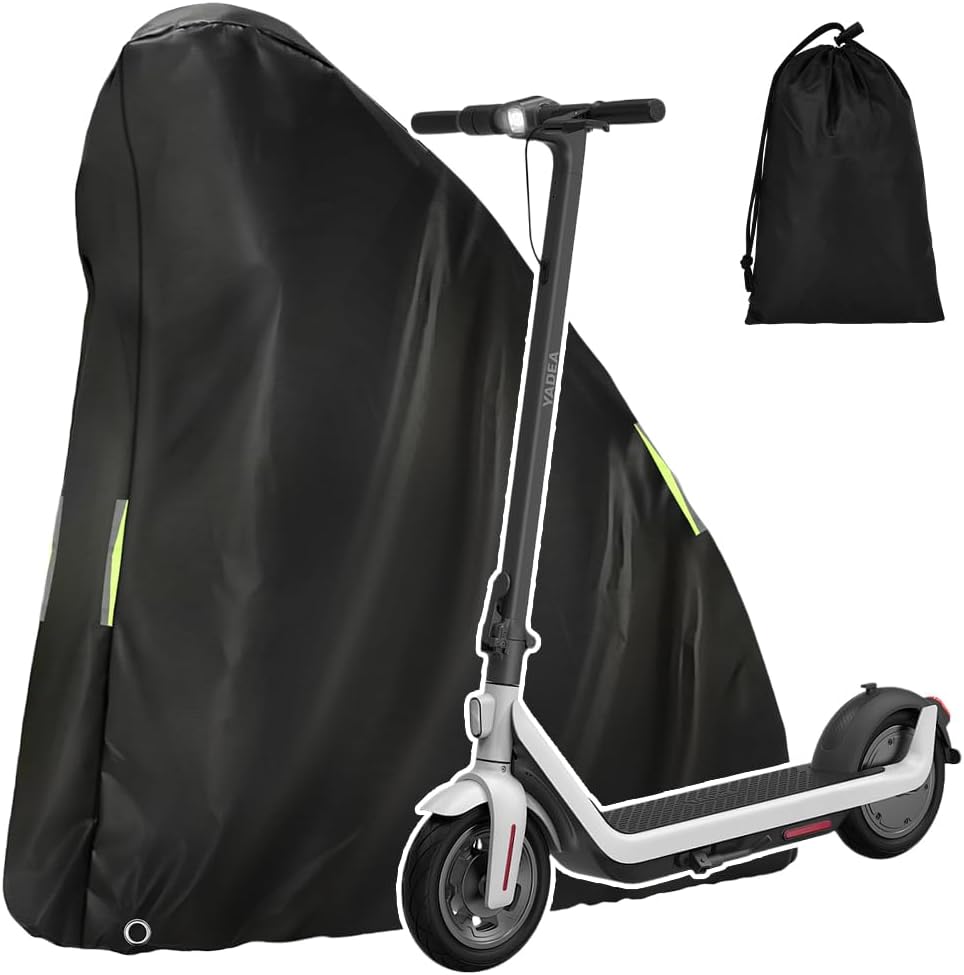
flintronic Electric Scooter Cover, Waterproof Universal E-Scooter Storage Cover with Reflective Strip & Storage Bag
A waterproof universal storage cover with a reflective strip and a storage bag. It is an accessory rather than a scooter, and it is the simplest way to keep a scooter that parks outdoors dry and clean.
Visit on AmazonPrices and availability may change. Check the retailer for current details.
How these products were compared
This guide compares motor power and claimed top speed, battery capacity in volts and amp-hours, tire type and diameter, braking systems, and foldability and safety certification where the manufacturer lists it. For the cover, the comparison points are material, coverage, and the reflective strip. Product names, images, and retailer links are matched by ASIN so that every card points to the product shown.
Two things are deliberately left out. First, claimed range is reported as a claim rather than a promise. Manufacturers publish range figures measured with a light rider on flat ground, and your number will be lower once you add weight, hills, and wind. Second, no current prices appear in this article, because they move. Use the retailer link on any card to confirm price and availability before you commit.
Where the published specs do not support a meaningful distinction between two products, this guide says so rather than inventing one.
How to choose the right electric scooter
Start with the route, not the top speed. Measure the round-trip distance you will actually ride, then add a margin for cold mornings and detours. A scooter that claims 20 miles is usually comfortable for a 12 to 14 mile round trip with some climbing, and a scooter that claims 16 miles is a short-hop machine. If two models look identical on paper, compare watt-hours rather than amp-hours: volts multiplied by amp-hours is the real capacity, and a 48V 12Ah pack holds meaningfully more energy than a 36V 10Ah pack even when both listings say long range.
Then look at the hill. Motor wattage tells you how much the scooter can pull, and the continuous rating matters more than a peak number printed on a box. An 800W motor like the one on the ASKGO model has more headroom on a grade than a 350W motor, and that headroom is the difference between holding your speed and watching the battery gauge drop as you climb.
Tires come next. Solid tires cannot go flat, which is why the budget models here use them, but they ride firmer and transfer more road noise through the deck. Pneumatic tires ride better and handle rough pavement with less chatter, at the cost of tube maintenance. Fat tires, like the 11-inch set on the ASKGO, add stability and float over gravel and broken asphalt, and they add weight and rolling resistance along with it.
Braking is not optional. Every scooter in this guide lists a braking system, and the Segway line specifies a dual setup. Two independent brakes matter more than almost any other feature on a scooter that shares the road with cars.
Finally, think about where the scooter sleeps. A folding frame and a manageable weight decide whether you carry it up three flights of stairs or leave it outside. If it lives outdoors, a cover like the flintronic model keeps rain and dust off the deck and controls, which is cheaper than replacing a controller.
Segway Ninebot E2 Plus II/E2 Pro/E3 Pro
This is the top pick because the published specs line up with what commuting demands. It folds, it uses a dual braking system, it lists a long-range battery, and it carries both UL 2272 and UL 2271 certification. That last point deserves attention: UL 2272 covers the electrical system of a personal e-mobility device and UL 2271 covers the battery pack, and those listings are the closest thing this category has to an independent safety check.
The trade-off is that this listing covers several models. E2 Plus II, E2 Pro, and E3 Pro are not the same scooter, and the differences between them show up in motor output, battery size, and features. Confirm which version you are buying before you check out, because the name on the page is a family rather than a single configuration. There is also no seat and no fat-tire option here, so if you want either of those, look at the alternatives below. And treat the range figure as a starting point for your own math, not as a commute plan.
Alternatives to consider
The ASKGO Electric Scooter is better suited to riders who deal with broken pavement, gravel, or a steep climb, thanks to its 800W motor, 48V 12Ah battery, and 11-inch fat tires, with a claimed 25-mile range and 28 MPH top speed. It is heavier and bulkier than a commuter folder, and that bulk is the price of the extra capability.
The Gyroor Electric Scooter with Seat for Adults C1 is a stronger fit when you would rather sit than stand. Its 450W motor and claimed 20-mile range put it in the same commuting conversation, and the seat makes longer, lower-effort rides possible.
The budget pair, the 350W/500W solid-tire commuting scooter and the WERHY Adult Electric Scooter, cover short trips and first scooters. Both use solid tires in 8.5-inch or 10-inch sizes, so there is no tube to patch, and both list double or dual braking setups depending on the version. They are lighter and simpler than the fat-tire machine, which makes them easier to carry up stairs and easier to store in an apartment.
The flintronic Electric Scooter Cover covers a different need entirely: keeping whichever scooter you choose dry and clean when it parks outside. The reflective strip helps with visibility at night, and the included storage bag keeps the cover tidy when it is not in use.
Day-to-day use and maintenance
Tire pressure is the single most ignored number on a scooter and the one that costs you the most. Low pressure eats range, slows you down, and on pneumatic tires it invites pinch flats. Check it weekly, and check it more often in a hot climate, because temperature swings move pressure more than most riders expect.
Charge indoors in a dry spot when you can, and let the battery rest for a while before charging if you just came back from a hot ride. Lithium packs last longer when they are not stored at full charge or left sitting empty for weeks. If you park a scooter for the season, leave it around half charge and top it up occasionally.
Keep the deck and controls clean with a damp cloth rather than a hose. Most scooters in this price range do not publish a high water-resistance rating, so a garden hose is a risk you do not need to take. If the scooter lives outside, a waterproof cover is far cheaper than a replacement controller.
Check the brakes on a schedule, the same way you check tire pressure. Brake pads and cables wear, and the first sign is usually a longer stopping distance rather than a sudden failure.
Wear a helmet on every ride. That recommendation applies to every product on this page, from the budget folder to the 800W machine. Scooter crashes happen at ordinary commuter speeds, and a helmet is the cheapest insurance in micromobility.
Buying checklist
- Measure the round-trip distance you actually ride, then add a margin for hills, wind, and cold weather.
- Compare battery capacity in watt-hours (volts times amp-hours) rather than amp-hours alone.
- Choose tire type deliberately: solid for zero flats, pneumatic for comfort, fat for rough surfaces.
- Confirm that the exact model includes the motor, battery, and braking setup you want, since several listings here cover multiple versions.
- Read the cleaning and maintenance instructions before the first ride.
- Verify the current retailer price, availability, and return terms before buying.
Final recommendation
Choose the Segway Ninebot E2 Plus II/E2 Pro/E3 Pro Electric Scooter when your commute is mostly paved, you want a folding scooter with dual brakes, and UL certification matters to you. Choose the ASKGO Electric Scooter when the route is rough, steep, or partly unpaved and you want an 800W motor with fat tires to match. Choose the Gyroor Electric Scooter with Seat for Adults C1 when you would rather sit, and pick one of the solid-tire budget models when the trip is short and you would rather never patch a tube. If the scooter parks outdoors, add the waterproof cover and treat it as part of the purchase rather than an afterthought.