Most people asking about electric scooter storage in a small apartment are asking the wrong question. They want to know which scooter folds the smallest, so they buy one, carry it up two flights, and then discover the actual problems: no outlet where they want to park it, a battery that hates being charged while it is hot, and a charger cable permanently tangled on the kitchen counter.
I have been car-free in Austin for four years. My commute is 14 miles round trip across the Congress Avenue bridge, and in that time I have owned seven scooters, blown two controllers, patched four tubes, replaced a deck, and kept a repair log in a battered notebook plus a spreadsheet of every mile ridden and every tire pressure reading. What that taught me is simple: the scooter is only half the setup. The other half is where it sleeps and how it eats.
Electric scooter storage is really a three-part problem. The fold has to fit a real space in your home, the charging has to happen somewhere that will not cook the pack, and the gear you charge from has to survive the weather you actually ride in. Get those three right and the scooter stops being an awkward guest and starts being a vehicle.
Why you should trust me
I do not get paid to like anything, and I do not repeat a range claim I cannot back up with watt-hours. Every scooter I have kept past the first month earned it on the same 14-mile loop, at my actual riding weight, in whatever the weather was doing that day. Two did not survive that test. A GOTRAX taught me what a controller smells like when it dies, which is burnt toast. A Hiboy taught me that tubed tires and Texas heat are a bad marriage. A used Ninebot Max taught me that good engineering mostly means nothing breaks.
I keep track of the numbers manufacturers would rather you not compare: watt-hours, folded dimensions, weight, and tire pressure. I ride in 105-degree heat and in rain I pretend is fine. I wear a helmet on every single ride, and I will say so in every article, because an ER nurse once explained to me what a scooter crash without one looks like and I have not forgotten it.
That is the lens here. Not which scooter is fastest, but which setup survives a Tuesday in August and still fits behind your front door.
What actually matters when the scooter lives indoors
Four specs decide whether an apartment setup works, and none of them are top speed.
Folded footprint and weight. Measure the closet, the hallway nook, or the space under the desk before you buy anything. Width and depth matter more than the marketing photo suggests, because a folded scooter with the stem down still has handlebars sticking out sideways. Then do the carry test honestly. If you cannot lift it up three flights with one hand while the other hand holds a bag of groceries, it is a garage ornament with extra steps.
Battery capacity in watt-hours, not amp-hours. Amp-hours are marketing math because they only mean something once you know the voltage. Multiply the two and you get watt-hours, the actual size of the tank. A 48-volt, 12 amp-hour pack is roughly 576 watt-hours. That is the number to compare across scooters, and it is the number that tells you whether the advertised range is plausible at your weight.
Tire type. Fat tires ride soft, handle gravel and curb transitions, and add weight and rolling resistance you feel every time you lift the scooter. Tubeless is the upgrade I recommend to anyone who commutes; tubed tires are a maintenance subscription, and you will learn to patch a tube or pay someone who can.
Charging safety. Charge at room temperature, on a hard surface, not on carpet, and not in a hallway people walk through at 2 AM. Never charge a pack that is hot from a ride. In Austin that means a 20 to 30 minute cooldown in summer, minimum, and no charging in a garage that has been baking all afternoon.
The scooter
The machine below is the one I would point an apartment commuter toward first, because the spec sheet answers the questions that matter for this kind of setup: a foldable frame, a pack big enough to be worth charging, and tires that handle the bad pavement between your door and the bike lane.
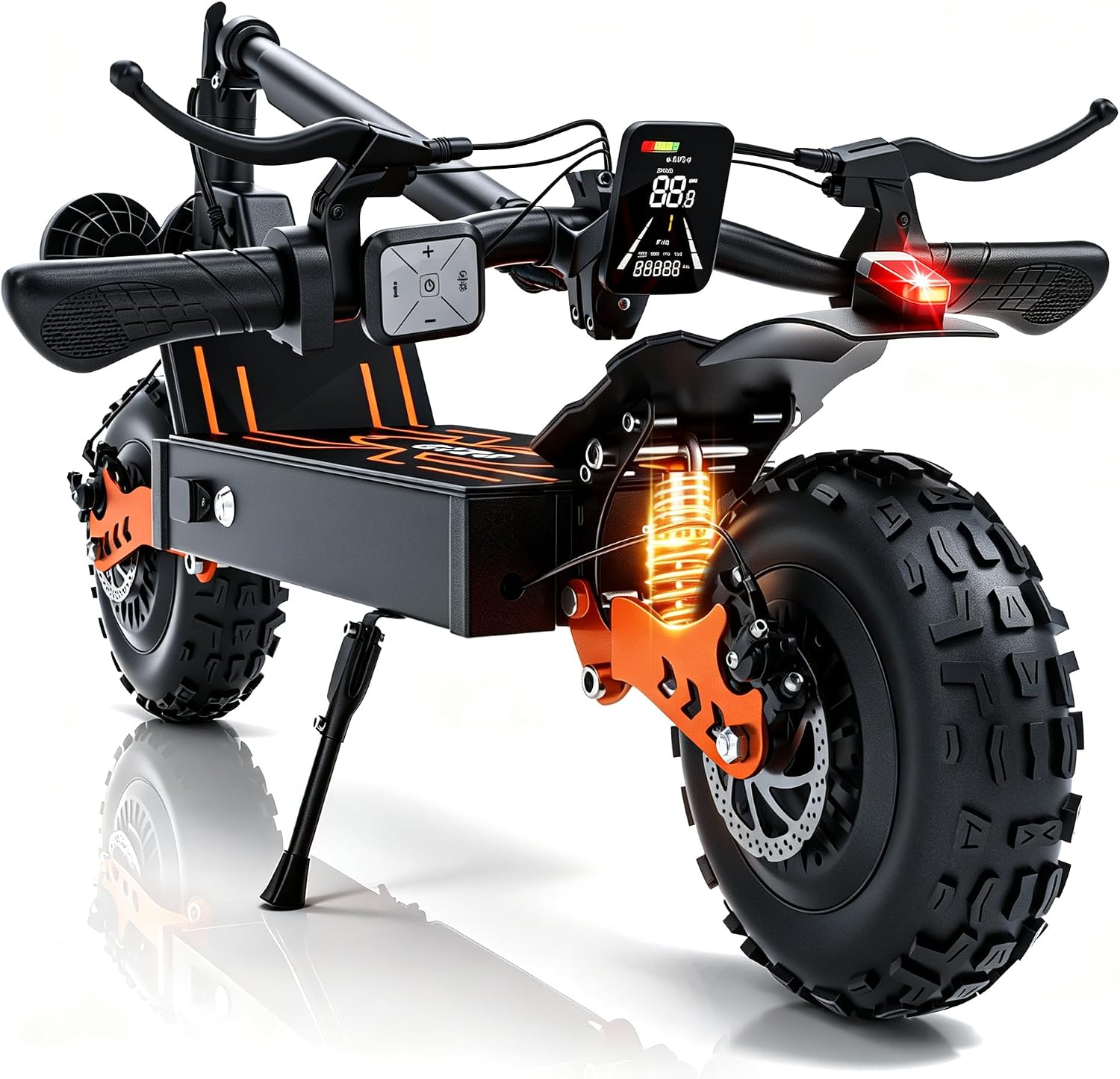
Our pick: ASKGO Electric Scooter for Adults, 800W Motor, 25 Miles Long Range, 28MPH escooter with 48V 12Ah Battery, 11" Fat Tires, Foldable, Off Road Scooter for Commuting
 Visit on Amazon →
Read the spec sheet the way a mechanic reads a wiring diagram. The 800W motor is the peak figure, which is a party trick on a box, but the 48V 12Ah battery is real capacity, and at roughly 576 watt-hours it is a legitimate commuter tank rather than a toy pack. The 28 MPH top speed is more than you need in a city, and the 25-mile range figure is a ceiling, not a promise. Expect less at 185 pounds, in August, with a bridge to climb and a headwind coming off the river.
The 11-inch fat tires are the part that matters for apartment life and city streets. They absorb potholes and curb cuts better than narrow tires, and the off-road tread is forgiving on gravel and broken asphalt. The trade is weight and a little rolling resistance on smooth pavement, which is a fair deal if your route is anything like mine.
Before you commit, confirm two numbers the listing will not decide for you: the folded dimensions and the weight. Those decide whether the closet plan works and whether the stairs are realistic. Also check your city's rules before you ride 28 MPH anywhere near a sidewalk, because that speed belongs in a lane, not next to pedestrians.
Flaws but not dealbreakers: A folding scooter at this size is still a lift, not a purse. If you live on a fourth-floor walkup with no elevator, test the carry before you fall in love with the spec sheet. Check current Amazon price.
The gear that keeps the charging setup alive
If you charge from a portable power station, either as outage backup, as a balcony workaround, or because your building's garage outlets are shared and unreliable, that unit lives in dust. Garage grit, pollen, and road film settle into fan paths and unused ports, and a power station that runs hot because its vents are clogged is a power station that ages fast.
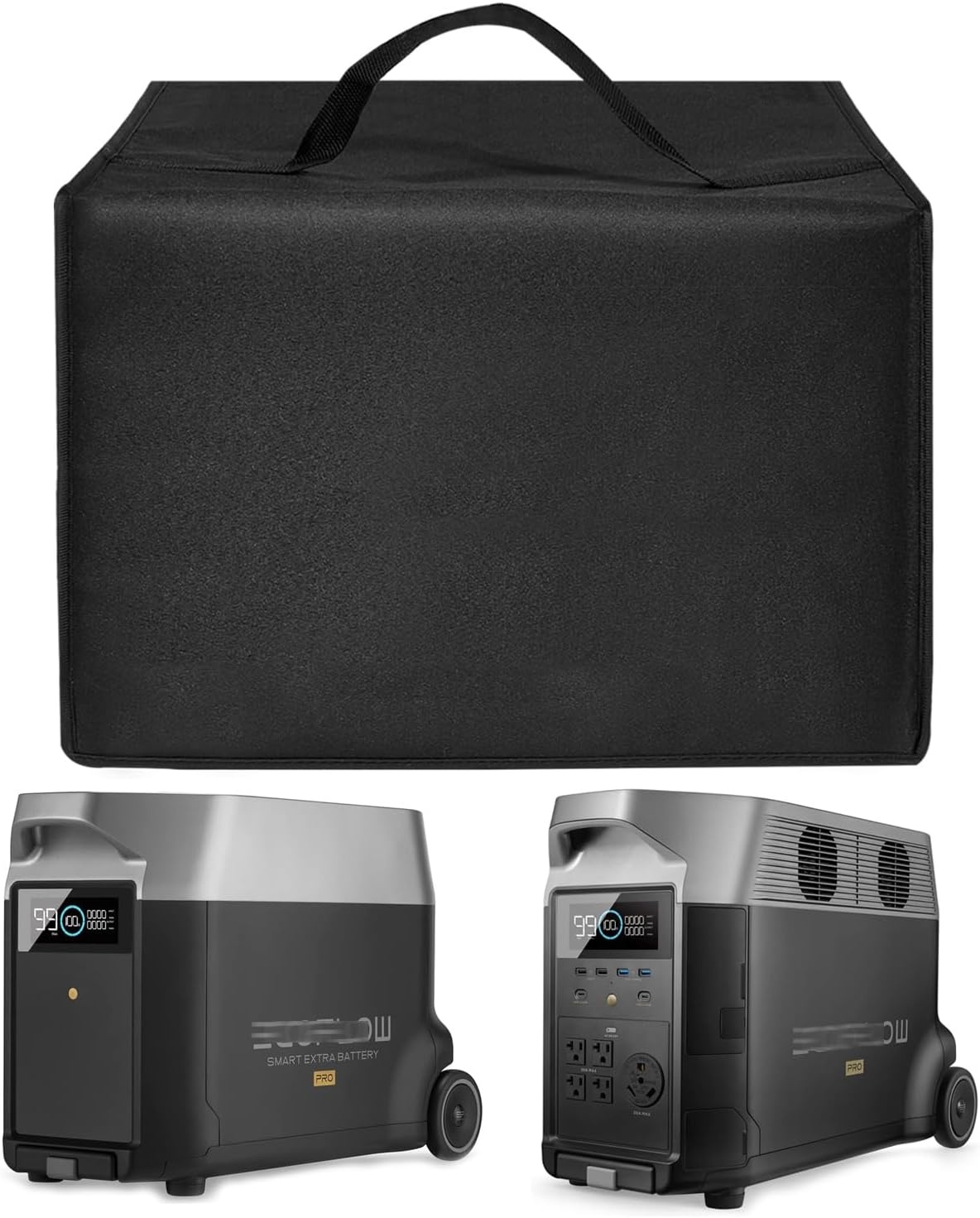
The charging-gear pick: Power Station Dust Cover for EF ECOFLOW DELTA Pro EFD500 Solar Generator
 Visit on Amazon →
This is a fitted cover, cut for the EF ECOFLOW DELTA Pro EFD500 rather than a generic tarp that drapes like a trash bag. That specificity is the whole point. A cover that fits the chassis and clears the handles keeps dust out of the intake path and off the ports, and it means the unit can sit in a garage or on a covered balcony without looking like abandoned equipment.
It is cheap insurance in the literal sense: the cover costs a fraction of what the gear underneath it costs, and it protects the thing that keeps your scooter charged when the outlet situation is not ideal. If you run a power station as your apartment charging hub, this belongs in the plan alongside your cable pouch.
Flaws but not dealbreakers: It is made for one specific unit. If you own a different power station, measure your chassis and check the dimensions before ordering, because a loose cover flaps and a tight cover will not close. Check current Amazon price.
The storage and charging workflow
Here is the sequence I would follow, in order, from the day the scooter arrives.
Step one: Choose the parking spot before you choose the scooter. Walk your apartment with a tape measure. Closet width, hallway depth, the gap between the couch and the wall. Write the numbers down and shop against them, because "it looks small enough" is how people end up storing a scooter in their shower.
Step two: Do the carry test honestly. Load a backpack with 25 pounds of groceries and walk your actual stairs. If the scooter makes that impossible, you bought the wrong machine for your building, no matter how good the spec sheet looks.
Step three: Build a charging zone. Hard floor, an outlet you can reach without running an extension cord across a doorway, and nothing flammable within a couple of feet. A surge protector is fine. A daisy chain of three power strips is not, and neither is charging next to a pile of laundry.
Step four: Respect battery temperature. Ride home in August and that pack is warm. Let it sit 20 to 30 minutes before it goes on the charger. For daily commuting, charge to about 80 percent and save the full top-off for the night before a long ride. Heat plus a full charge is the combination that shortens battery life fastest.
Step five: Check tire pressure weekly. I preach this and I average about once a month, which is exactly why I have patched four tubes. Ten PSI low costs you range, speed, and tube life at the same time. Buy a gauge with a real dial, not the one on a gas station air hose.
Step six: Manage the cables. One pouch, one charger, one coiled cord. If you own more than one scooter, label the chargers with tape, because plugging a 42V charger into a 54V pack is a mistake you only make once.
Step seven: Protect the power gear. If your charging hub is a portable power station, cover it when it is not in use. Dust in a fan path is a slow failure, and slow failures are the ones that strand you at 9 PM.
Step eight: Have a rain protocol. If you ride in the rain, dry the deck and the charge port before you plug anything in. Water plus a live charge port turns a commute into a repair bill.
What this setup costs
The scooter is the real spend. Everything else in this guide is rounding error by comparison, which is the argument for buying the boring accessories instead of skipping them. Check current Amazon price on the scooter, and check current Amazon price on the cover, because both move with sales and neither is worth trusting a number from an article on.
The math I care about is not the sticker. It is cost per day across the years you own the thing. A commuter scooter that replaces a car payment, insurance, parking, and fuel pays for itself in a few months of real commuting, and a cover that keeps your charging gear alive for years costs less than one rideshare home from a dead battery.
What this setup will not do
It will not make a heavy scooter easy to carry, and no amount of clever folding changes physics. It will not make an advertised range figure real at your weight in August. It will not fix tubed tires, and it will not turn a fair-weather machine into a rain commuter.
A dust cover will not waterproof a power station, either. It keeps dust and grit out of a unit that lives in a garage or on a balcony, and that is the job. If your gear sits in actual rain, you have a different problem and a cover is not the answer.
And none of this replaces a helmet. Storage, charging, and tire pressure keep the scooter alive. The helmet keeps you alive, and it goes on every ride, even the two-block one.
Set the parking spot, build the charging zone, check the pressure, cover the gear. That is the whole job, and once it is a habit, a scooter stops being a thing you own and becomes the way you get to work.