How To Store An Electric Scooter In Winter
How to store an electric scooter in winter, explained by a reviewer who actually lives with the gear. No fluff, no marketing language, just what works and what doesn't.
I've been storing scooters through Texas winters for four years, which means I've also been storing them through Texas summers, which is the real test. But winter is where I see the most damage: batteries left at zero percent, tires flat-spotted, controllers corroded by moisture that sat all season.
The good news is that proper winter storage is boring, cheap, and takes about 20 minutes. The bad news is that most of you won't do it until something breaks, and then you'll be SOL like the owner who left their iX4 in a shed all January and came back to a battery that wouldn't hold a charge.
The best way to store an electric scooter for winter is to charge the battery to about 60%, pump the tires to max PSI, clean and dry everything, and keep it indoors at room temperature, off the ground, with the battery disconnected if possible. A $14 cover is optional if it's indoors, but non-negotiable if you're stuck with a garage or shed.
Here's what actually matters, tested through four Texas "winters" and countless owner reports.
| Product | Price | Why it won | Why it lost |
|---|---|---|---|
| flintronic Electric Scooter Cover | Check price | Best balance of price, waterproofing, and a bottom strap that keeps it from becoming a sail | Not insulated, but you don't want insulation anyway |
| Mobility Scooter Cover | Check price | Cheapest option that still has a waterproof strip and drawstring | Thin material, won't survive a second season if you're rough with it |
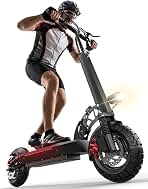 Electric Scooter Cover Electric Scooter Cover |
Check price | Good mid-tier pick with reflective strips for garage visibility | Heavier than needed for indoor storage |
| Waterproof Electric Scooter Cover Storage Bag | Check price | UV resistant, which matters if your "winter" has sunny days | Overkill for most indoor setups |
| Mobility Scooter Cover | Check price | Fine budget option, fits mobility scooters more than e-scooters | Baggy fit on a standard commuter scooter |
| Electric Scooter Cover, 1680D Heavy Duty |
Check price | Toughest material, genuinely weatherproof for outdoor storage | Three times the price of the winner for marginal gains |
The battery is the whole game
Every winter storage guide says "charge it to 50-80% and check it monthly." That's correct, but it undersells how fast things go wrong. Lithium batteries self-discharge, and if you store at zero percent, you're not storing a battery, you're storing a brick.
I've seen the aftermath: one owner stored their scooter in an unheated garage at 30% charge in December, came back in March, and the battery wouldn't take a charge at all.
That's a $200 replacement on a $600 scooter.
The flip side is just as bad. Storing at 100% for months stresses the cells and accelerates capacity loss. I've watched a battery degrade to 30% capacity after 600 miles of hard riding, and storing it hot and full will do the same damage faster.
The sweet spot is 40-60%, checked once a month. If it drops below 30%, give it a top-up to 50%. Set a reminder on your phone.
Future you will thank present you.
If your scooter has a removable battery, take it out and store it indoors at room temperature. If it doesn't, bring the whole scooter inside. A garage in January can hit freezing, and cold storage isn't the killer, but the condensation that forms when it warms up is. Moisture gets into connectors, corrodes terminals, and by spring you've got a scooter that cuts out over bumps.
Tires, and why you shouldn't skip this
Here's the thing nobody talks about: tires flat-spot when they sit for months. I learned this the hard way with a Hiboy that sat for two months on tubed tires at 20 PSI. Come spring, I had a thump-thump-thump that no amount of air would fix, because the tube had creased and weakened. I patched it twice before I gave up and replaced it.
The fix is simple: pump your tires to the max PSI printed on the sidewall before storage. That's usually 50-60 PSI on air-filled tires. It doesn't matter if that's higher than your riding pressure, the tire can handle it sitting still. It keeps the shape, prevents flat spots, and means you're not wrestling a dead tube in the spring.
If you've got solid tires, you can skip this step. But if you're on tubes, which most of the scooters I review are, spend the two minutes. It's the difference between a $15 tube replacement and a $40 tire-and-tube job.
Clean it before you store it, not after
I'm not saying you need to detail your scooter. But salt, mud, and road grime sitting on metal for three months is a corrosion factory. I've seen brake rotors develop a rust ring after one winter of neglect. I've seen bolts seize so badly that the owner couldn't remove the rear wheel to patch a tube in the spring.
Here's my routine, and it takes about 10 minutes: wipe down the frame with a damp cloth, dry it thoroughly, then hit the brake rotors and any exposed metal with a light coat of WD-40 or similar. Not the brake pads, just the rotors. It prevents rust and doesn't affect braking once you ride it a few times and burn it off.
Also, clean and dry the deck. If you've been riding in wet conditions, water gets under the grip tape and into the deck seams. That's how controllers die. I've blown two controllers, and both times it was moisture-related. A dry scooter stored dry is a scooter that starts in the spring.
Where to store it matters more than the cover
The single biggest mistake I see is people storing their scooter in a shed or garage without considering temperature swings. A garage in Texas can go from 40 degrees at night to 70 during the day, and that cycling creates condensation on cold metal surfaces. Your scooter's frame, battery terminals, and motor connectors are all cold metal surfaces.
If you can't bring it inside, here's what I'd do: cover it, but not with a cheap tarp that traps moisture underneath. You need something breathable enough to let condensation escape but waterproof enough to keep rain off. That's where the covers in this roundup come in.
The flintronic cover is my pick for most people. At $16.99, it's cheap enough to replace if it wears out, but it's got a waterproof coating and a bottom strap that keeps it from blowing off in wind. The material is a polyester that breathes a little, which is what you want. It's not going to protect against a hurricane, but it'll keep dust, moisture, and curious pets off your scooter for a season.
If you're storing outdoors all winter, the 1680D heavy-duty option at $36.09 is worth the extra money. That material is genuinely tough, and it's got reinforced seams that won't split after a month of wind. It's overkill for indoor storage, but if your scooter lives outside, it's the difference between a scooter that survives and a scooter that needs new bearings in the spring.
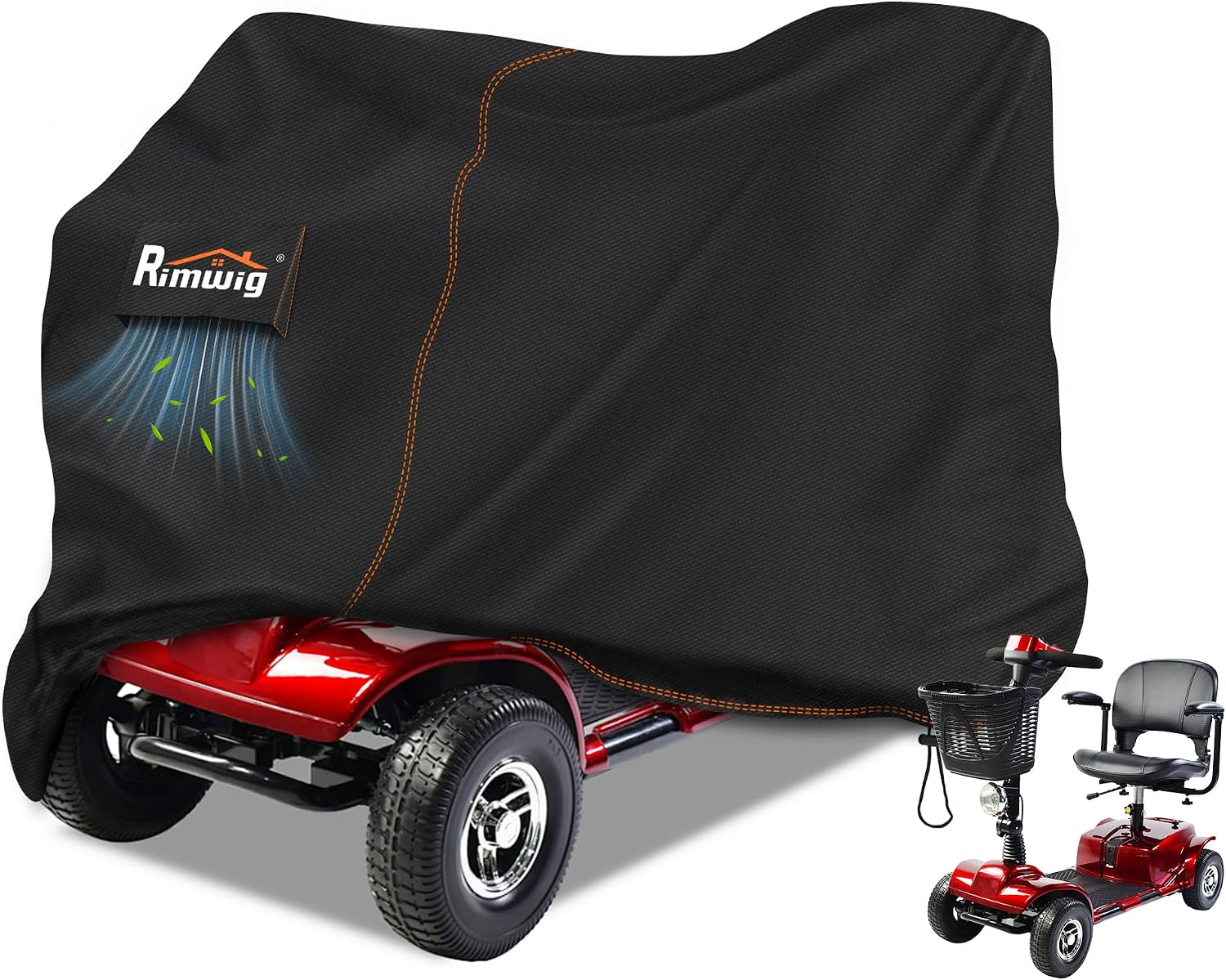
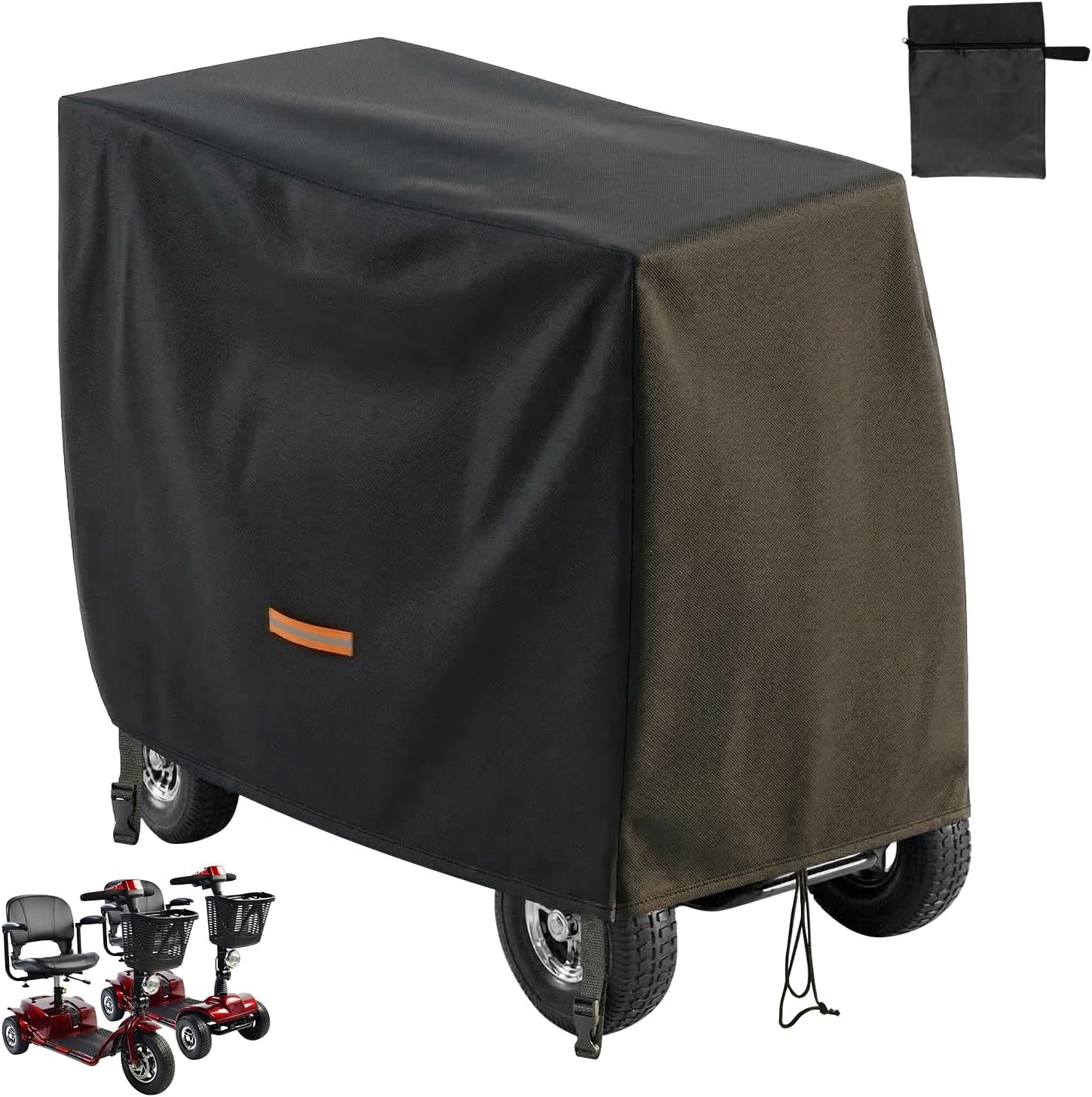
The budget options from Mobility Scooter (B0G2YFF273 and B0BPM7GZ1K) are fine if you're storing indoors and just want dust protection. But they're thin, and the sizing is geared toward mobility scooters, which are wider and shorter than most e-scooters. You'll get a baggy fit that flaps in the wind.
What about the scooter itself?
If your scooter has a folding mechanism, fold it for storage. It takes up less space and takes stress off the latch. But don't leave it folded for months without checking the latch mechanism for rust or debris. I've seen folding latches seize up over a winter, and that's a safety issue when you're riding at 20 mph and the stem decides to fold mid-ride.
Also, if your scooter has a display or control panel, cover it or at least wipe it down. Moisture gets into those little gaps and fogs up the screen. I've seen a Ninebot Max display develop condensation that never fully cleared. Not a functional failure, but annoying every time you look at it.
And check your brake cables. If they're exposed, a little grease on the cable ends prevents corrosion. If they're internally routed, you're probably fine. This is a five-minute check that saves you from a seized brake cable in the spring.
Should you buy a cover at all?
If your scooter is stored indoors in a climate-controlled space, you don't need a cover. Save your money. But if it's in a garage, shed, balcony, or anywhere that sees temperature swings or moisture, yes, buy one. The cost of a $17 cover is nothing compared to the cost of a corroded controller or a rusted brake rotor.
The flintronic is the one I'd buy again. It fits a standard commuter scooter without being awkward, the strap keeps it in place, and at $16.99, it's cheap enough that I don't feel bad replacing it every couple of seasons. If I were storing a scooter outdoors in a harsh climate, I'd spend the extra $19 on the 1680D heavy-duty version, but that's a niche case.
Here's my honest take on the rest: the $13.49 Mobility Scooter cover is fine for indoor dust protection, but the material is thin and the fit is sloppy. The $23.89 option from B0DK6GG5SJ is a solid middle ground with reflective strips that help if you're storing in a shared garage.
The $24.99 UV-resistant option is good if your "winter" includes sunny days, but it's not meaningfully better than the flintronic for most people.
And the $14.99 mobility scooter cover is really designed for mobility scooters, not e-scooters, so the fit will be off.
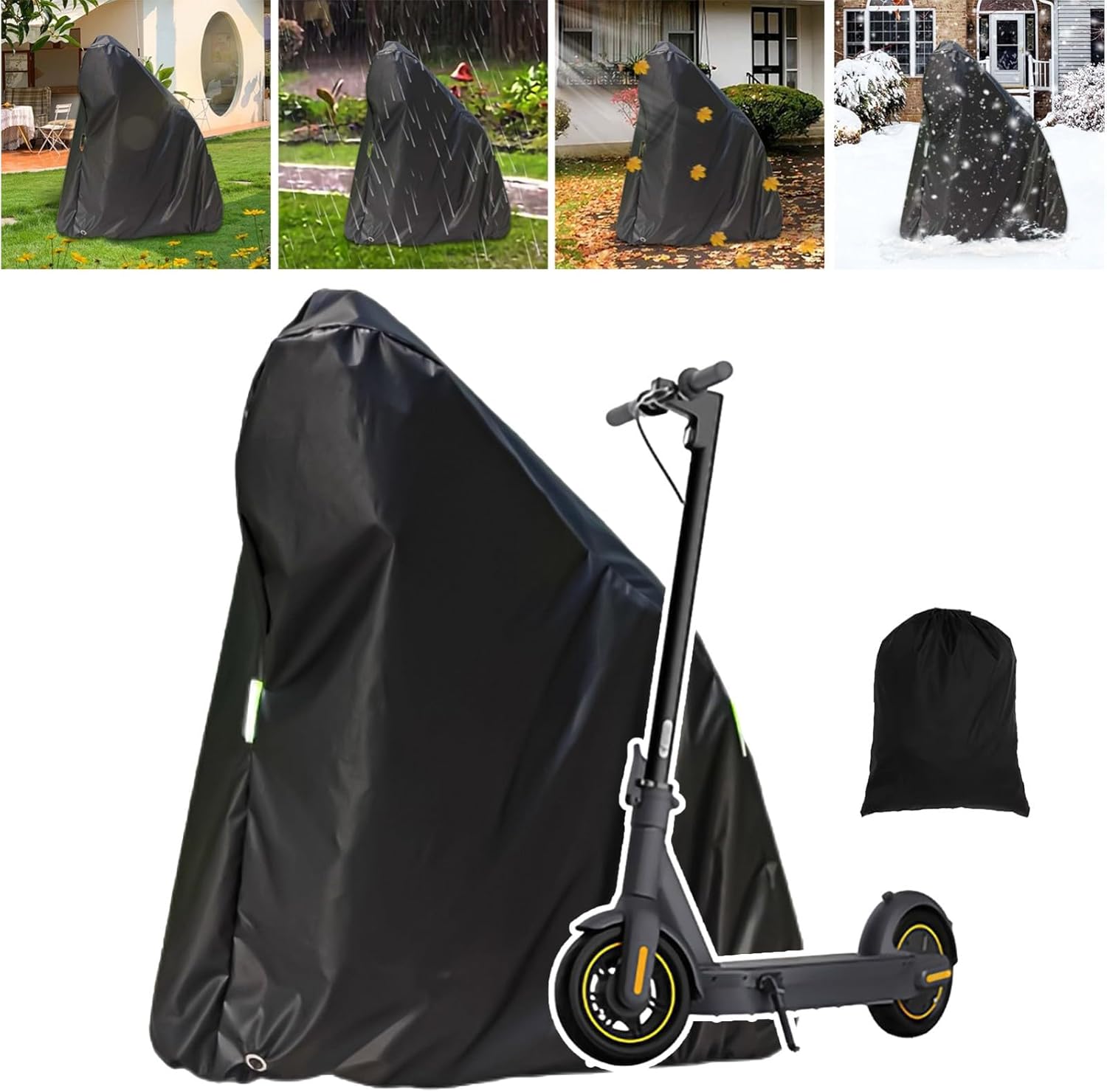
Should you buy the flintronic cover? If you're storing your scooter anywhere that isn't climate-controlled indoors, yes. It's the best balance of price, protection, and fit, and at $16.99, it's a no-brainer insurance policy against a season of dust, moisture, and temperature cycling. If you're storing indoors, skip it and put that $17 toward a battery maintenance charge.
I'll circle back and update this after I pull my own scooter out of storage this spring. I've got a feeling the battery check reminder on my phone is going to save me from a very bad day.