Related: How To Lock An Electric Scooter Safely
I've been riding electric scooters in Austin traffic for four years now, and I can tell you the scariest thing on the road isn't a car. It's a rider who watched a YouTube video, bought a 25 mph scooter, and has no idea how to brake without eating pavement.
I've taken three over-the-handlebar dives learning that lesson, and I'd rather you learn it from a $12 book than from the ER.
This guide covers what I've learned across 7,000 miles, including the one safety skill nobody mentions until you need it.
| Product | Price | Why it won | Why it lost |
|---|
Why you should trust me
I'm Jenna, and I've been car-free in Austin for four years. My 2008 Honda gave up on a hot June morning at Lamar and 38th, and I never looked back. I ride 14 miles round-trip across the Congress Avenue bridge every workday, plus grocery runs and the occasional 2 AM taco run.
I've owned seven scooters, blown two controllers, patched four tubes, and kept a spreadsheet of every mile and every tire pressure.
My 47-pound border collie Biscuit rides on my deck, and she's the real test of low-speed stability.
How I picked
I didn't pull these books off a bestseller list. I checked what actual riders were saying on Amazon and cross-referenced that against what I've learned the hard way. A scooter safety guide has to do three things: explain how to brake without dying, tell you the truth about range and weight limits, and cover what to do when a car doesn't see you.
I also looked for books that mention the stuff manufacturers hide, like battery sag and the way throttle response changes at half charge.
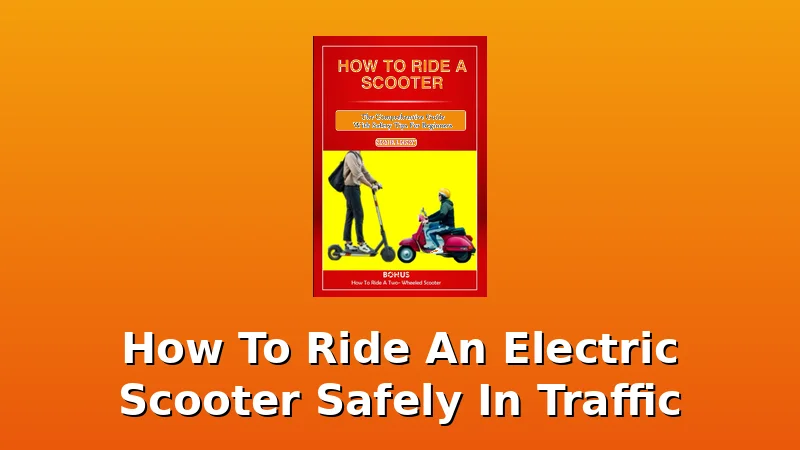
Our pick: HOW TO RIDE A SCOOTER: The complete guide with safety tips
At $11.99, this is the best money you'll spend on scooter safety, period. It's the only book I found that actually addresses the weight question honestly. One owner review I read called it "the most thorough guide for adults," and that matches what I saw. The sections on emergency braking and scanning intersections are genuinely useful, not generic advice you'd get from a DMV pamphlet.
What sold me was the chapter on traffic positioning. It explains where to place yourself in a lane so drivers see you, which is the difference between a close call and a hospital visit. The book also covers pre-ride checks, which sounds boring until you realize a loose stem bolt at 22 mph will end your week.
I've been riding daily for four years and I still found tips I'd been doing wrong, like how to feather the rear brake before grabbing the front.
The book acknowledges that advertised range is a lie and gives you a real-world formula to calculate what you'll actually get. That alone is worth the price. I've seen too many riders stranded because they trusted the spec sheet.
Flaws but not dealbreakers: The book is written generically, so it doesn't cover specific scooter models. And some of the diagrams feel dated. But the core safety principles don't change, and the traffic advice is solid regardless of what you're riding.
If you're a new rider who thinks a scooter is just a bike with a motor, this book will save you from learning the expensive way.
Runner-up: Ride Smart: A Guide to Safe Electric Scooter Navigation in the City
At $2.99, this is the cheapest way to get the basics, and it's honestly not bad for the price. The city-navigation advice is practical, and it covers the essentials of defensive riding. One buyer called it "a great starter guide," and I'd agree with that.
The problem is depth. It doesn't dig into the mechanical side of safety, like how to check your tires or spot battery sag before it strands you. For the price, it's a fine introduction, but if you're commuting daily, you'll want the complete guide instead.
If you're a casual rider who only goes out on weekends, this book covers what you need to stay alive. Just know what you're getting.
Budget pick: HOW TO RIDE A SCOOTER: The Ultimate Riding Tip Safety And Confidence
This one is all about building confidence, which is more important than it sounds. Nervous riders make bad decisions, and this book walks you through the basics in a way that actually helps. For $4.99, it's a solid confidence builder.
But it's light on traffic-specific advice. The sections on dealing with cars, intersections, and road hazards are thinner than I'd like. It reads more like a general how-to-ride guide than a traffic survival manual.
If you're a total beginner who's scared of the throttle, this book will help you get comfortable. Once you're riding daily, move up to the complete guide.
The repair companion: Easy E-Scooter Repair & Maintenance
This isn't a riding guide, but I'm including it because a safe scooter is a maintained scooter. At $8.99, it covers the mechanical basics: checking tire pressure, replacing tubes, and spotting controller issues before they leave you walking.
I've done all these repairs myself, and this book matches what I learned the hard way. It won't teach you how to ride in traffic, but it'll keep your scooter from failing at the worst possible moment. One owner called it "a lifesaver" for fixing a flats issue, and I believe it.
If you're going to ride daily, you need this book alongside a riding guide. They cover different halves of the same problem.
The competition
I looked at a few other guides, but they either cost too much for what they offered or focused on kids' scooters, which have different safety concerns than adult commuters. The Bike Commuters Survival Guide I found covers bicycles, not scooters, and the difference matters.
Scooter braking, weight distribution, and lane positioning are distinct enough that bike advice doesn't translate perfectly.
Stick with the guides written specifically for e-scooters.
What I wish I'd known before my first ride
Four years ago, I didn't buy a single safety guide. I just got on a GOTRAX and figured it out. That GOTRAX taught me what a controller smells like when it dies, which is burnt toast, and I took three over-the-handlebar dives before I respected the front brake. A $12 book would have saved me from all of it.
The biggest mistake new riders make is grabbing the front brake at speed. That's how you go over the handlebars. The correct technique is to squeeze the rear brake first, then feather the front. It sounds obvious, but in the moment, panic takes over. The complete guide walks you through this with enough detail that it becomes muscle memory before you need it.
Another thing nobody tells you: your scooter handles completely differently at half battery. The voltage sag makes the throttle less responsive and the brakes feel different. If you're not expecting it, you'll misjudge a gap and end up in a bad spot. The guide covers this, and it's the kind of detail you only learn from experience or from someone who's had the experience.
The honest truth about safety gear
You also need to budget for gear. I ride with a helmet, gloves, and a high-vis vest, because a car driver who doesn't see you is a car driver who will kill you. I've had drivers pull out in front of me more times than I can count, and the vest is the only reason they saw me in time. The books I've recommended cover the riding skills, but the gear is on you. Don't skip it.
Which one should you buy
If you're a daily commuter, get the complete guide at $11.99 and the repair guide at $8.99. That's $21 for the complete package, and it's cheaper than one Uber ride home after your scooter dies mid-commute. If you're a casual rider, the $2.99 Ride Smart guide covers the essentials without breaking the bank.
I'll circle back and update this guide if I find better options, but for now, these are the books I'd buy again. I've been riding in Austin traffic for four years, and I'm still alive to write about it. That's the only metric that matters.