Most people shopping for a commuter electric scooter ask the wrong question. They ask which one is fastest, or which one has the biggest range number printed on the box, and then they buy that one and find out the number was measured with a 120 pound rider, a fresh battery, flat pavement, and a tailwind at their back.
My commute is 14 miles round trip across the Congress Avenue bridge in Austin. I weigh 185 pounds. In August the pavement is hot enough to cook on, and the wind on that bridge at 5:40 PM is always in my face. That is the job. It is a much harder job than the one the marketing department tested for.
So this is a how-to for reading a commuter electric scooter the way a mechanic reads a wiring diagram, and for the two budget scooters I would put on a first short list: the Hiboy S2 with its solid tires, and the Aovowheel folding scooter with dual brakes and a pile of configuration options. One of them takes tire maintenance out of your life entirely. The other asks you to pick a battery size and then live with that choice for two years.
Why you should trust me
I have been car-free in Austin for four years, ever since a 2008 Honda gave up at the corner of Lamar and 38th on a hot June morning. In that time I have owned seven scooters. One taught me what a dying controller smells like, which is burnt toast. One taught me that tubed tires and Texas heat are a bad marriage. One taught me that a 60 mph scooter ridden at 18 mph is just a heavy scooter with a lot of risk attached. I keep a repair log in a battered notebook and a spreadsheet with every mile, every tire pressure reading, and every range claim a manufacturer made that my own numbers did not support.
Two rules come out of all of that. Watt-hours is the only battery number that means anything, because amp-hours is marketing math and peak watts is a two-second party trick. And if a scooter cannot climb the bridge at my weight without the power sagging away underneath me, the top speed on the box is irrelevant, because I climb that bridge twice a day.
Full disclosure before we go further: I have not run either scooter in this article through my instrumented 14-mile loop. What follows is how I read their spec sheets against four years of real commuting, and how you should read any spec sheet the same way.
The four numbers that decide whether a scooter works
Every scooter listing is written to hide the same four things. Find them and you can judge a scooter in about three minutes.
Watt-hours. This is battery capacity, and it is the number that predicts your real range. If the listing gives you volts and amp-hours, multiply them. A 36 volt pack rated at 10 amp-hours is 360 watt-hours. The rule of thumb I use at my weight, in warm weather, at 15 to 18 mph, is roughly 20 to 25 watt-hours per mile. That puts a 360 watt-hour pack somewhere around 14 to 18 honest miles. Anything a manufacturer claims beyond that is a lab number.
Hill performance and voltage sag. Voltage sag is the power drop you feel when the pack is low, cold, or being asked for more than it can give. It is why a scooter that feels strong at 100 percent feels like a different machine at 40 percent. The only hill test that matters is the one you ride every day, at your weight, on a partially charged battery.
Tires. Tubed tires on a commuter scooter are a maintenance subscription. You will learn to patch a tube or you will pay someone who can. Solid tires never flat and ride like a shopping cart over expansion joints. Tubeless is the upgrade most people should want, but it is not on every budget scooter. Pick your poison knowingly.
Brakes and the controller. The controller is the soul of the scooter. A cheap one will strand you at 9 PM with a burnt toast smell and a long walk home. And brakes are the part you will use most in traffic, so dual brakes are worth real money on a wet Austin morning.
Two budget commuter scooters, and who each one fits
Both of these sit at the affordable end of the market, which is exactly where most first commuters should start. Neither is a premium machine. Both solve the same problem in opposite ways.
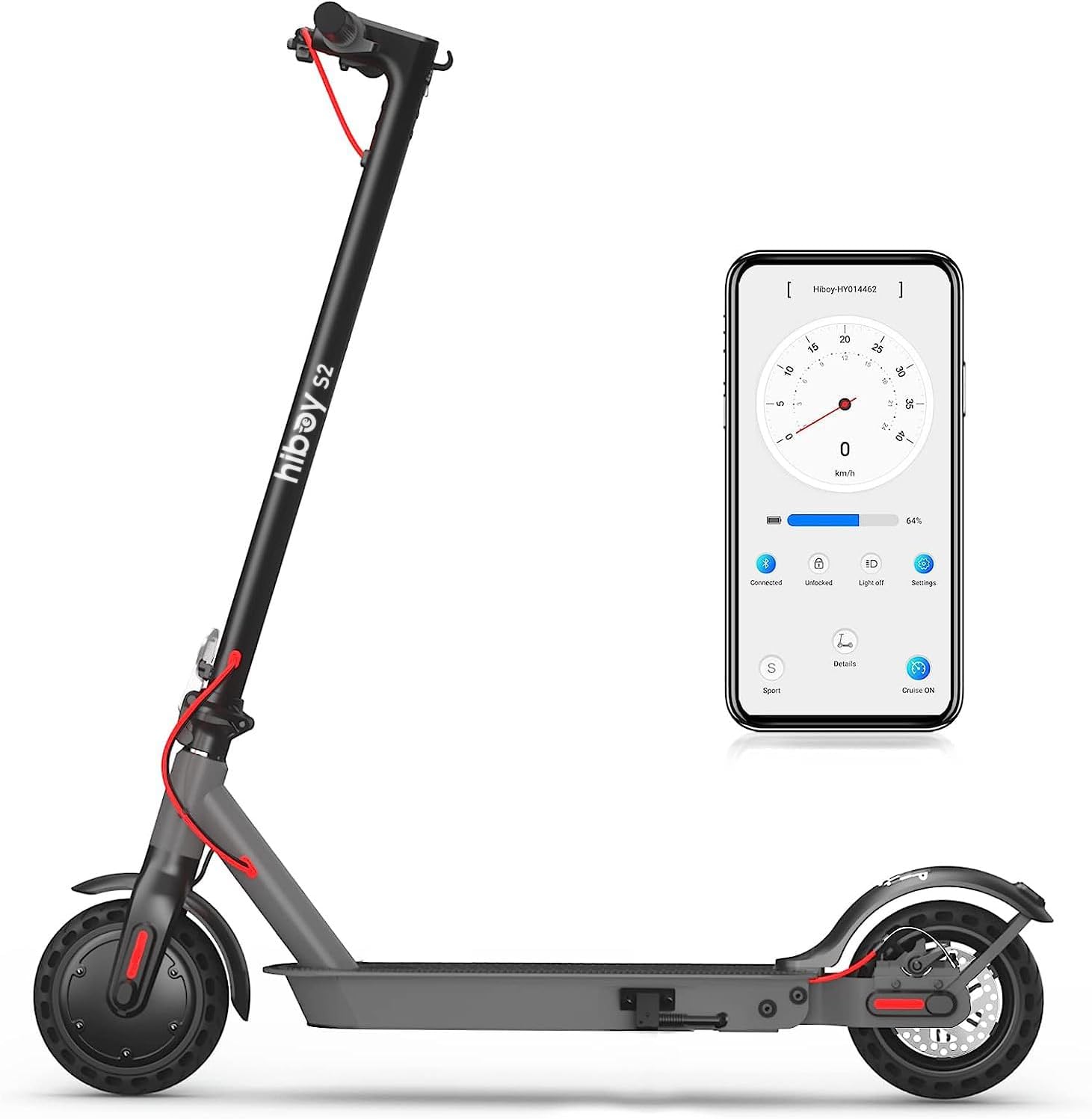
The low-maintenance pick: Hiboy S2 Electric Scooter - 8.5" Solid Tires - Up to 17 Miles Long-Range
 Visit on Amazon →
The case for this scooter is one line long: solid tires. If you have ever stood on a sidewalk in the heat with a flat rear tire and no patch kit, you already understand why that matters. The 8.5 inch solid tires mean no tubes to patch, no pinch flats from Austin potholes, and no weekly pressure ritual that you are going to skip anyway. For a rider who wants to charge it, ride it, and never think about it, that is the whole argument.
The trade is real, though. Solid rubber transmits every crack in the pavement straight up through the deck, and grip in the rain is noticeably worse than a pneumatic tire. Ride this one at a sensible speed on wet roads, because there is no air cushion to help you find traction.
On range, read the "up to" in the name as exactly what it is. Seventeen miles is the ceiling, not the plan. At 185 pounds in August with a bridge in the middle, plan on less. If your one-way trip is 4 to 6 miles, this scooter fits your life. If your round trip is 14 miles with a climb, do not count on doing it on one charge and expect to be happy about it.
Flaws but not dealbreakers: The ride is firm, and solid tires cannot be tuned for comfort the way pressure can. Anyone who wants a plush ride should look at a pneumatic tire instead and accept the patch kit that comes with it.
This is the right first commuter for a short, flat-ish ride where reliability beats comfort.
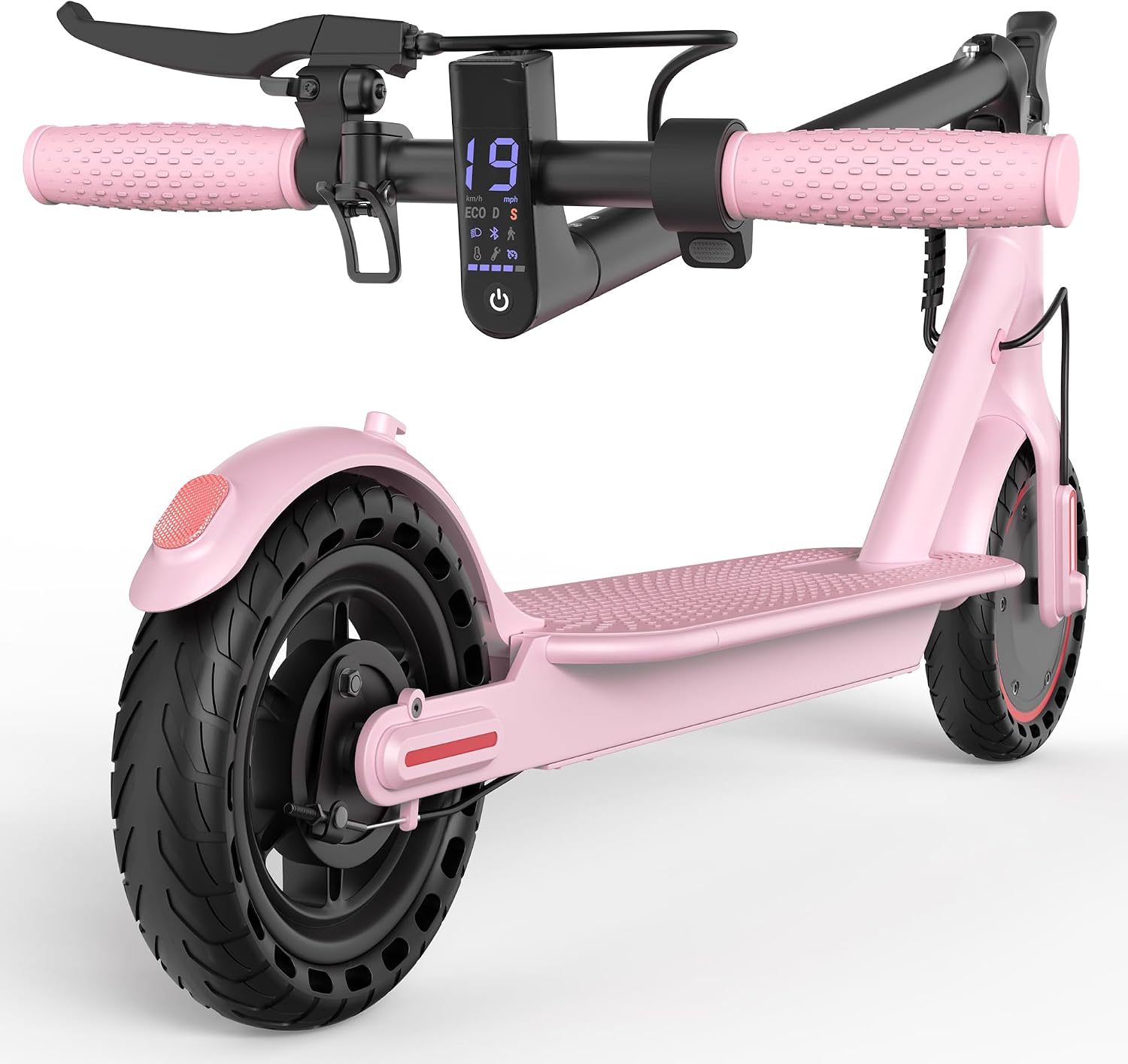
The value pick: Aovowheel Electric Scooter for Adults, Folding E Scooter with 250W-500W Motor 16-24 Mph Top Speed, Max 15-60Miles Long Range,Commuting Scooters with 6.5''/8.5''/10''/14'' Tires, Dual Brakes
 Visit on Amazon →
This listing tells you almost everything if you read it slowly. The motor is listed as 250W to 500W, the top speed as 16 to 24 mph, the range as 15 to 60 miles, and the tires as 6.5, 8.5, 10, or 14 inches. Those spreads are not marketing noise. They are the signature of a scooter sold in several configurations under one name, and the configuration you pick is the scooter you get.
That means the 15 mile version and the 60 mile version are not the same machine. Before you order, confirm which tire size and which battery the option you selected actually ships with. If you want stability at 20 mph and better manners over rough pavement, the larger tire options are the ones to look for. If you want honest distance, choose the biggest battery option in your budget and treat the 60 mile figure as a best case that assumes a lighter rider than most of us.
Where this scooter wins is brakes and folding. Dual brakes are not a gimmick on a commuter, they are the difference between a controlled stop and a prayer on wet pavement. Use both levers together and the front brake does the work while the rear keeps you settled. The folding mechanism also makes it a genuine multi-modal option if part of your commute involves a bus or a train.
Flaws but not dealbreakers: A 250W nominal motor is fine on flats and honest about its limits on hills, and the 500W peak figure is a brief burst, not a sustained output. Heavier riders with a bridge on the route should choose the larger battery configuration rather than the cheapest one.
This is the better pick for a rider who wants dual brakes, a folding frame, and room to choose a bigger pack.
The setup steps that decide whether you actually ride it
Buying the scooter is the easy part. These are the steps that separate a scooter you ride 900 times from one that sits in the garage.
Step one: Measure the real commute. Not the map distance. The door-to-desk distance, plus the climb, plus where you will lock or store it. If there are three flights of stairs at either end, that changes which scooter you should buy more than any spec on the box.
Step two: Do the watt-hour math before you buy. If the listing only gives amp-hours, multiply by volts. If it gives you nothing, that is your answer about the manufacturer. Compare watt-hours between the two scooters, not claimed miles.
Step three: Set tire pressure correctly on day one. If you bought pneumatic tires, buy a gauge with a real dial and check pressure weekly. Ten PSI low costs you range, top speed, and tube life. If you bought solid tires, accept the firmer ride and stop worrying about it.
Step four: Bed in the brakes in an empty parking lot. Do ten gentle stops, then a few firmer ones from speed. On a dual brake scooter, practice using both levers together so it becomes reflex before you need it in traffic. Rear brake first on gravel or wet paint.
Step five: Check the folding latch and stem every ride for the first month. Play in the folding joint is the number one thing that makes a scooter feel terrifying at speed. If the stem starts to wobble, stop riding and tighten it before you go anywhere.
Step six: Charge like you plan to keep the battery. Charge to full before a long ride. If you only use half the pack on a normal day, charging to about 80 percent most days is easier on the cells. Never charge a battery that is still hot off a 105 degree ride. Let it sit and cool first.
Step seven: Have a rain plan. Look for an IP rating, and treat anything without one as a fair weather toy. IP54 is the minimum I would ride in a drizzle. Dry the deck and the charge port after a wet ride, and never charge a wet scooter.
Step eight: Test the carry. Lift the folded scooter and walk it up your stairs before the return window closes. A scooter you cannot carry is a garage ornament, no matter how good the spec sheet looks.
What these two scooters are not
Neither of these is a hill monster. Neither is a 30 mph machine, and neither is a car replacement for a 20 mile commute with a serious climb. If your route has a long grade and you weigh more than 200 pounds, save longer and buy more watt-hours, because no amount of peak watt marketing fixes a pack that is too small for the job.
They are also not premium commuters. If you want the ride quality, brakes, and controller that survive years of daily abuse without a single unplanned repair, you are shopping in a higher tier. The trade is simple: these two cost less, and the Hiboy in particular trades comfort for a life without tube patches. That is a fair trade for a lot of riders.
What they are is honest entry points. Ride one of these for a year, learn what your commute actually demands, and you will buy your second scooter with real data instead of a box number.
What this all costs
Skip the sticker and do the ride math instead. A five day a week commuter does about 250 rides a year. A scooter that lasts three years gives you roughly 750 rides. Whatever you pay, divide it by 750 and that is your cost per ride. Compare that to your alternatives for the same trip and the number stops feeling like a purchase and starts feeling like a utility bill.
Add the small stuff. A helmet, every single ride, no exceptions. A gauge if you ride pneumatic tires. A patch kit or a spare tube if you ride tubes. A lock that is better than the one you were going to buy. Those costs are real, and they are still small next to what a car costs to keep on the road for a year.
The rest of the math is time. Twenty minutes of setup, a weekly pressure check, and one honest range test on your own route will tell you more about your scooter than any review on the internet, including this one.
That is the job. Read the watt-hours, ride the hill, and let the scooter prove itself.