Most people shopping for a commuter electric scooter start with the top speed on the box. That is the wrong end of the spec sheet. After four years of riding 14 miles round trip across the Congress Avenue bridge in Austin, through 105 degree August afternoons and rain I pretend is fine, I can tell you the number that decides whether you actually commute on the thing: watt-hours. Everything else is a detail you can live with, work around, or upgrade.
I have owned seven scooters in those four years. One GOTRAX taught me what a dying controller smells like, which is burnt toast. A Hiboy taught me that tubed tires hate Texas heat. A Ninebot Max survived a year of daily abuse and made me respect good engineering, and a used Kaabo taught me why nobody needs a 60 mph scooter to ride at 18.
This is the checklist I run before I recommend anything to anyone, and the two scooters I would put at the top of a shortlist for a first real commuter.
Why you should trust me
I have been car-free since my 2008 Honda gave up at the intersection of Lamar and 38th on a hot June morning, and I have ridden to work almost every day since. In that time I have blown two controllers, patched four inner tubes, replaced one deck, and learned to read a spec sheet the way a mechanic reads a wiring diagram. I keep a repair log in a battered notebook and a spreadsheet of every mile ridden, every tire pressure, and every range claim a manufacturer has stretched past what the battery can actually deliver.
Three rules I do not break. No range claim gets repeated without measured watt-hours behind it. No scooter with tubed tires gets a commuting recommendation without a note about the tube reality. No scooter gets tested without a helmet, and I will say so in every article I write, because the ER nurse who told me what a scooter crash without one looks like did not soften it for me.
How I picked these two
I shortlisted from spec sheets, not from marketing pages. A commuter scooter has to clear four gates before I care how it looks: an honest watt-hour figure, enough torque to climb a bridge without voltage sag drama, tires I can live with in August, and a controller that will not strand me at 9 PM. Then I add one more that most buyers skip entirely, which is third-party safety certification.
What I cannot do from a spec sheet is put a full year of Austin miles on a scooter I have never ridden. So I am telling you exactly what the listings support, and what I would verify in the first week of ownership. If a scooter clears the gates on paper, that is a shortlist. It is not a verdict, and anyone who hands you a verdict on a scooter they have not ridden to work is selling you something.
The checklist: eight steps before you buy
Step one: do the watt-hour math. Watt-hours is voltage multiplied by amp-hours, and it is the only battery number you can compare across brands. If a listing gives you amp-hours and hides the voltage, go find the voltage, because amp-hours alone is marketing math. Then plan on real range being about two thirds of the claimed miles at a 185 pound rider in summer heat with a headwind and a climb in the middle. If the honest number does not cover your round trip with margin, the scooter is wrong no matter how good the rest of it looks.
Step two: test the hill, not the top speed. Speed is easy. Torque under load is where cheap scooters fold. Voltage sag is what you feel when a pack is low or cold, and it is the reason a scooter showing half a charge can suddenly ride like it has a fifth. If your route has a bridge, a parking garage ramp, or a long grade, that climb is your first test, not your last. A scooter that cannot make it up the hill at your weight is a scooter you will stop riding in a month.
Step three: decide what tires you can live with. Solid tires never flat, and they also never forgive. They ride harsh on chip seal, they lose grip faster in the wet, and Texas heat makes every road imperfection louder. Tubed tires ride better and pinch flat on potholes, which is a maintenance subscription you either learn to service or pay someone else to service. Tubeless is the sweet spot for a commuter, and it is the upgrade I push on everyone who rides to work.
Step four: weigh it against your stairs. A scooter you cannot carry up three flights is not a commuter scooter, it is a garage ornament. Weigh the scooter, then add your lock, your charger, and whatever you carry to work. If that number makes you sigh, the scooter is too heavy for your building, no matter how good the specs read.
Step five: look hard at the brakes and the controller. Dual braking systems matter because a single brake on a wet Austin morning is a suggestion, not a stop. Regenerative braking is mostly a rounding error on range, but it does save your brake pads, so treat it as a bonus and not a feature. The controller is the soul of the scooter. Cheap ones burn out, and when they do you are walking.
Step six: check certification and water resistance. UL 2272 is the scooter standard and UL 2271 is the battery standard. A scooter with both has been through third-party testing that a listing claiming "high quality battery" has not. Then look at the IP rating. IP54 means rain-safe-ish. Anything less means it is a fair-weather toy, and "water resistant" with no number attached is a phrase, not a specification.
Step seven: know the rules where you ride. Scooter rules vary by city, they change, and they are enforced unevenly. Read your city's current micromobility page before your first commute and assume sidewalk riding is not allowed unless you have confirmed otherwise. This takes five minutes and saves you an argument with someone who is having a worse day than you.
Step eight: gear first, scooter second. A helmet, a pressure gauge, and a lock cost less than the repair bill for one bad decision. Check your tire pressure weekly. I average about once a month and I have the flat-tube scar to prove it.
Two scooters that clear the checklist
These two are the shortlist for a first commuter, and they clear the gates for different reasons. One wins on price and simplicity, one wins on certification and braking.
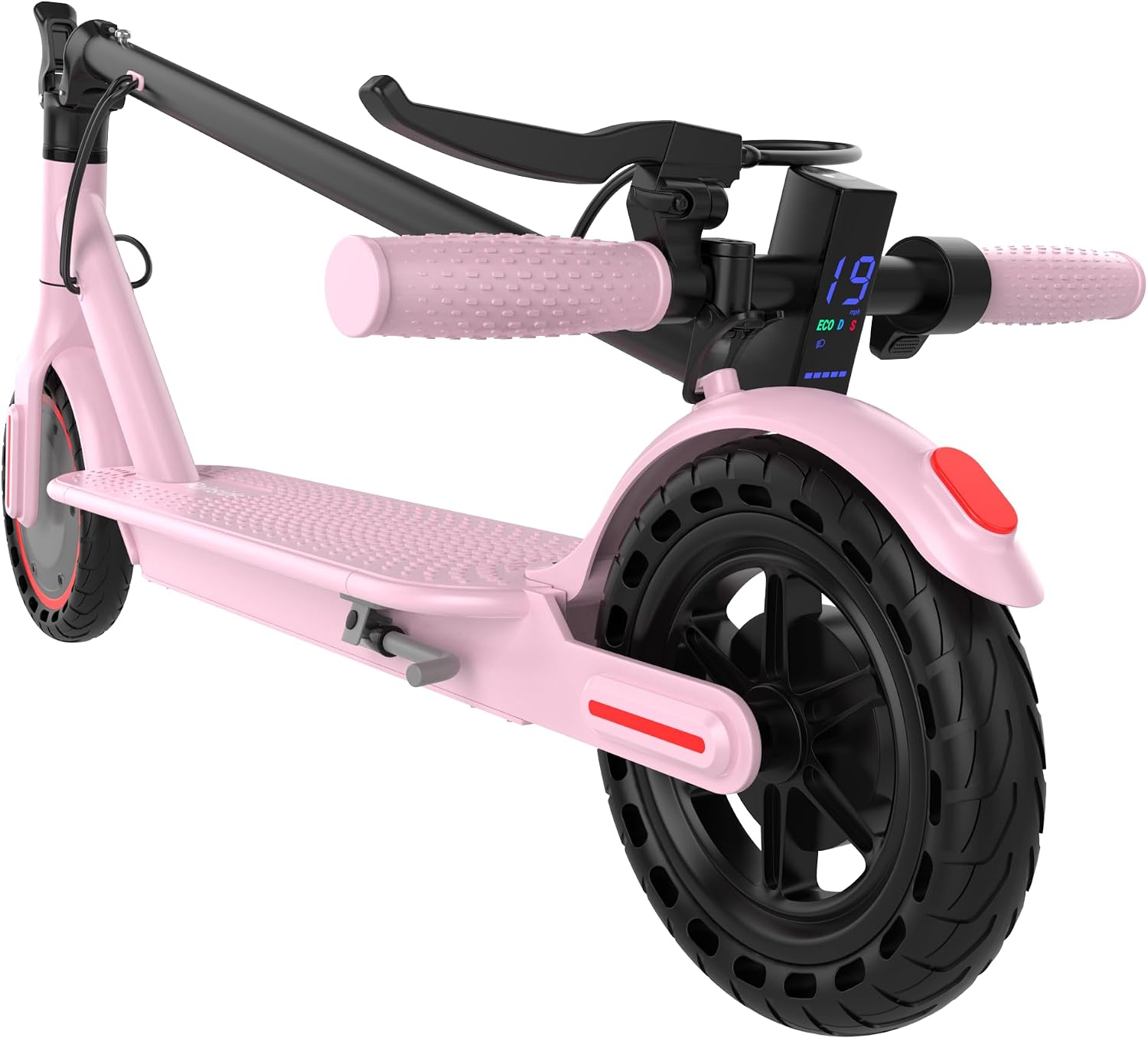
Best value pick: Electric Scooter - 350W/500W Motor, 8.5"/10''Solid Tires, Up to 19/22MPH& 16/21/23Miles Long-Range Portable Commuting Scooter for Adults with Double Braking System
 Visit on Amazon →
This is the budget end of the shortlist, and it hits the two gates that matter most at this tier. It folds, which means it can go under a desk or onto a bus rack, and it runs a double braking system rather than the single rear brake that shows up on a lot of scooters in this class. The motor is listed as 350W or 500W depending on the configuration, with 8.5 inch or 10 inch solid tires and a claimed top speed in the 19 to 22 mph range.
Read that listing carefully, because it spans several configurations. The motor, the tire size, and the claimed range all shift depending on which variant you click. Figure out which one you are actually buying before you add it to the cart, and check whether the tires are the 8.5 inch or the 10 inch version, because that single choice changes how the scooter handles Austin's chip seal and how it fits in a trunk.
Flaws but not dealbreakers: Solid tires mean no flats and a harsh ride. The claimed range figures are the kind I treat as lab numbers until proven otherwise, so plan your commute around the shorter end of that spread. If your round trip is over about ten miles, size up rather than hoping.
Anyone with a short, flat commute who wants to stop patching tubes and stop worrying about flats should start here.
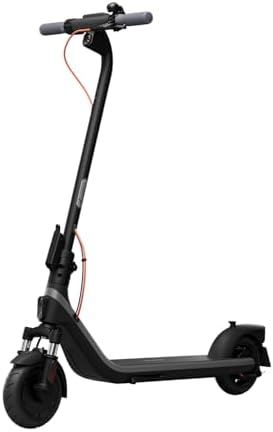
Best certified pick: Segway Ninebot E2 Plus II/E2 Pro/E3 Pro Electric Scooter, Dual Braking System,Long Range,Foldable Adult Scooter, UL 2272 & 2271 Certified.
 Visit on Amazon →
The certification line is the reason this one sits at the top of the list. UL 2272 covers the scooter and UL 2271 covers the battery pack, which means an independent lab has put the electrical system through the abuse testing that a no-name listing skips. For a machine you are going to plug in overnight in your apartment, that is not a marketing bullet, that is the whole ballgame.
It is also foldable, it runs a dual braking system, and the listing spans the E2 Plus II, E2 Pro, and E3 Pro, which is Segway's entry commuter line. My own Ninebot Max survived a year of daily abuse without a single unplanned repair, and that history is why I give this brand the benefit of the doubt on build quality. I have not put a year on this specific model, so what I am vouching for is the certification and the engineering track record, not a mileage log.
Flaws but not dealbreakers: The lineup naming is genuinely confusing, and the three models in that listing do not have identical specs. Confirm which one you are ordering. As with anything in this class, treat the "long range" claim as a claim until your own commute proves it.
Anyone who wants a certified battery, real brakes on both ends, and a fold for the office should look here first.
Mistakes that leave people walking
Buying on peak watts. A peak number printed on a box that the scooter can hold for two seconds tells you nothing about your commute. Look at continuous power and watt-hours instead.
Buying on claimed range. Range numbers are tested light, in still air, on flat ground, with a rider who weighs less than you. Your range is what you get at your weight, in August, with a headwind and a bridge.
Ignoring tire pressure. Ten PSI low costs you range, speed, and tube life, and it is the single most ignored spec on any scooter.
Buying more scooter than you can carry. If it does not fit up your stairs or into your office, it lives in the garage.
Skipping certification. Cheap scooters cheap out on the battery management system, and the BMS is the circuit standing between your cells and a very bad night.
What this decision actually costs
The scooter is the cheap part. The expensive part is choosing wrong. A dead controller means a long walk home and a replacement you did not budget for. A pinch flat on a tubed tire in August means an hour on your knees in a parking lot. A scooter that cannot climb your bridge means a scooter you stop riding, which means you paid full price for a garage ornament.
Both of the picks above are in the entry and mid tier, and you can see the current numbers on the product pages. Run the math on the right side of the ledger instead: what does a month of parking, gas, or rideshare cost you, and how many months of that does one scooter replace?
The short version
Do the watt-hour math first. Check the hill. Decide what tires you can live with. Weigh it against your stairs. Then pick from the two above, with the Segway if certification and braking are your priority and the 350W/500W option if price and a short flat commute are yours.
And wear the helmet. Every ride, no exceptions, no matter how short the trip looks.