Related: Best Electric Scooter Tires and Tube Upgrades for Austin Roads
I have been car-free in Austin for four years, and I have crossed the Congress Avenue bridge on a commuter electric scooter somewhere north of 900 times in that stretch. I have blown two controllers, patched four tubes, replaced one deck, and learned to read a spec sheet the way a mechanic reads a wiring diagram. So when somebody asks me which scooter to buy, I do not start with top speed. I start with watt-hours, hill performance, and what happens to the controller after 20 minutes of full throttle in August.
The four products below are what is on the table this month. Two are scooters aimed at very different riders, one is a budget model that needs an honest conversation, and one is a spare charger, which is the least exciting purchase in micromobility and the one that saves your week when your only charger dies at 9 PM on a Sunday.
I am not going to pretend a listing photo tells you how a scooter climbs a bridge. What I can do is tell you what each spec sheet is actually promising, what it is quietly leaving out, and which questions to answer before you spend money. Every range figure below is a manufacturer claim, not my measurement. Treat it that way.
Best Overall for a Real Commute: The 550W All-Terrain Electric Scooter
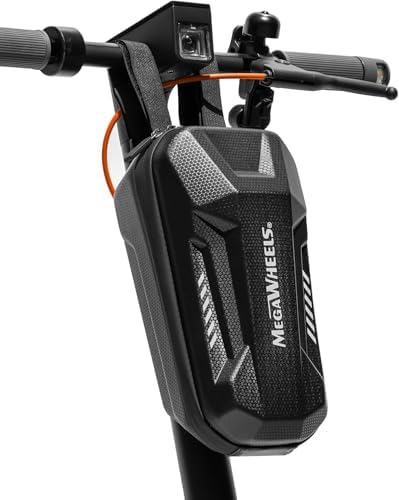
This is the one on the list that reads like a commuter scooter instead of a toy. The listing claims 28 miles of range, up to 20 MPH, a 550W motor, dual suspension and dual brakes, a 12 inch front tire with an 8.5 inch rear, app control, TCS, and UL2272 certification.
Three of those details matter more than the rest.
UL2272 is the first thing I look for on any scooter I would ride to work. It is the certification that covers the electrical system, and it is the difference between a product that went through a test lab and a product that went through a container ship. I will not recommend a scooter without it, and I will not ride one either. This one has it.
The 12 inch front tire is the second detail. A bigger front wheel rolls over potholes, bridge expansion joints, and the debris field that is any Austin bike lane in the fall far better than the small wheels on budget scooters. The rear is 8.5 inches, so this is a split setup, and you will feel that smaller rear wheel on rough pavement more than on smooth asphalt. Dual suspension is what keeps that from turning into a spine massage.
The third is the brake setup. A dual brake scooter with suspension is what I want on a route with any downhill in it. Stopping distance is the spec nobody brags about and the one that decides whether a close call stays a close call. TCS, the traction control system, is genuinely useful in the rain, though I still ride slower in it, and so should you.
Now the range claim. Twenty-eight miles is a lab number, tested light, flat, and warm. Real range depends on your weight, the wind, the hills, your tire pressure, and the temperature, and it drops when the battery is low because voltage sag turns 40 percent battery into what feels like 15 percent. I would plan a 10 to 20 mile round trip on this scooter and charge at both ends, not a 28 mile day.
App control is a nice extra. It is not a reason to buy. Phone apps are the first thing manufacturers abandon, and the scooter has to work when the app does not.
Who it is for: a rider with a 10 to 20 mile round trip who wants suspension, a bigger front wheel, and a certification on the box. Check current Amazon price before you decide, because this is the premium pick of the four.
Best for Stairs and Short Trips: The AOTOS M1 Lite
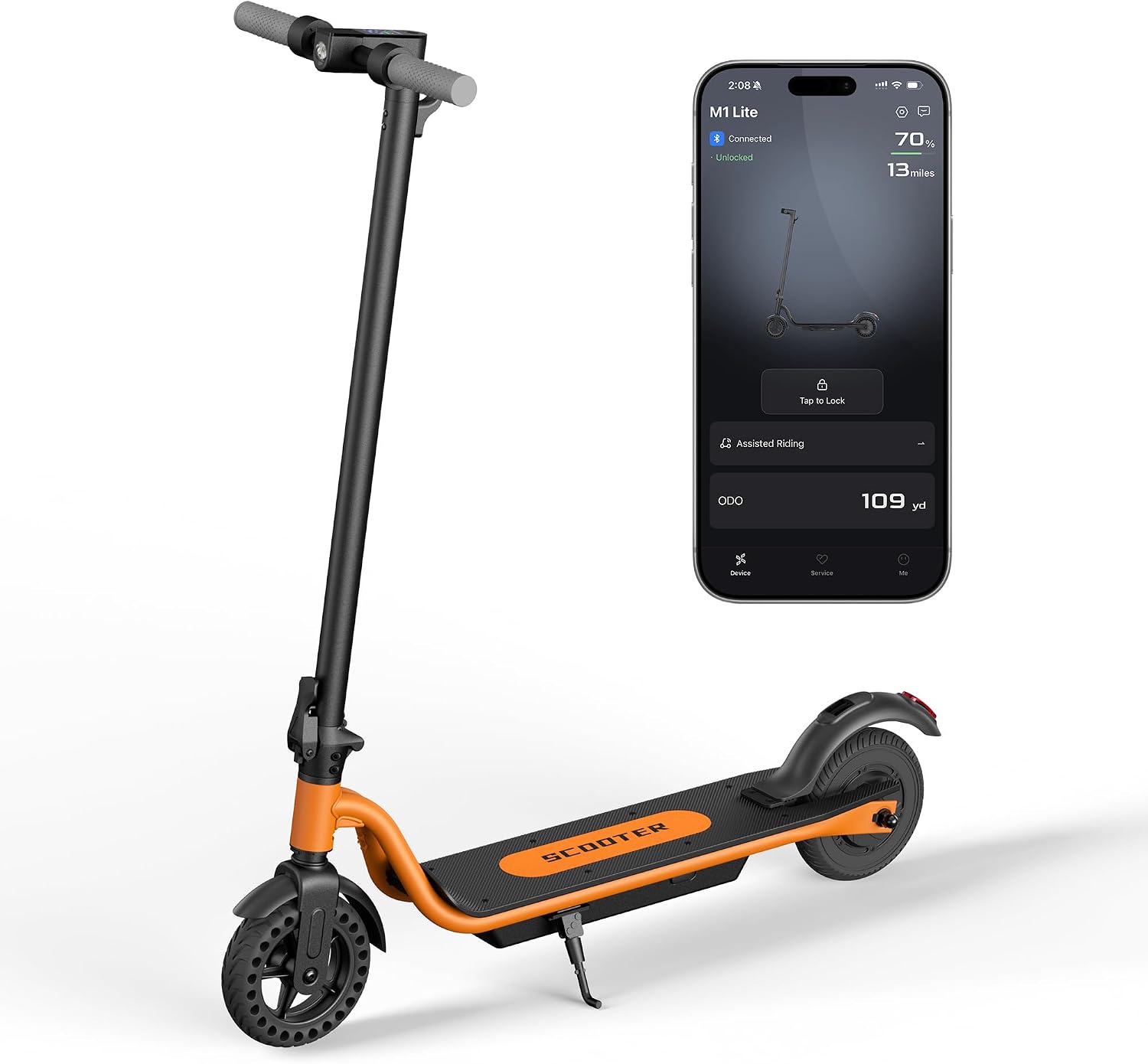
The AOTOS M1 Lite is a 500W scooter with a 15 MPH top speed, a claimed 19 mile range, and a folding frame. The folding part is the headline for me, and the 15 MPH cap is a feature, not a shortfall.
Here is my rule, and I have earned it: a scooter you cannot carry up three flights of stairs is not a commuter scooter, it is a garage ornament. Foldability plus a lighter frame is what makes a scooter work for a third-floor apartment, an office elevator, and a bus rack. If you mix a scooter with public transit, this category is the one to shop in.
Fifteen miles per hour is also right for a lot of riding. Most protected bike lanes and multi-use paths are calmer than 20 MPH, and a scooter that tops out at 15 keeps you in the flow of bike traffic instead of constantly overtaking it. What you give up is headwind performance and long straightaways, so if your route has a two mile stretch with no lights, the 550W scooter above will feel stronger.
The 500W motor is close enough to 550W that wattage is not the deciding factor between these two. Watt-hours are, and the listing does not give them. That is the first question I would send to the seller: what is the battery capacity in watt-hours? Ah alone tells you nothing you can compare, because amp-hours without voltage is marketing math.
The 19 mile claim is a claim. At my weight, in August, with a bridge in the route, I would count on meaningfully less. For a 5 to 8 mile each way commute, that is plenty of margin. For a 14 mile round trip with no charger at the office, it is tight.
Who it is for: short commutes, stairs, multimodal trips, and anyone who wants a folding scooter with a real motor and a known brand name on it.
The Entry-Level Scooter, and the Hard Conversation That Comes With It
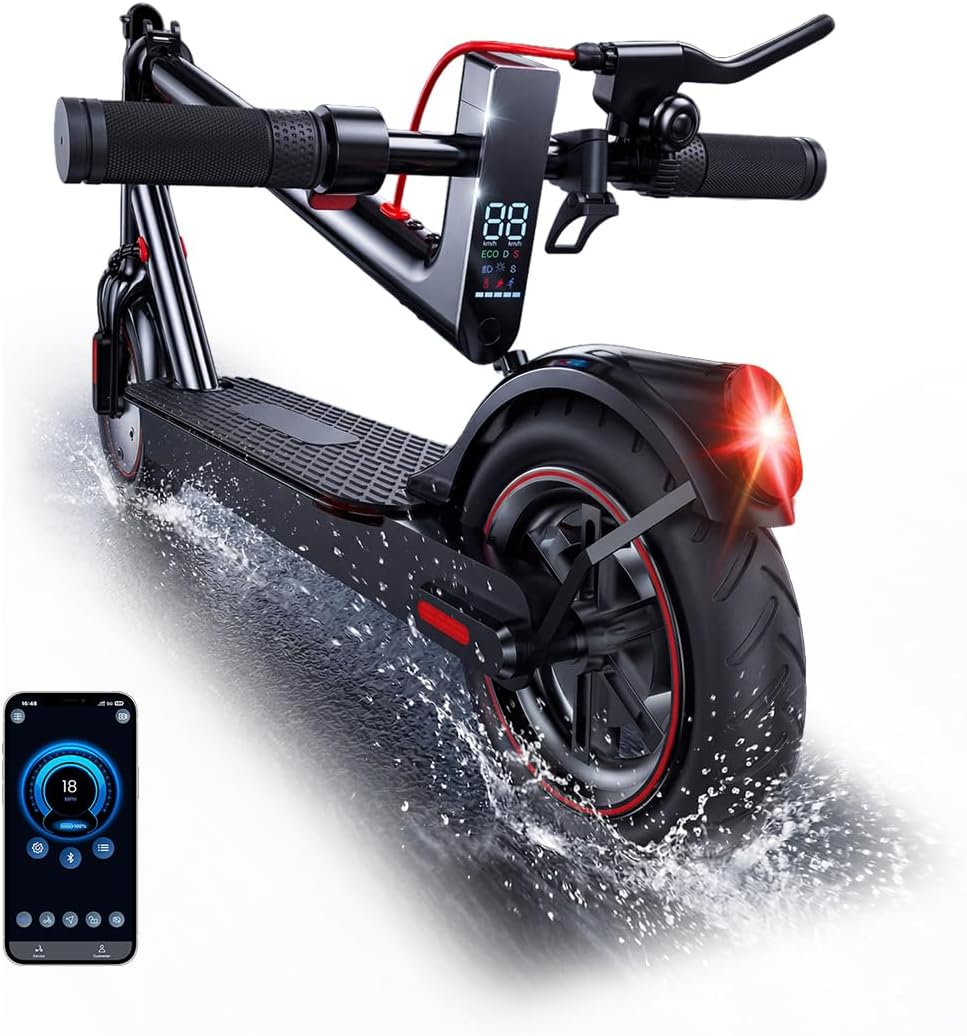
This listing is called "Electric Scooter, Electric Scooter for Adults and Teens," which tells you almost nothing. There is no range, no top speed, and no motor wattage in the name. That is not automatically a red flag, but it means you have to do the work the listing skipped. Before you buy this tier, get answers to four questions: what is the battery in watt-hours, is it UL certified, are the tires tubed or tubeless, and what kind of brakes does it have?
At this price tier, the entry number is what gets people in the door, and Check current Amazon price is the honest way to look at it. What I can tell you is that cheap scooters are how most of us learn what we actually need. I learned on a used GOTRAX. It taught me what a dying controller smells like (burnt toast), and it taught me that a 15 mile claim and a 15 mile ride are two different numbers.
For two mile errands, a first scooter, or a teenager learning to ride with a helmet on, a low-cost model is a reasonable place to start. For a daily 14 mile round trip in August heat with a bridge in the middle, it is not. That is not a knock on the scooter. It is a mismatch between the machine and the job.
The Spare Charger Nobody Thinks About: UL Certified 54.6V 2A
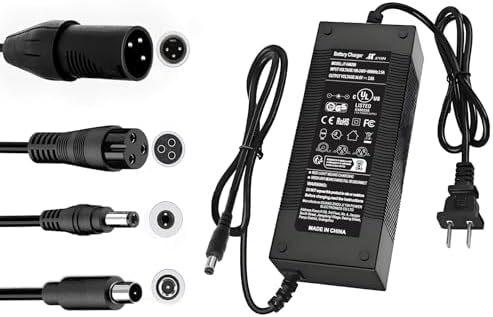
This is a UL certified 54.6V 2A charger for 48V e-bike batteries, listed as compatible with the Lectric XP 2.0 and 3.0, the Ecotric City and Beach, and the Evercross H5 and H7. It is not a scooter, and it is still one of the most useful things on this page.
Your charger is a single point of failure. It lives in a bag, it gets dropped, it gets rained on, and when it dies you are not slow, you are stopped. I keep one at home and one at the office, and the second one has paid for itself twice. If you ride a 48V pack, a spare at work means you charge at your desk and never think about range on the way home.
Two amps is an overnight rate, not a fast charge. For a battery in this class, that is the right speed. Fast charging is hard on cells, and the charger is the cheapest place in the whole system to be patient. UL certification on a charger is also not optional in my book, because the charger is plugged into a wall while you sleep.
Before you order, check two things on your own bike or scooter: the pack voltage and the connector. 54.6V is the charge voltage for a 48V pack, and if your scooter runs a different voltage, this is the wrong charger no matter what the listing title says. Check current Amazon price, then check your connector twice.
How I judge a scooter before it earns a recommendation
Everything I call a commuter has to survive the same 14 mile loop: the Congress Avenue bridge in both directions, a 185 pound rider, tires pumped to the same PSI, in August heat, with the watt-hours logged rather than the miles believed. The loop has one real climb, several bad patches of pavement, and enough stop and go to heat a controller.
Here is what that means for you, whatever you buy:
- Range: I compare claimed miles against measured watt-hours pulled, then subtract for weight, wind, hills, and cold. If a listing gives amp-hours and no voltage, ask for watt-hours.
- Hill climb: if it cannot hold speed up the bridge, nothing about its downhill speed matters.
- Tires: tubed tires on a daily commuter are a maintenance subscription. You will learn to patch a tube or you will pay somebody who can.
- Controller: the brain of the scooter and the first thing to fail on a cheap one. A 20 minute full throttle run is the test that finds the weak ones.
- Water: IP54 is rain-safe-ish. Anything less is a fair weather toy, and "water resistant" with no number is a shrug.
- Weight and fold: if it does not fit up your stairs or in your trunk, you will stop riding it.
- Helmet: every ride, no exceptions. I have talked to the nurse who sees what happens without one, and I have worn one ever since.
Commuter electric scooter comparison table
| Model | Claimed range | Claimed top speed | Motor, tires, brakes | Best for |
|---|---|---|---|---|
 Visit on Amazon → 550W all-terrain electric scooter |
28 miles claimed | Up to 20 MPH | 550W, 12 inch front and 8.5 inch rear, dual suspension and dual brakes, UL2272 | Long commutes, hills, mixed pavement |
 Visit on Amazon → AOTOS M1 Lite |
19 miles claimed | 15 MPH | 500W, folding frame | Stairs, short trips, bus and train combos |
 Visit on Amazon → Entry-level electric scooter |
Not stated in the listing name | Not stated in the listing name | Not stated in the listing name, ask before buying | First scooter, short errands, learning |
 Visit on Amazon → UL certified 54.6V 2A charger |
Not a scooter | Not a scooter | 54.6V, 2A output, UL certified | A second charger for a 48V pack |
None of these numbers are mine. They are the claims, laid out side by side so you can compare them the way a spec sheet should be compared: same columns, same questions, no marketing adjectives.
Should you buy the 550W all-terrain electric scooter?
Yes, if your commute is long enough to need suspension and a bigger front wheel, and if you want a certification on the box instead of a promise. UL2272, dual suspension, dual brakes, and a 12 inch front tire are the four things I would pay for in a commuter scooter, and this one lists all four. The 28 mile range claim is the number to discount, not the number to plan around. Check current Amazon price, then decide with your actual route in mind, not the lab route.
Should you buy the AOTOS M1 Lite?
Yes, if your trip is short, your building has stairs, or your commute includes a bus or a train. A 500W motor, a 15 MPH cap, a 19 mile claimed range, and a folding frame make it a practical short-trip and multimodal machine, and the top speed is a design choice rather than a limitation. If you need to hold 20 MPH into a headwind for 12 miles, buy the bigger scooter instead.
Should you buy the budget scooter or the spare charger?
The budget scooter is a yes for errands, a first ride, and learning what you actually want, as long as you go in knowing that the listing gives you almost nothing to compare and you have to ask for the watt-hours and the certification. The charger is a quieter yes for almost everybody with a 48V pack: it is UL certified, it is listed for several common e-bikes, and a spare charger at work is the cheapest insurance in micromobility. Verify your voltage and connector first, then Check current Amazon price on both and let your route decide which one you actually need this month.