Most people buy an electric scooter the way they buy a blender: one shiny spec, one price, one impulsive click, and a year of quiet regret in the garage. I have watched friends in Austin do it, and I have done it myself. If you want an electric scooter for commuting that you are still riding next August, the decision has almost nothing to do with the top speed printed on the box and almost everything to do with your route, your weight, your stairs, and your tire budget.
I have ridden to work across the Congress Avenue bridge for four years, 14 miles round trip, in 105-degree afternoons and in rain I pretend is fine. In that time I have owned seven scooters, blown two controllers, patched four tubes, and learned to read a spec sheet the way a mechanic reads a wiring diagram.
This is the order I would walk a friend through before they spend anything. Two scooters anchor the examples: a lightweight, UL-certified model built for kids and short neighborhood trips, and an adult commuter with off-road tires for people who actually have to arrive somewhere.
Why you should trust me
I am not a lab. I am a person who does not own a car, which means every scooter decision I make has to survive a real commute on a real Tuesday. My loop is the same 14 miles every workday, with a bridge climb in the middle and a stretch of chip-seal pavement that has eaten more inner tubes than any pothole. When a scooter fails me, I do not get to drive instead. I walk, or I call a rideshare and resent it.
That constraint is why I care about watt-hours instead of claimed range, tire construction instead of tire size, and the controller instead of the peak watt number. It is also why I will tell you when a scooter is wrong for you, even when it is a perfectly good scooter. A kids' scooter is a great kids' scooter and a terrible commuter. An off-road adult scooter is a great commuter and a silly first scooter for a nine-year-old.
How I picked and how I judged these two
I did not run either of these two through my loop, so I am not going to hand you a range number I cannot back up. What I did instead was read both listings against the checklist I use on my own scooters, and separate what is verifiable from what is marketing.
The verifiable parts are things like UL certification, which is a real battery-safety standard and not a sticker you can print at home, and the intended rider, which tells you more about a scooter than any speed claim. The marketing parts are peak watts, "up to" range, and any number measured with a rider lighter than you.
The checklist, in order: watt-hours, rider weight, hill performance, tire type, the scooter's own weight, IP rating, and what happens to the controller when you hold full throttle for twenty minutes. Speed comes last, because a scooter that does 30 mph and cannot climb your hill is just a faster way to walk.
Match the scooter to the rider before you match it to the price
The most common mistake is buying one scooter for two people who are not the same size and do not ride the same route. A 45-pound kid and a 185-pound adult with a backpack are not the same customer, and no scooter does both jobs well. Decide who is actually riding, where they are actually going, and how far, then shop.
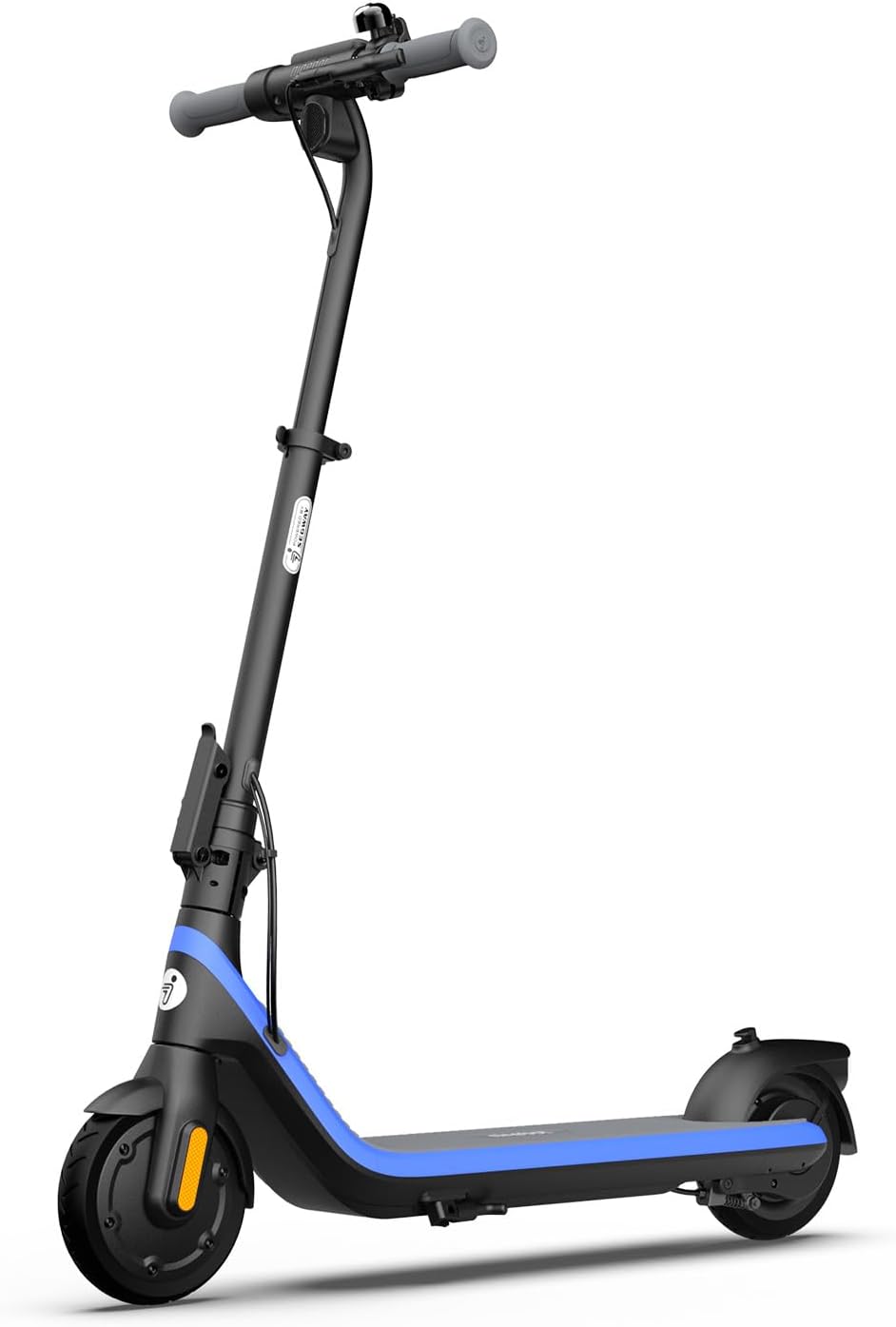
For young riders and short neighborhood trips: Segway C2 Pro /C2 Go Kids Electric Scooter, Lightweight Design, UL Certified
 Visit on Amazon →
The two words in that name that matter most are "lightweight" and "UL Certified." Lightweight matters because the person who ends up carrying it up the porch steps is usually the parent, and because a scooter a kid can pick up is a scooter a kid will actually use. UL certification matters because the battery is the part of a cheap scooter that fails in the worst way, and a certified pack is the cheapest insurance you can buy.
The realistic use case is a kid riding to a friend's house, a park, or school on quiet streets, with a helmet, at speeds well under what the scooter can theoretically do. This is not an adult commuter, and it is not a substitute for the family car on a four-mile errand. Treat it as a first scooter that teaches balance and rules, not as transportation you depend on.
Flaws but not dealbreakers: Kids' scooters get outgrown. If your rider is already tall for their age or already comfortable on a bike, you may be shopping for the adult model sooner than you think. Buy this one on sale if you can, and expect a year or two of service before the upgrade conversation.
Parents who want a certified, genuinely light scooter for a younger rider on neighborhood streets will be happy here.
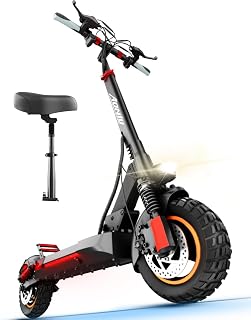
For adult commuters: M4 Electric Scooter for Adults Off Road Escooter for Commuting
 Visit on Amazon →
Off-road tires on a commuting scooter are not a gimmick, they are a comfort and durability decision. Bigger, knobbier tires absorb chip-seal, gravel at the edge of a bike lane, and the kind of pavement patch that would rattle a small-wheel scooter apart. If your route includes an unpaved connector, a construction detour, or a trail, this category makes more sense than a sleek urban model with skinny tires.
Before you buy, get three answers from the listing or the seller. What is the battery capacity in watt-hours, not amp-hours? What is the scooter's own weight, and can you carry it up your stairs? And are the tires tubed or tubeless? Tubed tires on a commuter are a maintenance subscription, and in Texas heat you will learn to patch a tube or pay someone who can.
Flaws but not dealbreakers: Off-road tires are heavier and noisier on smooth pavement than street tires, and they cost you a little range. If your entire route is fresh asphalt, a street-tire commuter will feel quicker. For mixed surfaces, the trade is worth it.
Adults with a real commute, a few hills, and mixed pavement who want one scooter that handles all of it should start here.
The actual buying workflow
This is the order I run. It works whether you are buying the two scooters above or something else entirely.
Step one: Measure the route, not the dream. Ride your actual commute distance one way and double it. Add 20 percent for detours, headwinds, and the days you take the long way. A scooter that barely covers your round trip on paper will strand you in month three, when the battery has aged and the weather is bad.
Step two: Weigh the rider with everything they carry. Body weight, backpack, laptop, water bottle, the lock. Manufacturers test range with a light rider and no cargo. You are not that rider. Every pound you add costs range and hill speed, and the gap between a 120-pound test rider and a real adult with a bag is not small.
Step three: Find the watt-hours. Multiply voltage by amp-hours. A 36V 10Ah pack is 360 Wh, and that is the only battery number you can compare across brands. Amp-hours alone are marketing math, because 10Ah at 48V is a third more energy than 10Ah at 36V. If a listing will not give you voltage and amp-hours, that is your answer about the brand.
Step four: Test the hill on paper. Find the steepest climb on your route and be honest about whether the scooter can carry your weight up it without voltage sag turning the last third of the battery into a crawl. Hill performance is the first test, not the last. A scooter that cannot climb your bridge does not care how fast it goes down it.
Step five: Look hard at the tires. Tubeless is the upgrade worth paying for on a commuter. Tubed tires pinch-flat on potholes and heat, and you will either learn to patch them or become a regular at a shop. Whatever you ride, check the pressure weekly. Ten PSI low costs you range, speed, and tube life, and it is the single most ignored spec on any scooter.
Step six: Weigh the scooter and count your stairs. A scooter you cannot carry up three flights is a garage ornament. Folded weight and folded dimensions matter more than top speed if you live upstairs or want to take it on a bus.
Step seven: Check water resistance and the battery management. Look for an IP rating and take it literally. IP54 is rain-safe-ish. Anything less is a fair-weather toy, and "water resistant" without a rating is a phrase, not a promise. A UL-certified battery and a real battery management system are the two things standing between you and a headline.
Step eight: Budget the second year, not just the first. Tubes, brake pads, a helmet you will actually wear, a lock, and eventually a charger. The purchase is the cheap part. Nobody I know has spent less on year two than year one, and the people who plan for it are the ones still riding.
The competition and why it lost
The scooters I did not pick for this guide are mostly wrong for the job, not bad machines. The premium dual-motor commuter class is genuinely excellent, with better brakes and more torque than anything here, and it is the closest thing to a car replacement I have ridden. It is also more scooter than a first-time buyer needs, and more scooter than most people can carry upstairs.
The 60 mph hyperscooter class is a rocket with handlebars. Amazing fun, terrible commuter, and in a city like Austin it will get you pulled over long before it gets you to work. Buying one to ride at 18 mph is the most expensive way to be uncomfortable.
The cheapest no-name scooters are the ones that teach beginners what they actually need, usually by failing. A used one can be a fine way to learn, as long as you understand that the battery is the part you are gambling on and the controller is the part that will strand you at 9 PM with a long walk home.
And a kids' scooter is not an adult commuter, no matter how much money it saves you. It is built for a lighter rider, a shorter distance, and a slower world.
What this all costs
Both scooters here sit in the entry-to-mid part of the market, and both cost less than the phone in your pocket. Check current Amazon price on each before you commit, because these listings move.
The number that actually matters is not the sticker. It is cost per mile over the years you own it. A commuter scooter that replaces even two rideshare trips a week pays for itself faster than most people expect, and one that sits in the garage because it cannot climb your hill or fit up your stairs costs you everything and returns nothing.
So run the steps. Measure the route, weigh the rider, find the watt-hours, check the tires, count the stairs. Buy the scooter that fits the ride you actually take. Then pump the tires, put on the helmet, and go.