I have crossed the Congress Avenue bridge on a scooter somewhere around 900 times in four years, and I have learned that a spec sheet tells you maybe 60 percent of the story. The rest is tires, controller quality, and whether the thing can still climb a hill at 185 pounds in August with the battery down to half. So this commuter electric scooter comparison is not a list of the fastest or the prettiest machines. It is four products that land in the same search results and get weighed against each other constantly, even though two of them are not really the same kind of vehicle at all.
The honest framing first: I have not put all four of these through my full 14-mile loop yet, and I am not going to pretend I have. What I can do is read them the way I read every scooter, which means asking four questions. What is the real watt-hour capacity, and is the spec sheet hiding it behind amp-hours? What tires does it ride on, and how much will I hate them in August? What happens to the controller under a sustained 20-minute full-throttle run? And would I trust it to get me to work and back on a 105-degree Tuesday?
The best pick for most people in this group is the 550W stand-up scooter with the dual range figure, because it is the only one of the four built as a stand-up commuter with a deck, a stem, and a motor sized for a bridge. The other three each solve a narrower problem, and I will tell you exactly which problem each one solves.
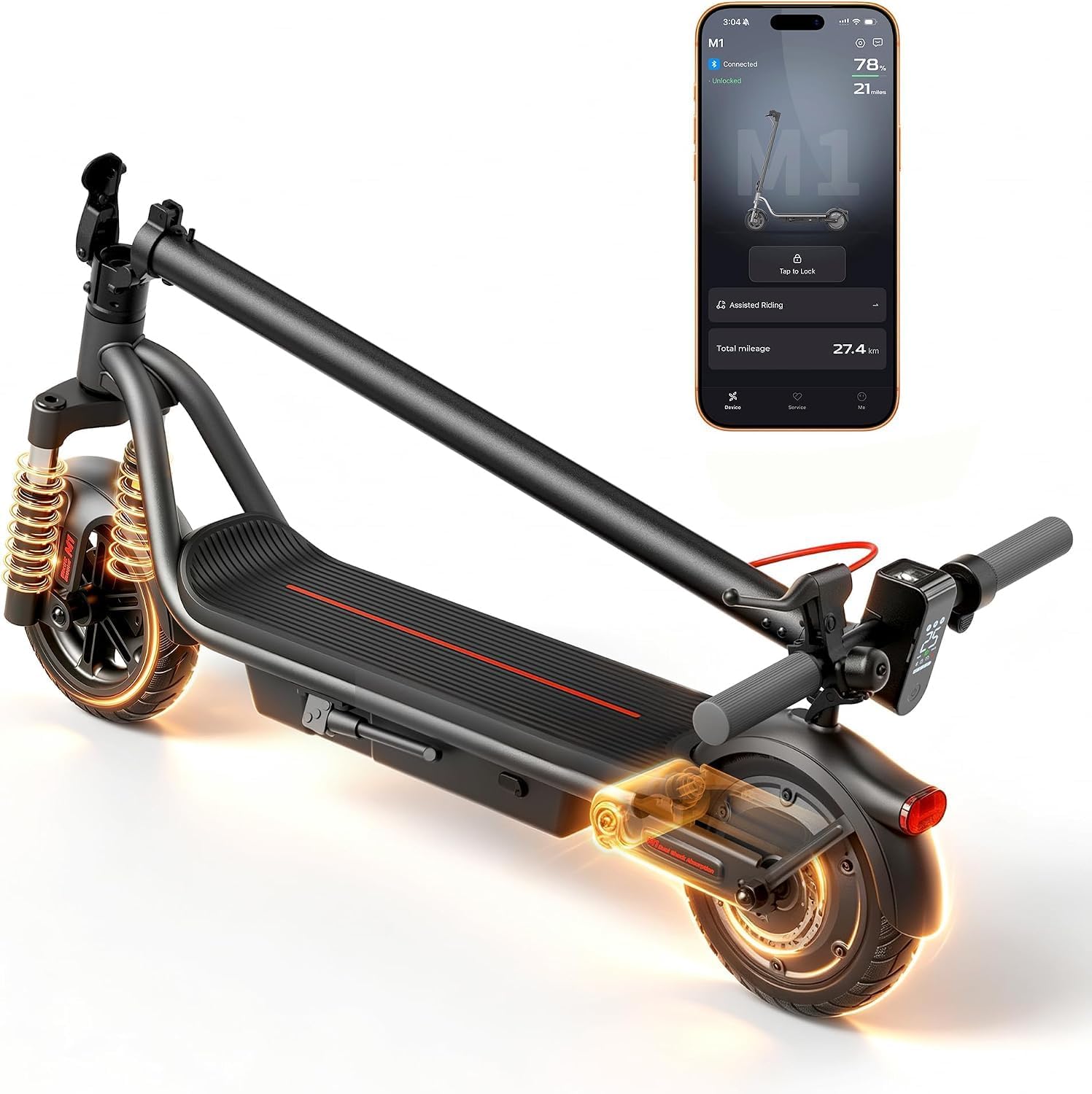
Electric Scooter with 28/19 mile range and 550W motor
The only true stand-up commuter in the group: real deck, real stem, 20 mph ceiling that is honest for city riding
Two range numbers on the box is a marketing tell, and the listing does not spell out tire type
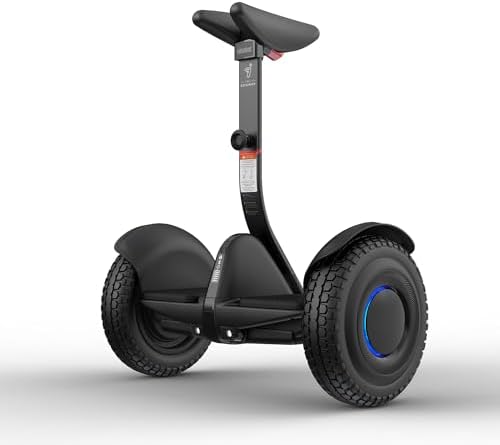
Segway Ninebot S2 Self-Balancing Scooter
Segway engineering, 10-inch tubeless tires, and a platform that is genuinely stable and fun
It is not a commuter scooter. You cannot hang a bag on it, and range is not what it is for
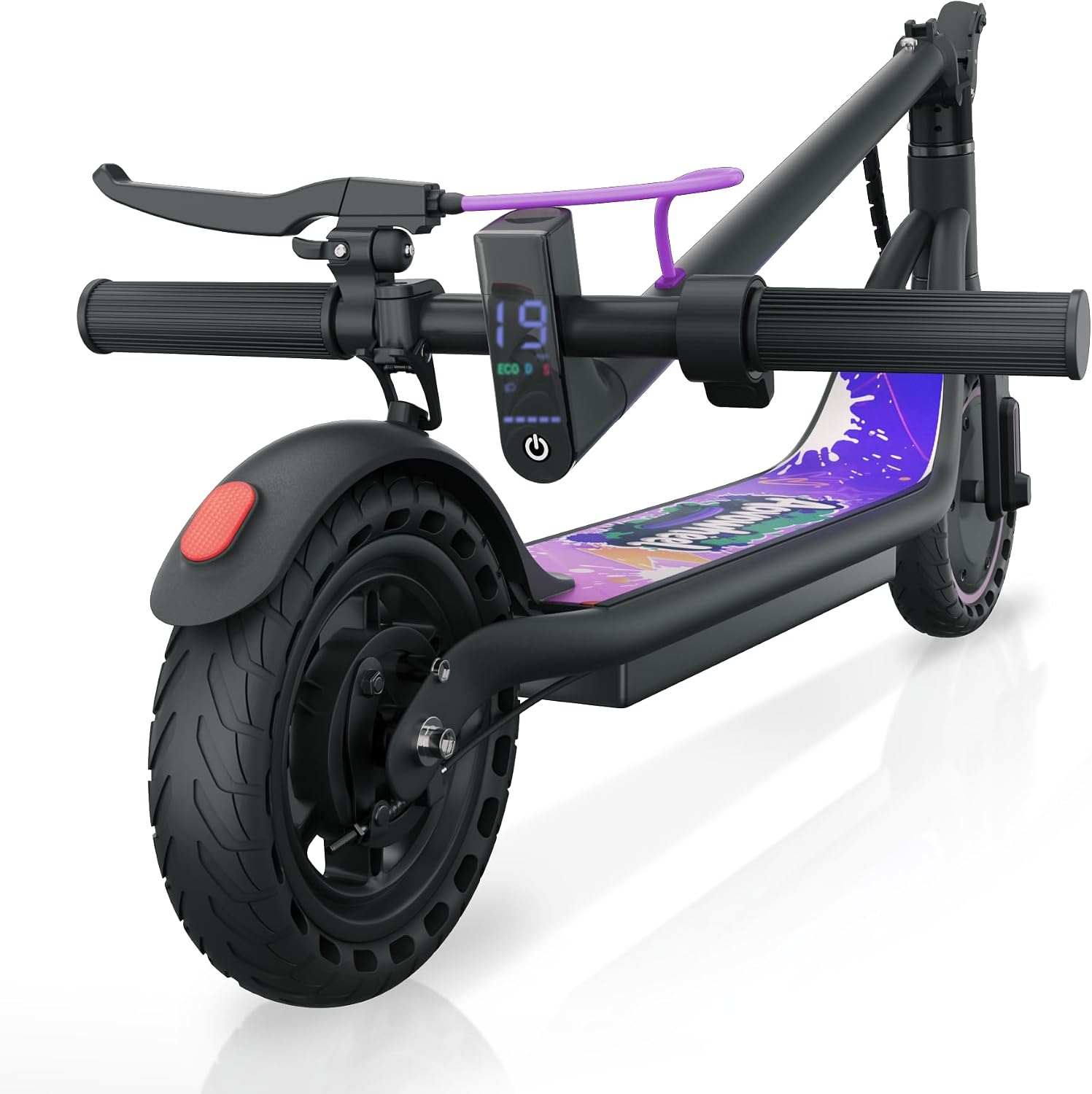
Aovowheel Folding Electric Scooter for Adults
The cheapest way into folding micromobility, and it folds small enough for a trunk or a bus rack
At this tier the battery and the controller are what got compromised, so treat it as fair-weather and short-trip
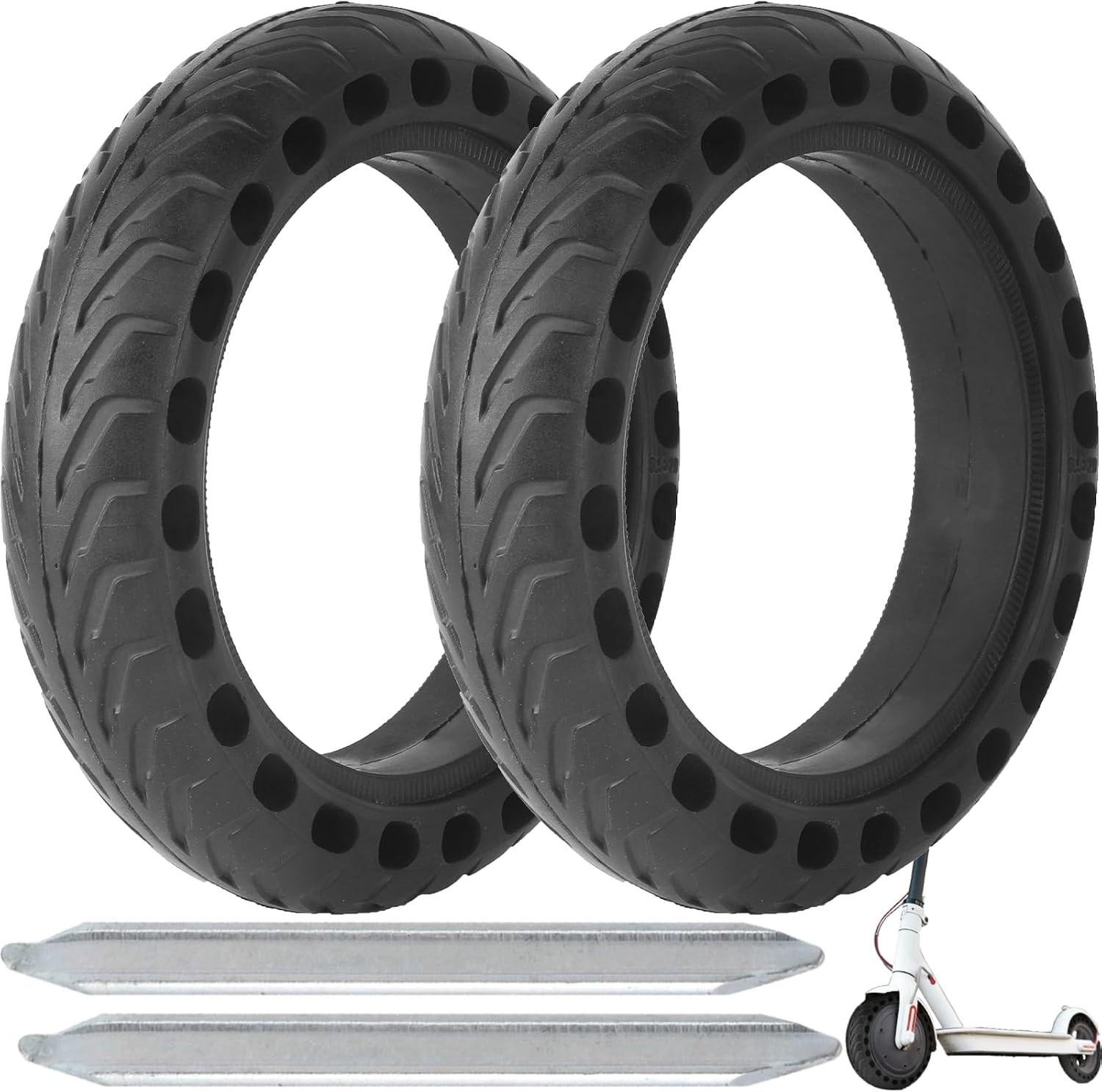
AR-PRO 8.5 inch Solid Scooter Tires (2-Pack)
Ends flat-tube season for Gotrax GXL V2, Gotrax XR, and Xiaomi M365 and M365 Pro owners
Solid rubber rides harsh, grips less in the rain, and mounting a pair is a workout
Prices and availability were captured from Amazon Creators API and may change.
How I judge a scooter I have not ridden yet
I keep a spreadsheet of every mile I have ridden, every tire pressure I have logged, and every range claim a manufacturer has told me that turned out to be fiction. That spreadsheet is why I can look at a listing and tell you which numbers are real and which ones were measured with a 120-pound rider, no wind, and a freshly charged pack on a flat lab floor.
So when a scooter shows up with two range figures, like 28 miles and 19 miles, I do not roll my eyes. I actually appreciate it. That is a manufacturer admitting there are two conditions: an eco mode and a normal mode, or a light rider and a heavier one. One number is a marketing decision. Two numbers is a spec sheet written by someone who has ridden the thing.
The other three questions are less forgiving. Watt-hours is the only battery number that matters, and if a listing only gives you amp-hours, you are being managed. Tires decide whether you spend your Saturdays patching tubes or riding. And the controller, which nobody markets and nobody tests, is the part that strands you at 9 PM with a burnt-toast smell and a long walk home.
The stand-up commuter: 550W and a 20 mph ceiling
This is the one I would actually commute on. It is a stand-up scooter with a folding stem, a deck you can stand on for 40 minutes without your arches filing a complaint, and a 550W motor with a 500W figure listed alongside it, which usually means a nominal rating and a peak rating. That is normal and not a red flag, as long as you understand that peak watts are a party trick the scooter can only hit for a couple of seconds.
The 20 mph top speed is the right number for a commuter. I have ridden scooters that do 40, and I have watched people get pulled over on them in Austin. Twenty miles per hour gets you across the bridge and down the bike lane faster than the bus and does not make you the story your neighbors tell. The range figures, 28 and 19 miles, bracket what I would expect from a battery in this class: 19 is your real-world number at my weight with hills, 28 is what you get if you are lighter, in eco, and the wind is being kind.
What I would want to verify before buying: the tire type, the IP rating, and the watt-hours. If it ships on tubed tires, budget for the fact that Texas heat and potholes will eventually find you. If it carries an IP54 or better, it can handle a drizzle. If the listing gives you watt-hours, great, compare it. If it only gives amp-hours, that is your first data point about how this company talks about its product.
The Segway Ninebot S2 is a different animal
I need to be direct about this one, because it shows up in scooter comparisons and it does not belong in the same category. The Ninebot S2 is a self-balancing scooter. You stand on two foot pads with nothing in front of you, no stem, no handlebar, and you steer with your knees and your lean. It is not a vehicle you commute 14 miles on while carrying a laptop bag.
What it is: the best-engineered version of the self-balancing idea you can buy, from the company whose engineering I trust more than anyone else in micromobility. I rode a Ninebot Max for a full year of abuse and it never once left me walking, and that reputation is why the S2 is on this list at all. The 10-inch tubeless tires are the detail I care most about. Tubeless means no tube to pinch, no tube to patch, and a much better shot at surviving a pothole at speed. That is the single most commuter-relevant spec on the machine.
Buy the S2 if you want a stable, well-built, genuinely fun last-half-mile machine for campus, a warehouse floor, or a boardwalk. Do not buy it if your plan involves a bridge, a backpack, or 12 miles each way. Different tool, different job.
The Aovowheel folding scooter: what the entry price buys
There is a whole tier of folding adult scooters that exists to get you in the door cheaply, and the Aovowheel sits squarely in it. The fold is the feature. It collapses small enough to drop in a trunk, carry onto a bus, or stash under a desk, and for a lot of people that convenience is the entire reason they are looking at a scooter instead of a bike.
My honesty rule applies here: at the entry tier, what got compromised is the battery and the controller, because those are the two most expensive parts and the two a manufacturer cannot fake with marketing. That does not make it a bad buy. It makes it a short-trip, fair-weather, low-mileage buy. A mile to the coffee shop, a mile and a half to the train, a run to the corner store. If that is your use case, the entry tier is exactly where you should be shopping, and you should keep the thing charged and dry.
What I would not do is buy it expecting 20-mile commutes. The person who buys a budget folding scooter for a 14-mile round trip is the person who ends up walking the last three miles with a dead pack, and I have been that person. Buy it for the fold, ride it within its limits, and save for something with a bigger battery when you outgrow it. Everyone outgrows their first scooter in about a month.
The AR-PRO solid tires: flat-tire insurance
This is the one item here that is not a scooter, and it is arguably the most useful thing on the list. The AR-PRO 8.5 inch solid tires come as a two-pack, sized 8 1/2 x 2, and they are listed as compatible with the Gotrax GXL V2, the Gotrax XR, and the Xiaomi M365 and M365 Pro. If you own one of those scooters, you already know why these exist.
Tubed tires on a commuter are a maintenance subscription. You will pinch-flat on a pothole, or you will pick up a goathead, or the heat will do what Texas heat does to rubber, and you will either learn to patch a tube on the side of the road or pay someone who can. I have patched four tubes in four years and I have the scar to prove it. Solid tires end that cycle. No tube, no valve, no pump ritual before every ride.
The trade-off is real and I will not soften it. Solid rubber has less grip, especially in rain, and it transmits every crack in the pavement straight into your wrists. It also takes real effort to mount, and if you have never changed a scooter tire, budget an afternoon and a set of tire levers. But for a GXL V2 or an M365 that is doing daily short errands in a city with bad pavement, a solid rear tire is the difference between a scooter you ride and a scooter you leave in the garage because you do not want to deal with the flat.
Watt-hours, hills, tires, and the controller
Four things decide whether a scooter survives a commute, and none of them are the top speed printed on the box.
Watt-hours first. Multiply voltage by amp-hours and you get the actual capacity. A scooter that lists amp-hours without voltage is hiding something. Compare watt-hours across candidates and the range question answers itself, because real range is roughly watt-hours divided by your weight, your speed, and how much climbing you do.
Hills second. If a scooter cannot climb the bridge at my weight without voltage sag drama, it does not matter how fast it goes downhill. That is the first test, not the last one. Voltage sag is what you feel when the battery drops to half and suddenly the scooter rides like it is at 20 percent.
Tires third. Tubeless beats tubed for commuting, full stop. Solid beats tubed for reliability and loses on comfort and wet grip. Know which trade you are making before you buy, not after.
The controller fourth. It is the soul of the scooter and the first thing to die on a cheap one. A controller that cannot handle a sustained 20-minute full-throttle run is a controller that will fail on the hottest day of the year, which is always the day you needed it most.
Who should buy which
Buy the 550W stand-up scooter if you are commuting, period. It is the only machine here with the deck, the stem, the motor, and the range figures for a real daily ride, and 20 mph is the honest commuter speed.
Buy the Segway Ninebot S2 if you want a self-balancing machine and you understand that is a different sport. Ten-inch tubeless tires and Segway build quality are the reasons to pick it over the no-name alternatives.
Buy the Aovowheel folding scooter if your trips are short, your storage is tight, and your budget is the constraint. Fold it, ride it a mile, and do not ask it to be something it is not.
Buy the AR-PRO solid tires if you already own a Gotrax GXL V2, a Gotrax XR, or a Xiaomi M365 and you are tired of patching tubes. Two tires, one afternoon, and flat-tire season is over.
And whichever one you pick, wear a helmet. I have worn one on every single ride since an ER nurse explained to me what a scooter crash without one looks like, and no spec on this page matters as much as that one habit.