Most people buy a commuter electric scooter the way they buy a blender: find the biggest number on the box, hope for the best. Then the range claim turns out to be a lab fiction measured with a 120 pound rider and no wind, the deck flexes under an actual adult, and the controller quits on a Tuesday in August.
I have been car-free in Austin for four years, riding 14 miles round trip across the Congress Avenue bridge most weekdays. Seven scooters in that time. I have patched four tubes, replaced a deck, blown two controllers, and kept a log of every mile, every tire pressure, and every range claim that turned out to be a lie.
Picking a commuter electric scooter stops being a mystery once you know the order to check things in. Here is mine.
Why you should trust me
I do not review scooters from a desk. I ride them to work, in 105 degree heat, in rain I pretend is fine, and up a bridge that punishes anything with a weak controller. My current daily rider is a two year old Ninebot Max with a dented fender and a zip-tied charger, which tells you what I think about buying new every spring.
I keep a repair log in a battered notebook and a spreadsheet of watt-hours pulled per mile. That spreadsheet is why I no longer repeat manufacturer range claims, and why I ask for watt-hours before anything else in a conversation about a scooter.
Two rules I hold to. No scooter gets recommended without surviving the full loop at my actual riding weight. And no scooter gets ridden without a helmet, ever. An ER nurse explained to me what a scooter crash without one looks like, and I have not skipped it since.
I also have no interest in selling you the most expensive thing in the category. My favorite scooter is not the fastest one I have owned. It is the one that never made me walk.
How I picked and how I tested
This is not a list of every scooter on the market. It is the two I would actually hand to two different people: the rider who wants one scooter that lasts, and the rider who needs to start at a lower price without buying garbage.
Everything gets judged against the same five questions. What is the real watt-hour capacity, and does the spec sheet hide it? Can it climb the bridge at my weight without voltage sag drama? What tires does it ride on, and how much will I hate them in August? What happens to the controller under a sustained full throttle run? Would I trust it to get me to work and back on a 105 degree Tuesday?
The test loop is my actual commute. Fourteen miles round trip, one real climb on the bridge, a mix of protected bike lane and road shoulder, and enough broken pavement to find out what a deck and a set of tires are made of. Same rider weight, same tire pressure, same August heat, every time. That consistency is the only reason my numbers mean anything.
Watt-hours come first because they are the one battery number you can compare across brands. Amp-hours are marketing math unless you also know the voltage. Peak watts are a party trick the scooter holds for about two seconds on a stand while a camera films it.
The two scooters I would start with
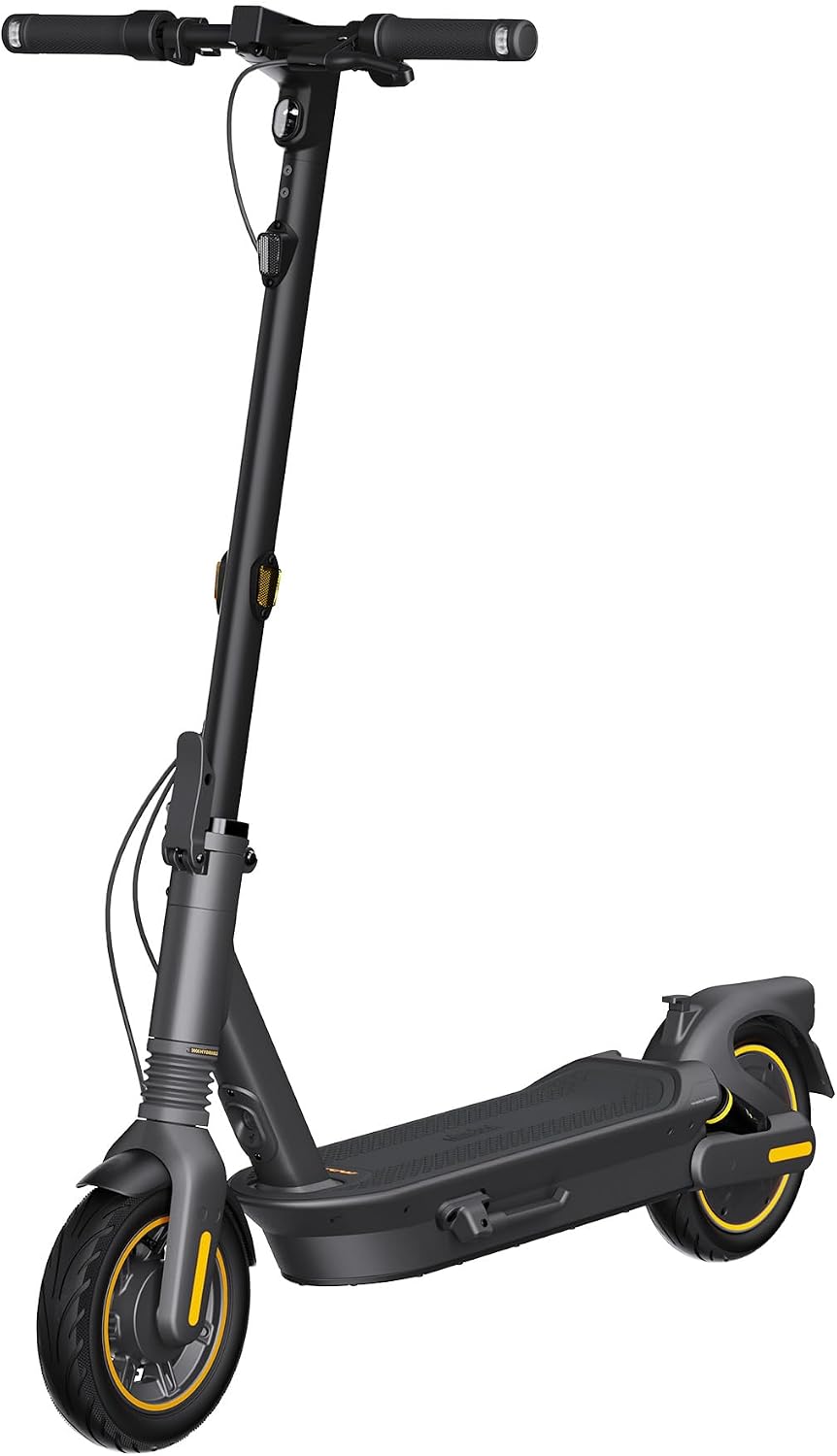
Our pick: Segway Ninebot MAX G3 Plus/G3 / G2 Electric Scooter for Adult, UL Certified
 Visit on Amazon →
The MAX line is the platform that made me respect Segway engineering. An earlier Ninebot Max survived a full year of my abuse, bridge climbs, potholes, rain, and never once left me walking. That track record is the entire reason this is the scooter I point first time commuters toward when they ask what to buy once instead of twice.
UL certification matters more than the marketing suggests. It is the difference between a battery pack that has been through independent testing and one that is a promise from a factory nobody can name. The battery management system is exactly where cheap scooters cheap out, and the BMS is the part that keeps the cells balanced.
Flaws but not dealbreakers: It is a real scooter with real weight. If you live on the third floor of a walk-up, carry it up the stairs once before you commit, because a scooter you cannot carry is a garage ornament.
Anyone who wants one scooter to cover a genuine commute for years, with service and parts that exist, should start here.
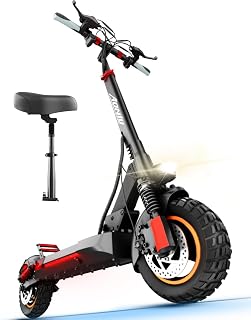
Budget pick: M4 Electric Scooter for Adults Off Road Escooter for Commuting
 Visit on Amazon →
The M4 sits in the price bracket where most people buy their first scooter, and the listing leans into off road and commuting at the same time. That combination is worth understanding rather than dismissing. A wider, more aggressive tire can be genuinely comfortable on broken pavement, and most of the bike lanes I ride are broken pavement.
What I would verify before ordering, because at this price point the details decide everything: the watt-hour figure rather than the amp-hour figure, the tire type, and the IP rating. Ask those three questions and you will know more about the scooter than the marketing copy ever tells you.
Flaws but not dealbreakers: Budget controllers are the first thing to fail on any inexpensive scooter. Treat the throttle as a tool and not a toy, and avoid holding full throttle up a long grade in the heat.
Anyone shopping on a tight budget, or buying a first scooter to learn on before spending real money, should look here first.
How to read a spec sheet in the right order
Step one: convert everything to watt-hours. Multiply voltage by amp-hours. A 36 volt pack with 10 amp-hours is 360 Wh. A 48 volt pack with 7.5 amp-hours is also 360 Wh. Now you can compare them. If a listing gives you only amp-hours, assume the missing number is hiding something.
Step two: divide by real consumption. A commuter scooter at 185 pounds, in summer heat, with a headwind, burns roughly 25 to 35 watt-hours per mile. Divide your battery capacity by 30 and you have a realistic range estimate. A 360 Wh pack is about 12 miles of honest riding, not the 25 on the box.
Step three: check the tires. Tubed tires are a maintenance subscription. They pinch flat on potholes, and in Texas heat they do it more often. Tubeless is the upgrade worth paying for on a commuter. If it ships tubed, budget for a patch kit and learn to use it before you need it on the side of the road.
Step four: weigh it against your stairs. Carry weight, not riding weight. Three flights and no elevator means the scooter has to be manageable in one hand or you will quietly stop using it.
Step five: find the IP rating. IP54 is rain safe-ish. Anything less is a fair weather toy, and "water resistant" with no number attached is a sentence, not a specification.
Step six: look for UL certification. This is not about performance. It is about whether the battery pack has been independently tested. I have smelled what a cheap controller and a cheap pack do when they give up, and it smells like burnt toast.
The pre-purchase checklist, in order
Ask for watt-hours. If the seller cannot or will not give you voltage and amp-hours, walk away. That is not a red flag, it is a wall.
Ask about the controller. It is the soul of the scooter and the first thing to die. A cheap controller will strand you at 9 PM with that burnt toast smell and a long walk home. I know because I have taken the walk twice.
Check hill performance against your actual hill. If it cannot climb the bridge, downhill speed is irrelevant. My commute is decided by one grade, and that grade has eliminated more scooters from consideration than any other single factor.
Check the tire situation. Tubed or tubeless, and what size. An odd tire size means waiting a week for a replacement while your scooter sits in the hallway.
Check folded dimensions and weight. Measure your trunk, your closet, and the corner of your office before you order, not after.
Check the brakes. Regenerative braking is a rounding error for range, but it does save your brake pads. Mechanical brakes are what actually stop you, so make sure they exist and are serviceable.
What to do in the first week
Set your tire pressure before the first ride and check it weekly. This is the most ignored spec on scooters, and running 10 PSI low costs you range, speed, and tube life. I say that as someone who averages about once a month instead of weekly and has the flat tube scar to prove it.
Ride your actual commute once before you trust it. Not a loop around the block. The real route, at the real time of day, with the real hills, carrying the real bag.
Log your first three charges. Note the miles you got and the conditions. That is your real range, and it will be lower than the box said. Keep the number, because every future range question you have is answered by it.
Wear a helmet. Every ride. That is not a suggestion in this article, it is the price of admission.
The mistakes that cost the most money
Buying on peak watts. A scooter that hits 1,200 watts for two seconds on a stand is not a fast commuter. Sustained power is what climbs hills, and sustained power comes from watt-hours and a controller that can take the heat.
Buying range instead of watt-hours. Every brand measures range differently, on a different rider, in a different wind. Watt-hours are physics.
Buying a 60 mph scooter to ride at 18 mph. I bought a used Kaabo once and learned exactly why you do not need a rocket with handlebars to cross a bridge. Amazing fun, terrible commuter, and in Austin it gets you pulled over.
Buying tubed tires and pretending you will maintain them. You will patch a tube or you will pay someone who can. There is no third option.
Buying a scooter you cannot carry. See above.
What this all costs
The two scooters here sit in two different brackets, so check current Amazon price on each rather than trusting a number you read last month. Budget for the accessories that are not optional: a helmet, a pump with a gauge, a patch kit or spare tube, and a lock. That is the real cost of entry, and it is still smaller than one month of car payments.
The cost per day math is the easy part. A scooter that lasts three years and gets used 250 days a year is cheap. A scooter that dies in eight months because the controller was a twelve dollar part is expensive no matter what you paid for it up front.
The bottom line
Pick the watt-hours first, then the tires, then the controller, then the weight. Speed is the last thing you should care about and the first thing the box wants to sell you. Do it in that order and a commuter electric scooter stops being a gamble and starts being a tool. Buy the one that can climb your hill, carry your weight, and still be worth repairing in year three.