
The headline on every scooter forum is the same question: "Can I ride this on the sidewalk?" The answer is always "it depends," which is the most useless phrase in the English language. So I dug through the actual statutes, municipal codes, and the fine print that manufacturers pray you never read.
Related: Best Electric Scooter for Heavy Riders in 2026: Tested at 220+ lb, Not 120
Here is the electric scooter laws by state guide, written by someone who has been pulled over once (Austin PD, warning, no ticket) and has the repair log to prove she rides enough to care.
The short version: there is no federal law. It is a patchwork of 50 different rulebooks, and the only thing they agree on is that you should probably wear a helmet.

A Practical Guide to the Law and Regulation of E-Bikes and E-Scooters: Simons,...
The only resource that covers actual case law and municipal code, not just blog summaries.
It's a textbook, not a beach read. You'll need it for the deep dive, not the quick answer.
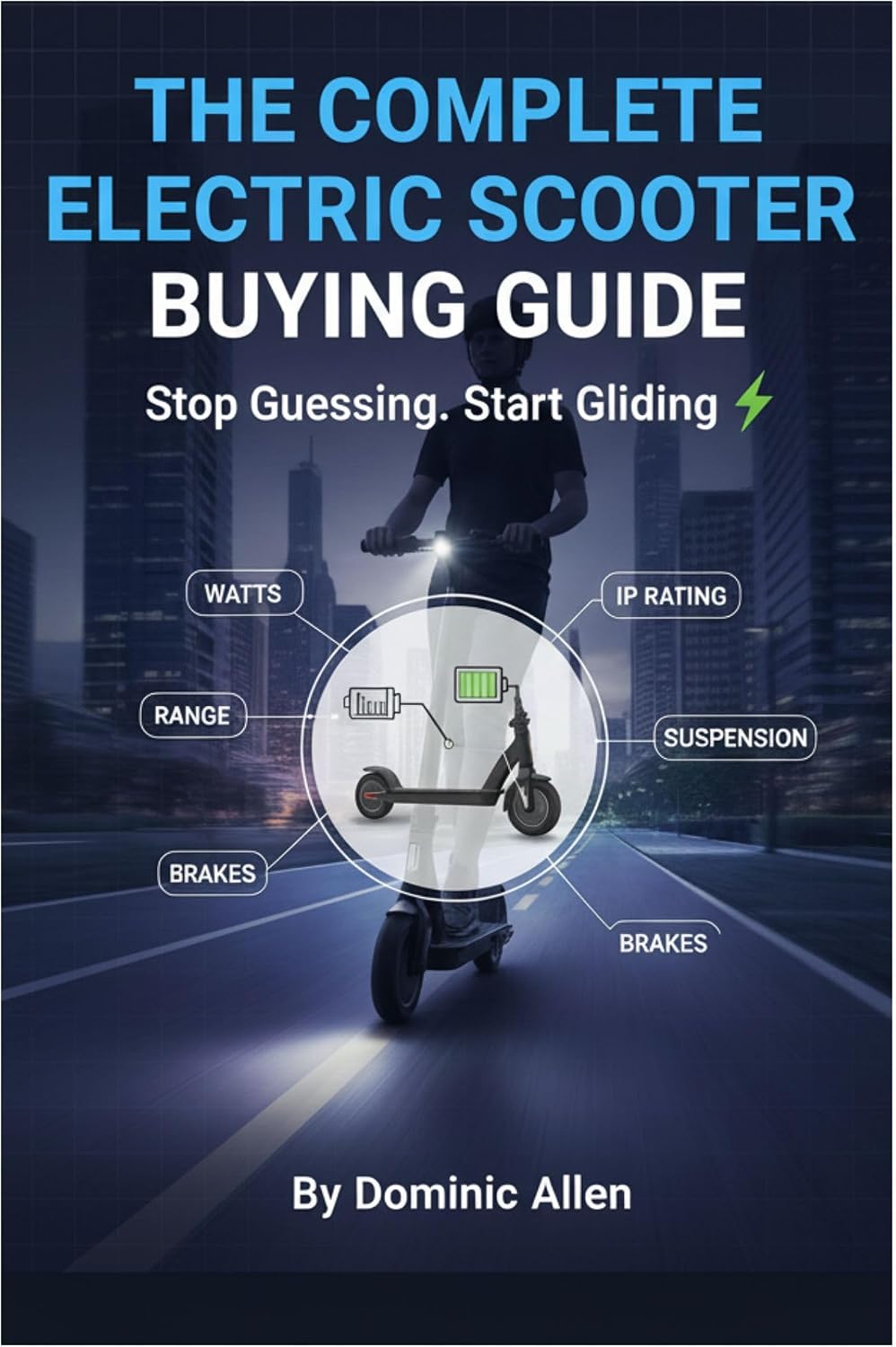
The Complete Electric Scooter Buying Guide Stop Guessing. Start Gliding: Your...
Good for figuring out what scooter to buy before you worry about where you can ride it.
No legal info whatsoever.
Prices and availability were captured from Amazon Creators API and may change.
I learned this the hard way. I was riding my Hiboy on the sidewalk on South Lamar because the road felt like a death trap at 7 AM. A cop waved me down. He didn't care about my speed, my helmet, or my lack of a license.
He cared that Austin's city code says no sidewalk riding in the central business district. The state law said it was fine.
The city said it wasn't. The city won, and I walked the rest of the way pushing a 40-pound scooter.
Pros of the current legal landscape:
- Most states have actually passed laws, so you're not in a gray area anymore.
- Helmet laws are more lenient than motorcycle laws, even when they exist.
Cons:
- The patchwork is exhausting. A scooter legal in one county can get you a ticket 10 miles down the road.
- Enforcement is wildly inconsistent. I've ridden past cops at 25 mph without a glance, and I've seen a guy get a ticket for riding on the sidewalk in a residential zone where no one was walking.
The State-by-State Breakdown Nobody Gives You
Let's start with the states that have actual, specific e-scooter laws. The rest of the country is either "no laws" or "they classify it as a motor vehicle, which is insane."
California is the benchmark. The state legalized e-scooters in 2018 with a set of rules that most other states copied: no sidewalk riding, no riding without a valid driver's license (yes, really, even for a 15 mph scooter), and a 15 mph speed limit on public roads.
The license requirement is the killer. I've met grown adults in LA who didn't realize they were riding illegally because they never got a driver's license.
The state also requires you to yield to pedestrians and gives cities the power to ban scooters entirely.
San Francisco did exactly that, and it took years for the rental companies to claw their way back.
Texas is where I ride, and it's a mixed bag. State law says scooters are "motorized mobility devices," which means they're not subject to registration, insurance, or a driver's license. You can ride on the road, and you can ride on the sidewalk unless a city says otherwise.
Austin says otherwise in the downtown core. The speed limit is 20 mph on roads, and there's no helmet requirement for adults, which I think is a mistake.
I've taken three over-the-handlebar dives. A helmet saved my skull on at least one of them.
New York is the most confusing. The state legalized e-scooters in 2020, but only after a long fight, and the rules are specific: no sidewalk riding, a 15 mph speed limit, and you must be 16 or older.
The twist is that New York City has its own rules that are even stricter, and the NYPD has been known to enforce them aggressively.
If you're riding in Manhattan, you're likely breaking a rule somewhere.
Florida is the wild west. The state passed a law in 2023 that preempts local bans, which means cities can't outright ban scooters anymore. But the law doesn't require helmets for adults, doesn't set a speed limit beyond the 25 mph default, and leaves sidewalk rules to local governments.
The Florida downtown dweller I've mentioned before, the one who did a wheelie on his first ride, rides everywhere, including sidewalks, and has never been stopped.
Your mileage, as they say, will vary.
The rest of the country:
- Arizona and Nevada follow California's model closely. Helmet required under 18, no sidewalk riding in business districts.
- Illinois and Michigan have laws that treat e-scooters like bicycles. You can ride in bike lanes, and you're subject to the same DUI laws.
- Georgia and North Carolina are lenient: no helmet law for adults, no license requirement, and sidewalk riding is allowed unless a city says otherwise.
- Oregon and Washington are strict: helmet required for all riders, no sidewalk riding, and a 15 mph speed limit.
The states with no laws at all, like Mississippi and Alabama, default to treating e-scooters as motor vehicles. That means you need a license, registration, and insurance. I have no idea how that's enforced, but it's technically the law.
The Real Problem: Enforcement Is the Law
Here's what no guide will tell you: the law is only as real as the cop who's enforcing it. I've ridden in Austin for two years, and I've been stopped exactly once. I know riders who've been ticketed three times in a month. It's luck, it's timing, and it's how you look.
The bigger issue is that most states have laws that were written by people who have never ridden a scooter. The 15 mph speed limit in California is a joke when the scooters themselves can hit 25 mph. The sidewalk bans ignore the reality that many roads are simply too dangerous for a 10-inch wheel.
And the helmet laws, or lack thereof, are a public health failure that I see every time I pass a rider without one.
What This Means for Your Wallet
If you get a ticket, it's not cheap. Sidewalk riding fines in Austin run $75 to $200. Riding without a license in California can cost you $250 plus points on your record. And if you're in a state that treats scooters like motor vehicles, a DUI on a scooter is a DUI, period.
I know a guy who lost his license for six months because he rode home from a bar on a rental scooter.
The scooter was the reason he was safe. The law didn't care.
So here's my advice, and it's worth more than the $8.99 you'd spend on the maintenance book:
First, check your city code before you check your state law. Most cities have their own rules, and they're usually stricter. A quick search of "[your city] electric scooter ordinance" will tell you more than any state summary.
Second, assume the worst. If you're riding on the sidewalk, assume it's illegal until you've confirmed it's not. If you're riding on the road, assume you need to follow the same rules as a bicycle.
Third, wear a helmet. I don't care what the law says. I've hit a pothole at 20 mph and gone over the bars. The helmet cracked. My head didn't. That's the only law that matters.
Fourth, carry proof of purchase and ID. Some states require you to have a license, and even the ones that don't, cops will ask. Having your scooter's manual on your phone can help if you're arguing about whether it's legal.
Fifth, know your scooter's actual speed. The iScooter iX3/iX4 I'm testing claims 25 mph. In reality, on a full charge, with a 215-pound rider, it tops out around 22 mph. That's a big difference when the law says 20 mph is the limit. You're rolling dice every time you hold it wide open.
The Book That Actually Helps
If you're going to buy one resource, make it A Practical Guide to the Law and Regulation of E-Bikes and E-Scooters for $74.99. It's not cheap, but it's the only book I've found that covers the actual legal framework, including municipal code, rather than a blog post summary.
It's dry, it's dense, and it's exactly what you need if you're trying to fight a ticket or start a rental business.
For the rest of us, [Easy E-Scooter Repair & Maintenance: The Complete Guide for Every] at $8.99 is the better buy. Because the law is the law, but a flat tire at midnight is a personal emergency. This book covers the basics: tube replacement, brake adjustment, and how to diagnose a controller failure before it smells like burnt toast.
I've replaced four tubes in my time, and I wish I'd had this book for the first one.
If you're thinking about turning your riding habit into a side hustle, [Start Your Own E-Bike Business: Electric Bikes, Electric Scooters, and] at $14.99 covers the business side, including the insurance and liability questions that most riders never think about until it's too late.
And if you haven't bought a scooter yet, [The Complete Electric Scooter Buying Guide Stop Guessing. Start Glidin] is a solid starting point. It won't tell you about the law, but it will tell you why a scooter with a 10-mile real-world range is useless for a 14-mile commute.
Should You Buy a Scooter in Your State?
You should buy a scooter if you live in a state with clear laws that allow road riding. You should think twice if you live in a city with aggressive enforcement or a state that treats scooters like motor vehicles. But you shouldn't let the law stop you entirely. The law is changing every year, and most enforcement is targeted at rental riders, not owners.
I'll circle back and update this guide as the laws change. I'm also tracking the iScooter iX4's battery sag and whether the throttle holds up past 600 miles. The law is a moving target, but the scooter is the constant. Ride safe, and for the love of god, wear a helmet.