Related: Electric Scooter Tire Pressure: The Cheapest Range Upgrade You Can Make
I ride 14 miles round trip across the Congress Avenue bridge every workday, and I have for four years. In that time I have killed two controllers, patched four tubes, replaced a deck, and learned one thing the hard way: a commuter electric scooter is not bought on top speed. It is bought on whether it gets you to work and back without a walk of shame.
That is the whole test. Not the number on the box. The bridge at 7:40 AM, loaded, in August, with the battery sagging somewhere past half. If a scooter holds speed up that grade, it is a commuter. If it cannot, it is a toy with a headlight.
Here is what I look at, in order. Watt-hours first, because Wh is the only honest battery number. Amp-hours are marketing math, and peak watts are a two-second party trick that tells you nothing about a twenty-minute climb. Tires second, because tubed tires on a daily rider are a maintenance subscription. The controller third, because a cheap one strands you at 9 PM with a smell like burnt toast. Weight fourth, because a scooter you cannot carry up three flights of stairs is a garage ornament.
What follows is four products I would put in front of a commuter: three scooters at different points on the capability ladder, and one unglamorous accessory that has saved more rides than any spec sheet. I will not print a price for any of them. Prices move weekly, and a guide that lies about price is a guide that lies about everything.
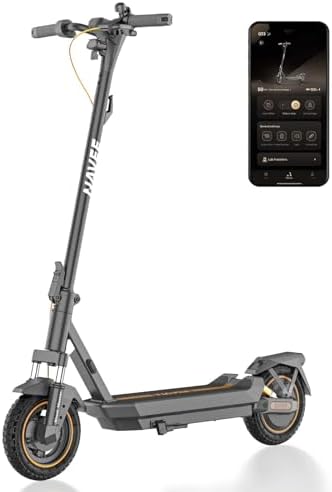
Best for Distance: NAVEE GT3/ST3/GT5 Series
NAVEE builds this line in several trims, and the listing reads 20 to 25 MPH top speed, a 1000 to 1638W motor, and a claimed max range running from 30 miles to 55.9 miles depending on which one you buy. Read that range the way you read any range claim: the big number belongs to the biggest battery, the lightest rider, the flattest road, and the freshest charge. You will not see 55.9 miles at 185 lb with a headwind. What you will see is a scooter with enough battery to make a 14-mile round trip without begging for an outlet at your desk.
The parts that matter for commuting are here. Ten-inch tires, which is the minimum I will ride on chip seal and the difference between rolling over a pothole and getting launched by one. Dual suspension, which in Austin is not a luxury feature, it is a spine feature. And a fold, which matters more than people admit, because the day your office bans scooters from the lobby is the day portability becomes a spec.
The 1638W top trim is the one to look at if your route has a real climb. The 1000W version is fine on flat ground and honest about its limits. If you weigh more than 200 lb or your commute crosses a bridge, buy the motor, not the paint.
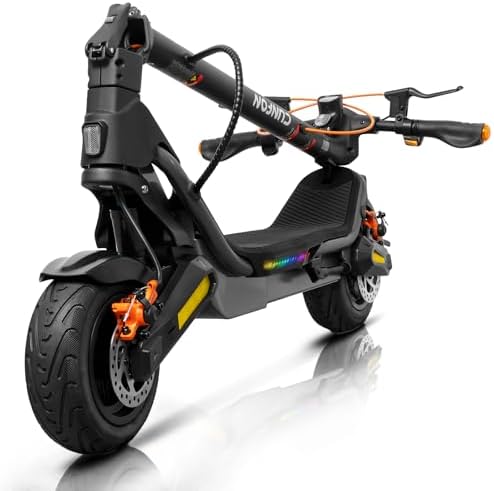
Best for Visibility and Heavier Riders: Cunfon Electric Scooter
Cunfon's listing is unusually honest about load: 220 to 330 lb, a wider range than most scooters in this class will admit to. Claimed peak power runs 1000 to 1600W, claimed speed is 25 to 31 MPH, and claimed range is 25 to 50 miles. Same caveat as always: those are best-case numbers at the top trim.
Two features earn this one a spot for commuters specifically. Turn signals, which almost nothing at this level has, and which matter more than a brighter headlight because drivers behind you cannot see your hand when it is dark and raining. And adjustable damping suspension, which means you can firm it up for a loaded rider or soften it for broken pavement.
It folds, and the load rating means a bigger rider is not automatically shopping for a dual-motor flagship. If you are 250 lb and tired of being told every scooter is rated for 265, this is the one in this group that speaks to you.
Best Budget Entry: Electric Scooter with APP Control
This one is the budget door. The listing covers several configurations: 500W, 1000W, or 1200W motors, 8.5-inch or 10-inch tires, and claimed ranges of 21, 23, 25, or 28 miles depending on which version you land on. The APP control is the interesting part at this price, because it usually means you can tune acceleration and read battery state instead of trusting a four-bar display.
Buy the 10-inch version. I will say that plainly. The 8.5-inch tire is fine on smooth pavement and miserable everywhere else, and the gap between the two is smaller than one flat-tube repair. The 1200W trim is the one that will hold a hill. The 500W trim is a flat-city scooter and should be sold as one.
For a first scooter or a short commute, this is a reasonable way in. Just know what you are buying: a smaller battery, which means charging more often, which means the range number matters more here, not less.
The Accessory That Saves the Day: 42V 2A UL Certified Charger
This is the least exciting product in this guide and the one I would buy first. A 42V 2A charger for 36V lithium packs, UL certified, which is the part that matters. Chargers are the failure point people never plan for, and an uncertified one is a fire risk sitting on your floor overnight.
My rule is one charger at home, one at the office. A 14-mile round trip on most of these scooters leaves you with a partial charge at the end of the day, and a partial charge means voltage sag, and voltage sag means a slower ride home. A second charger turns your desk into a charging station and removes the biggest excuse for driving.
It is also the cheapest insurance in this article. If your stock charger dies, you are not hunting for a replacement while your scooter sits in the hallway.
The commuter scooter reference table
This is the table I keep when I compare listings, and it is built the same way every time: claimed numbers in the middle, what they mean for a real commute on the right. Every figure in the middle columns comes from the manufacturer. Treat them as ceilings, not averages.
| Scooter | Claimed top speed | Claimed max range | Motor | What it means on a commute |
|---|---|---|---|---|
 Visit on Amazon → Visit on Amazon →NAVEE GT3/ST3/GT5 Series |
20 to 25 MPH | 30 to 55.9 miles | 1000 to 1638W | The distance pick, with 10-inch tires and dual suspension |
 Visit on Amazon → Visit on Amazon →Cunfon Electric Scooter |
25 to 31 MPH | 25 to 50 miles | 1000 to 1600W peak | Turn signals and adjustable damping, 220 to 330 lb load |
 Visit on Amazon → Visit on Amazon →Electric Scooter with APP Control |
Not stated | 21 to 28 miles | 500, 1000, or 1200W | Budget entry, choose the 10-inch tire and the bigger motor |
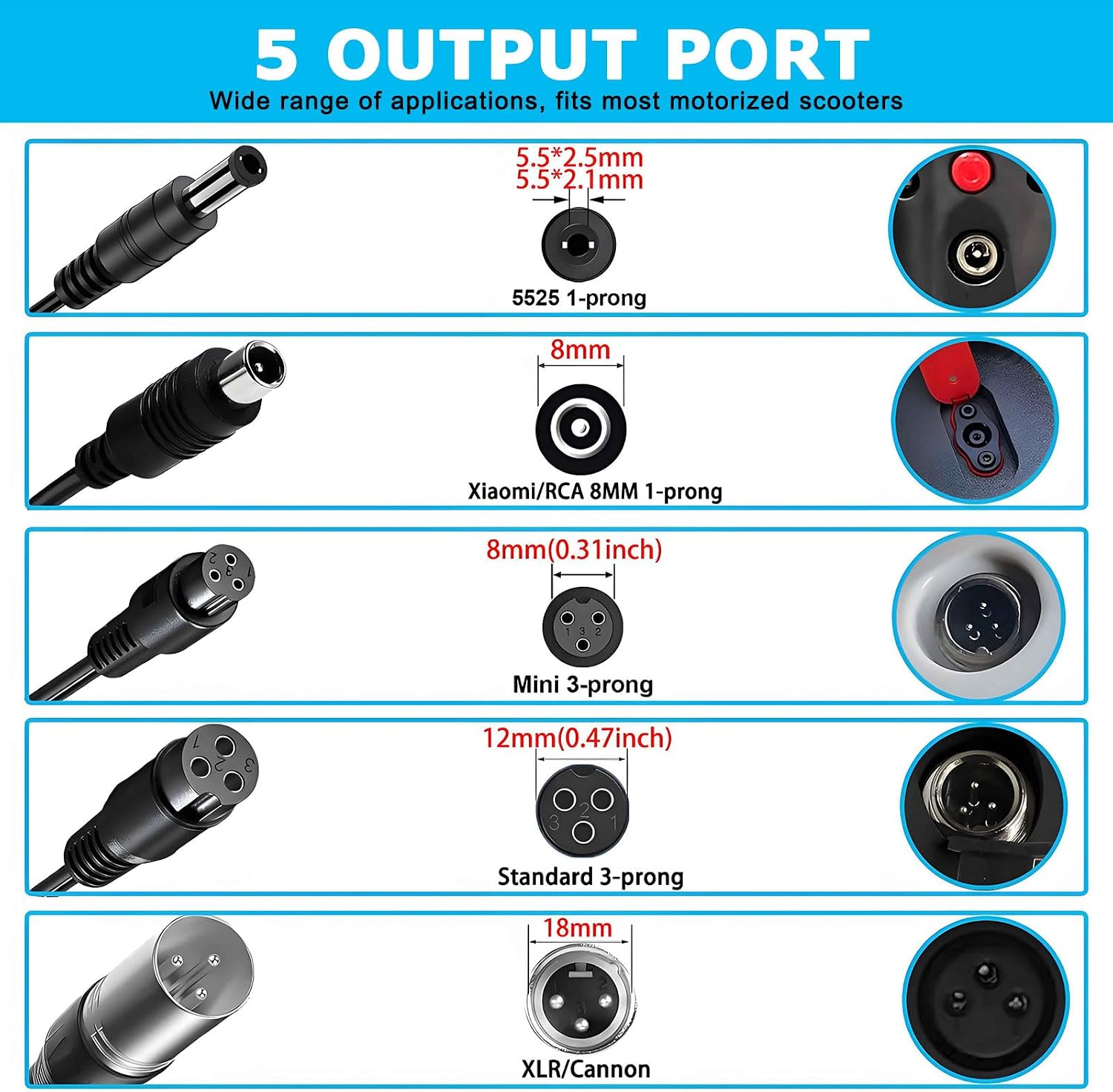 Visit on Amazon → Visit on Amazon →42V 2A UL Certified Charger |
Not applicable | Not applicable | Not applicable | Buy a second one for the office |
How I judge a commuter scooter
Four things, in this order.
The climb. Not the gradeability claim on the listing, the actual hill on your route, loaded, with the battery where it will really be at that point in the ride. A scooter that loses speed on the bridge is a scooter that feels slow every single day. One that holds speed is one you stop thinking about.
The tires. Ten inches or better, and know whether they are tubed or tubeless before you buy. Tubed tires pinch flat on potholes, and the repair is either an hour of your evening or a shop bill. That is not a dealbreaker, it is a subscription you are agreeing to.
The controller. You cannot see it in the photos, which is exactly the problem. It is the part that fails first on cheap scooters, and the only defense is buying from brands with a real support channel and not pushing a budget scooter past its rated load. Heat is what kills them.
The carry. Weigh the scooter in your head against your staircase. If it is heavy and you live on the third floor, you have your answer.
What the specs actually tell you
Voltage sag is the thing nobody warns you about. A pack that reads half full is not delivering half power at full throttle under load. It sags, and sag feels like a scooter that got slower for no reason. That is why the charger in this guide matters more than it looks. Topping up at the office is not a convenience, it is a performance modification.
Range claims deserve the same skepticism. Every number here comes from a manufacturer, and every one of them was produced by a lighter rider than you on a flatter road than yours. When a listing says 55.9 miles, plan for roughly two thirds of that in commuting conditions and be pleasantly surprised if you beat it.
Peak watts are the other marketing trick. A 1600W peak motor is not a 1600W motor. It is a motor that touches 1600W for a moment and settles. What you want is sustained power and battery capacity in watt-hours. If a listing will not give you watt-hours, that is information too.
And tires are not a detail. They are the difference between a scooter you ride and a scooter you fix. Ten-inch tires, correct PSI, checked weekly. That is the whole trick, and it is free.
Should you buy the NAVEE GT3/ST3/GT5 Series?
Yes, if your commute is long enough that range anxiety is what keeps you in the car. The 10-inch tires and dual suspension are the right call for a daily rider, and the trim ladder lets you buy the motor your hills require. Just buy the trim that matches your route, not the one that matches your ego.
Should you buy the Cunfon Electric Scooter?
Yes, if you want to be seen. Turn signals on a commuter scooter are a genuine safety upgrade, and the 220 to 330 lb load rating means heavier riders are not stuck shopping only at the top of the market. The adjustable suspension is a real feature, not a bullet point.
Should you buy the budget APP control scooter?
Yes, with conditions. Get the 10-inch tires and the 1200W motor if your route has any grade at all. This is the right scooter for a short commute, a first scooter, or a second scooter you leave at a partner's place. It is not the scooter for a long August round trip.
Should you buy the 42V 2A UL Certified Charger?
Yes, and buy it before you need it. UL certification is the minimum standard for something you plug in overnight, and a spare charger at the office is the single cheapest change you can make to how a scooter performs on the ride home.
Whatever you end up buying, wear a helmet. Every ride, no exceptions. I have heard the version of this story that ends in the ER, and it is not worth the wind in your hair.