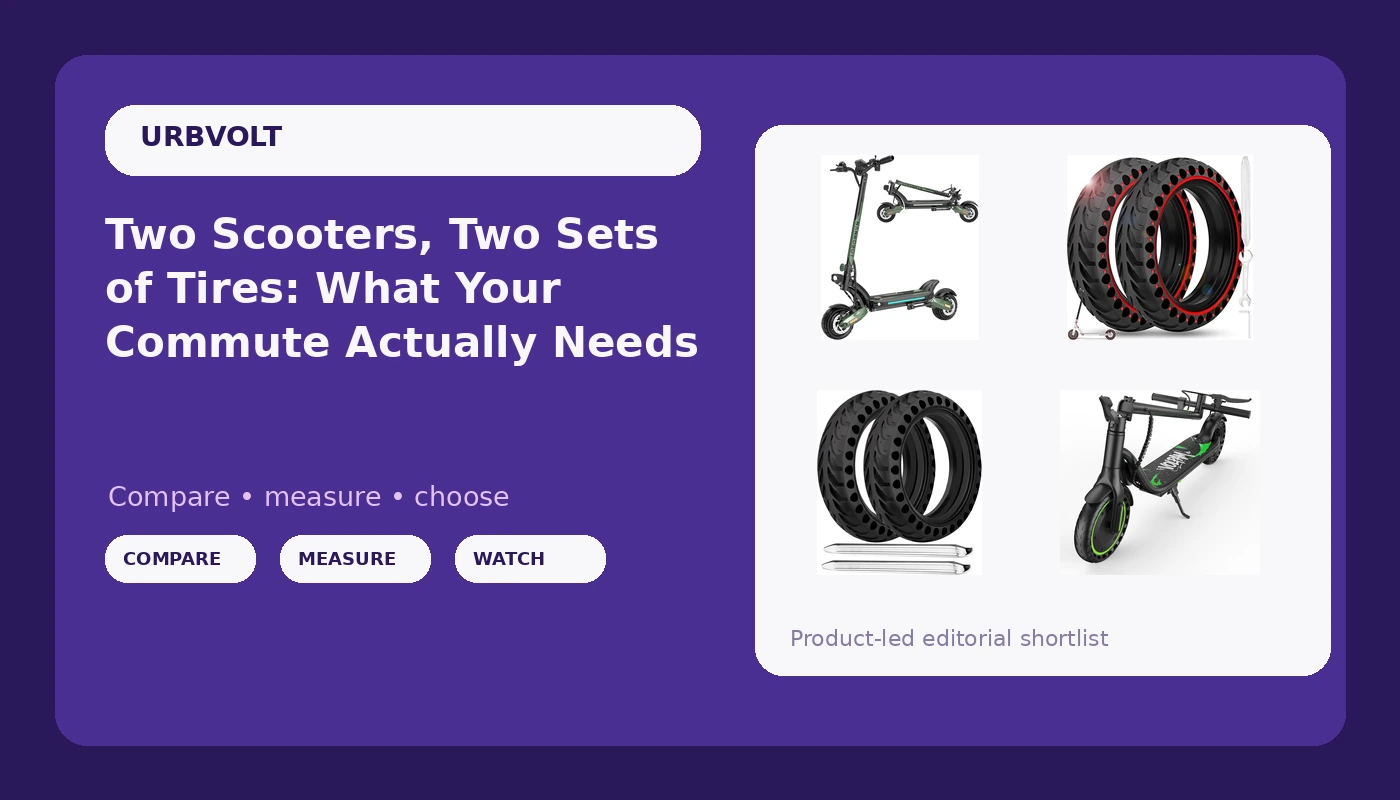
I have ridden the same 14-mile round trip across the Congress Avenue bridge for four years now, through 105-degree afternoons and through rain I keep pretending is fine, and in that time I have patched four tubes, replaced one deck, and blown two controllers. So when four listings keep surfacing in the same search results, two complete scooters and two sets of electric scooter solid tires, I read them the way I read a wiring diagram: what does it actually claim, and what does it leave out.
Related: Electric Scooter Tire Pressure: Why 10 PSI Costs You Range and Tubes
The honest short version: if you already own an 8.5-inch scooter, the tire swap is the cheapest real upgrade in micromobility. If you are buying your first commuter, the 350W/500W scooter is the sensible spend. The 3000W dual-motor machine is a rocket with handlebars, and it is not the scooter that gets you to work on a Tuesday.
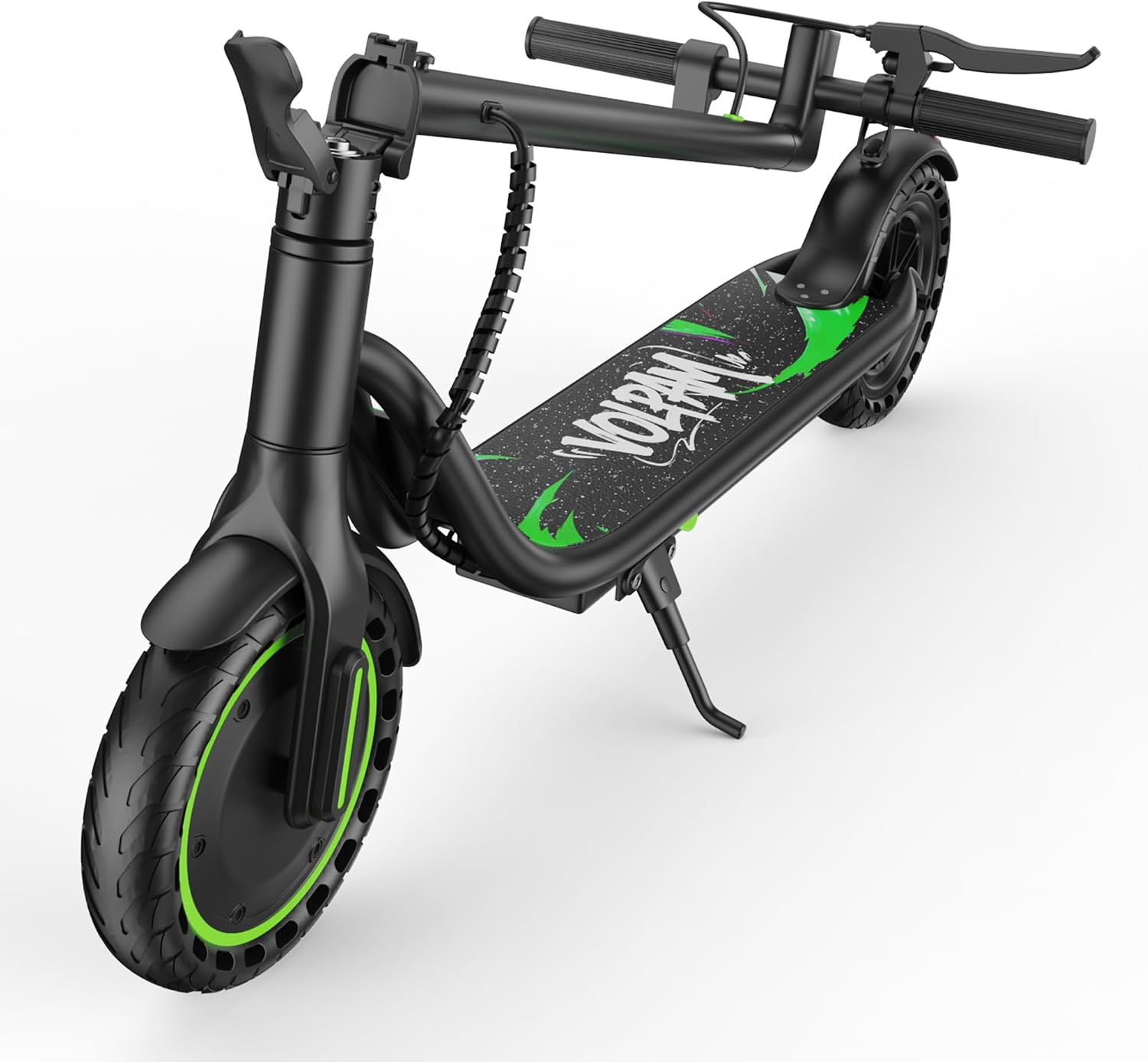
VOLPAM Electric Scooter, 350W/500W Motor, 21/28/40 Miles Long Range
The practical commuter of the four, with two motor ratings and three range figures to pick from
Three range numbers on one page means three configurations, so you need to know which one you are buying
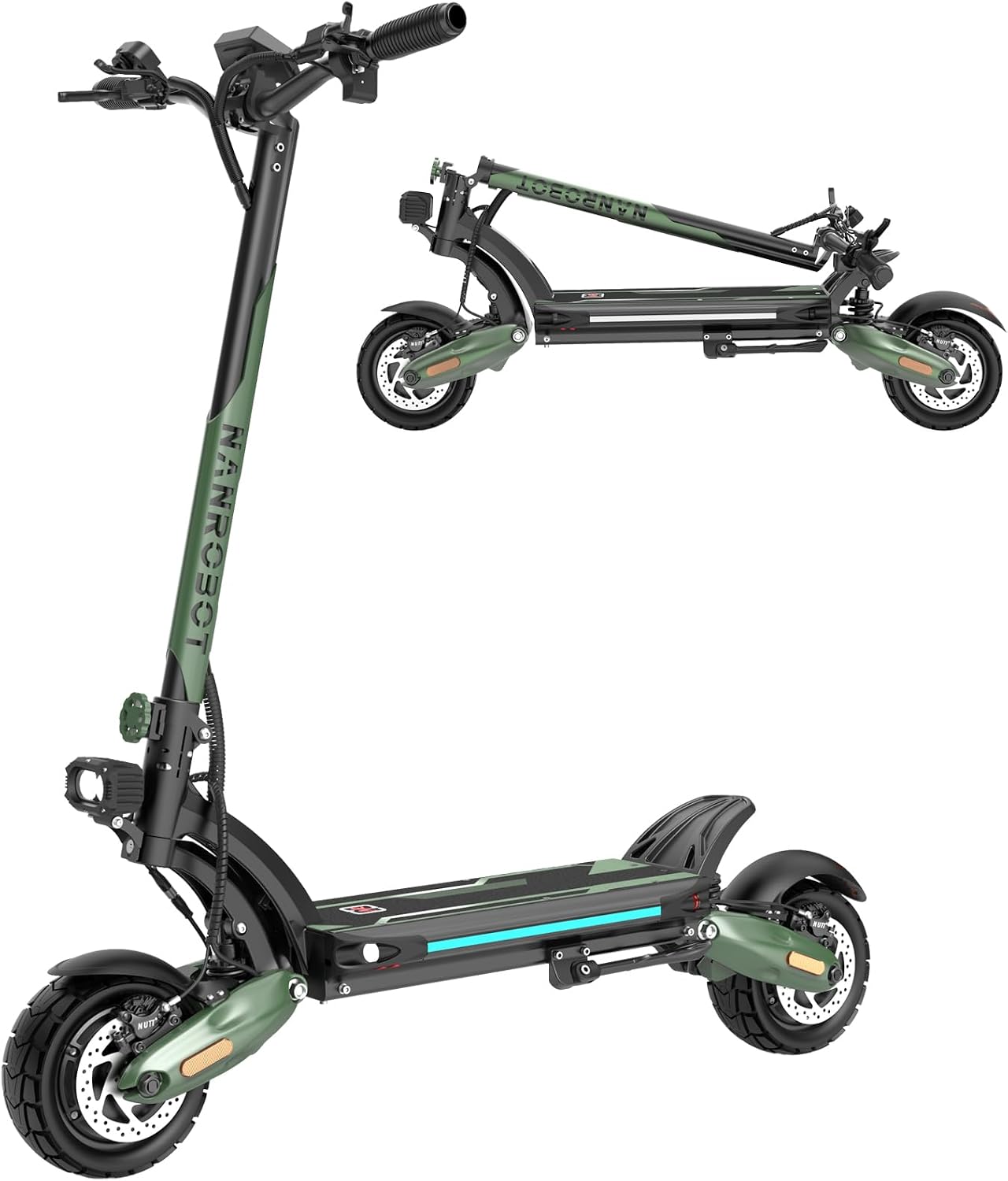
NANROBOT D6+ Lightning H1 Electric Scooter, 3000W Dual Motors, 45 MPH, 10" Off-Road Tires
3000W dual motors, 45 MPH, and 10-inch off-road tires make it the fastest thing here by a mile
45 MPH on 10-inch tires is a different risk class, not a commuter class
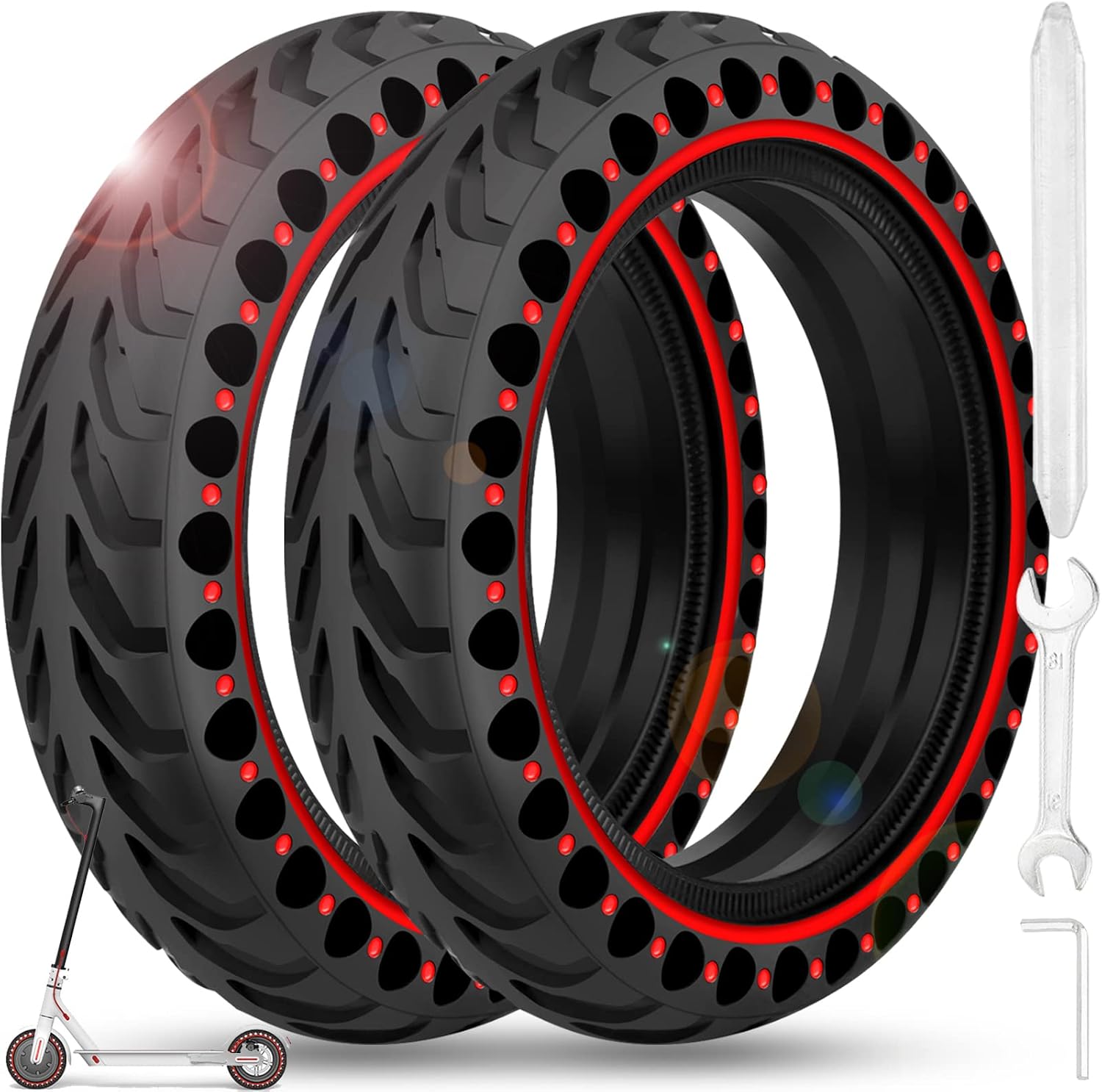
BANGTING 2PCS 8.5x2 inches Solid Tires for Electric Scooter
Turns an 8.5-inch Gotrax or Xiaomi into a no-flat commuter, and it names both fitments up front
Solid rubber is a trade: no flats, but a firmer ride and no PSI to tune
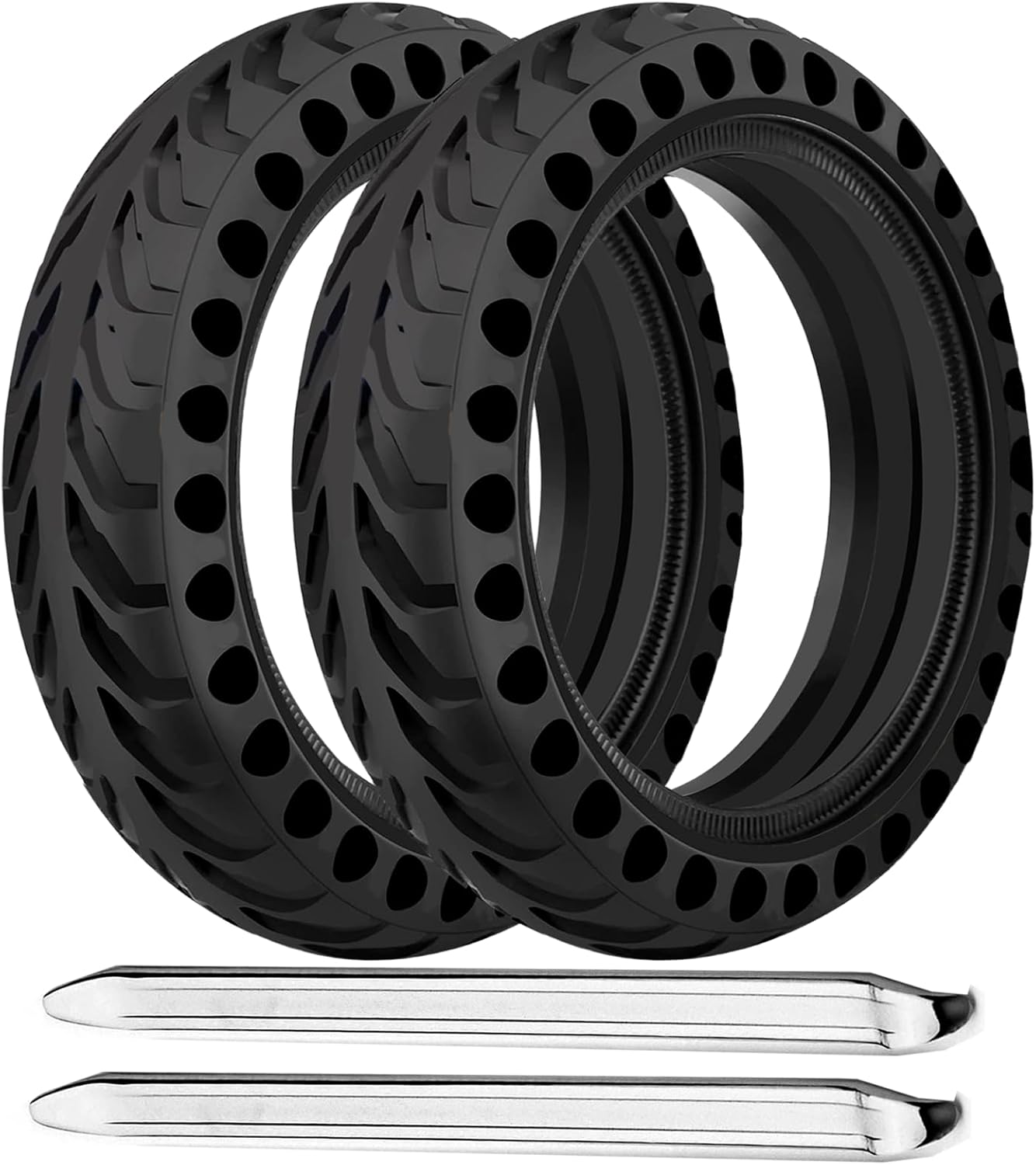
TOUBEUU Solid Tires 8.5x2 Inches for Electric Scooter, 50/75-6.1 Replacement Wheels, Black (2PCS)
The same 50/75-6.1 sizing and the same broad fitment list, sold as a matched black pair
Same solid-rubber trade, and fitment is still on you to verify before ordering
Prices and availability were captured from Amazon Creators API and may change.
How I read a scooter listing
Watt-hours is the only battery number that matters. Amp-hours are marketing math, and peak watts are a party trick that a scooter can hold for about two seconds before the controller starts sweating. When a listing gives me a top speed, a motor rating, and three range numbers, I do not learn the size of the battery. I learn the size of the marketing budget.
So the first thing I do with any of these pages is look for voltage and amp-hours, multiply them, and compare that number to the range claim. The second thing I do is check the tires, because tires are where a commuter scooter either survives August or strands you on the way home. The third thing I do is check the water resistance rating, because "water resistant" with no number attached means it will survive a drizzle and nothing else.
None of that makes these four listings bad. It makes them incomplete in the same way almost every listing is incomplete. Here is what each one actually tells you.
The commuter spend: VOLPAM 350W/500W
The VOLPAM listing gives you two motor ratings, 350W and 500W, and three range figures, 21, 28, and 40 miles. That is a configurable product line rather than a single scooter, and it is the one thing you have to sort out before you click anything.
My read: the 350W version with the 21-mile figure is the honest entry point. It is a flat-route scooter for a rider who is not carrying much and not climbing much. The 500W version with the 28-mile claim is the one most people should be looking at, because 500W is where a scooter stops feeling like it is asking permission to move. The 40-mile number is the top configuration, measured the way all range numbers are measured: light rider, warm battery, no wind, flat ground.
For my bridge, the question is not top speed. It is whether the scooter holds its speed at the top of the climb without the voltage sag that turns "50 percent battery" into 20 percent of usable power. A 500W single motor will do that climb, but it will do it slower at the end of the day than at the start. That is physics, not a flaw.
The performance spend: NANROBOT D6+ Lightning H1
This is the outlier in the group. The D6+ Lightning H1 runs 3000W through dual motors, claims a 45 MPH top speed, and rides on 10-inch off-road tires. The range claim comes in three flavors too, 75, 40, and 18 miles, and that spread tells you more than the biggest number does. A 75-mile figure and an 18-mile figure on the same page usually means different modes, different batteries, or both.
Here is my honest take, and it comes from someone who has owned a used Kaabo and learned this lesson the expensive way: a 45 MPH scooter is not a commuter. It is a motorcycle with a deck. At that speed on 10-inch tires, every pothole, every gravel patch, and every car door is a different conversation than it is at 18 MPH. You wear a helmet on every ride regardless, and on this class of scooter you wear more than a helmet.
Where it earns its place is if your commute is genuinely long, genuinely fast, and genuinely open, and if you already know how you ride at speed. Where it loses is for anyone buying a first scooter. It is also the one product here that the two tire sets below will not fit, because they are 8.5-inch tires and this scooter rides on 10s. If you buy the D6+, you buy its tires from a different listing.
The tire sets: BANGTING versus TOUBEUU
These two listings are close enough that the comparison is mostly about clarity, not performance. Both are two-piece sets of 8.5x2 inch solid tires. Both use the 50/75-6.1 sizing. Both name the same fitment families: Gotrax GXL V2, XR, and APEX, plus the Xiaomi M365, M365 Pro, Pro 2, and 1S, plus the general "all 8.5 inch scooter tires" catch-all.
The BANGTING listing leads with the Gotrax names and treats the Xiaomi fitment as the secondary note. The TOUBEUU listing puts both families on the same footing, spells out M365 Pro in the title, and sells the pair in black. If you own a Xiaomi M365 Pro, that explicit mention is worth something, because fitment is the only thing that can go wrong here. If you own a Gotrax GXL V2 or an APEX, either listing covers you.
What neither listing can tell you is how the rubber feels on your route, because that depends on your weight, your route surface, and how much you cared about ride comfort in the first place. That is the trade below.
What you give up with solid tires
Tubed tires on a commuter scooter are a maintenance subscription. You will learn to patch a tube or you will pay someone who can, and in a Texas summer you will do it more often than you want to. That is the case for going solid, and it is a strong one.
The case against is equally real. Solid rubber does not deform the way air does, so every expansion joint, every chip seal patch, and every bit of broken asphalt goes straight up through the deck into your knees. Grip in the rain is lower, and I ride in rain, so I say that from experience rather than from a spec sheet. Mounting solid tires takes more effort than mounting a tube, and once they are on, there is no PSI to tune. The weekly pressure check that keeps a tubed tire alive and fast simply stops existing.
For a short, smooth, dry commute, that is a great trade. For a long, rough, wet one, it is a decision you should make with your eyes open. My own line: solid tires on a scooter that lives on bike lanes and neighborhood streets, tubeless if you can get it on a scooter that does real distance.
Fitment is the whole ballgame
Both tire sets are 8.5x2 inches, which is the same as 50/75-6.1. That number is not a suggestion. Before you order either one, put a tape on your existing tire, or read the sidewall of the tire you are replacing. If your scooter runs 10-inch wheels, like the NANROBOT here, neither of these sets will help you. If your scooter runs 8.5-inch wheels and matches the Gotrax or Xiaomi families listed, you are in the right place.
The second thing to check is whether your scooter uses a split rim or a solid one-piece wheel. Solid tires generally go onto split rims without a fight. One-piece rims turn a tire change into a job, and sometimes into a shop visit.
Who should buy which
If you already own an 8.5-inch Gotrax or Xiaomi and you are tired of patching tubes, buy the tire set that matches your model. That is the highest-value purchase in this entire comparison, and it is not close.
If you are buying your first commuter scooter for a real commute, the 500W configuration of the VOLPAM is the one to price out. It is the least likely of the two scooters to overwhelm a new rider, and it is the one you can still carry and park without drama.
If you have ridden for years and your route is open and fast, the NANROBOT D6+ Lightning H1 is the machine that will not bore you. Buy the gear before the scooter, not after.
If you want one purchase that solves both problems, there is not one here. The scooters and the tires serve different riders at different stages, and the fastest way to waste money is to buy the 45 MPH scooter and then discover you needed a commuter and a set of solid tires instead.
What I would verify before buying
Ask for the watt-hours, not the range. Ask for the weight, because a scooter you cannot carry up three flights is a garage ornament. Ask what controller the scooter runs, because the controller is the part that fails first and strands you at 9 PM. Ask for the actual IP rating rather than the phrase "water resistant." And for the tire sets, verify your wheel size against the listing one more time before you order, because a tire that does not fit is a tire you will pay to ship back.
Ride with a helmet. Every ride, no exceptions. I have heard what a scooter accident without one looks like from someone who works in an ER, and it changed how I ride.
The last word
Two of these four products are upgrades and two are purchases, and the best money in the group goes to the rider who already owns an 8.5-inch scooter and is done patching tubes in the heat. The rest of you are choosing between a 500W commuter that will do the bridge climb without drama and a 3000W machine that will do everything faster than you should. Read the spec sheet like a mechanic reads a wiring diagram, and buy for the ride you actually take.