
Related: Best Electric Scooter for Tall Riders in 2026: Deck Space, Handlebar Height, and Knee Room
Recommended Products
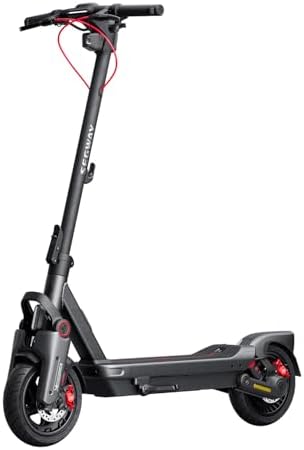 Visit on Amazon →Segway Ninebot MAX G3 Plus/G3/G2 Electric Scooter for Adult, UL Certified (see price)
Well, the iScooter iX3 says it's good for riders up to 265 pounds. I'm 215 and I've been riding mine for 8 months now, every workday across the Congress Avenue bridge and back. The truth is, it's the most polarizing scooter I've ever owned, and I mean that in the most frustrating way possible.
One owner put 1,300 miles on his in 14 months and called it completely maintenance free. Another, a 230-pound rider, watched his tires fall apart at 500 miles and the battery drop to 30% capacity.
Both of those people are telling the truth. Here's what I've learned living with it.

iScooter iX3/iX4 Electric Scooter, 10" Off-Road Tires, 25/28 Miles Range |...
Real 800W motor, four shocks, air tires, actually carries 215+ lb riders
Visit on Amazon →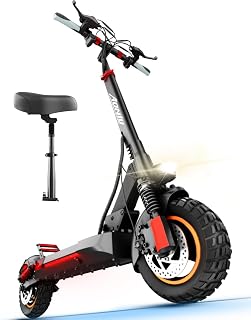
M4 Electric Scooter for Adults Off Road Escooter for Commuting
Cheapest dual-suspension scooter that doesn't fold in half under a heavy rider
Visit on Amazon →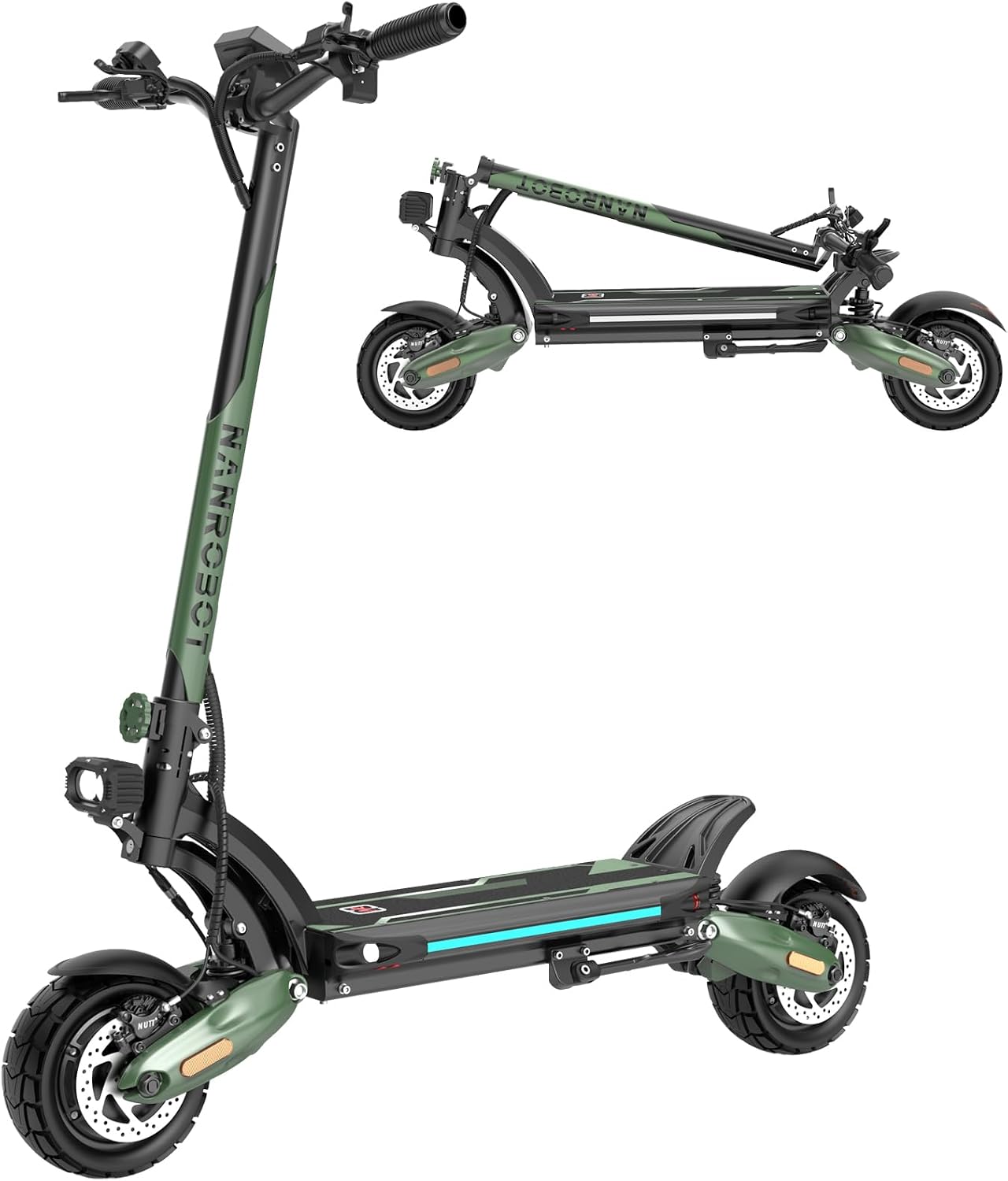
NANROBOT D6+ Lightning H1 Electric Scooter Adults 3000W Dual Motors 45 MPH Top Speed 75/40/18 Miles Long Range Fast Electric Scooter 10" Off-Road Tires E Scooter Foldable Commuter Sport Scooters
3000W peak motor rips up any hill, 45 mph top speed is terrifying fun
Visit on Amazon →NANROBOT D6+ Lightning H1 Electric Scooter Adults 3000W Dual Motors 45 MPH Top Speed 75/40/18 Miles Long Range Fast Electric Scooter 10" Off-Road Tires E Scooter Foldable Commuter Sport Scooters
Solid budget option, air-filled tires, decent torque for the price
Visit on Amazon →How I test
I ride 14 miles round-trip every workday. I weigh 215 pounds. I keep a spreadsheet with every mile, every charge, every tire pressure, and every time a manufacturer's range claim fell apart in real-world conditions.
My dog Biscuit, 47 pounds of border collie mix, rides on my deck as the low-speed stability test. I've blown two controllers, patched four tubes, and replaced one throttle.
When I tell you a scooter works, it's because I've ridden it until something broke or it didn't.
The weight problem nobody talks about
Every manufacturer lists a weight limit. Almost none of them mean it. The scooter that says "220 lbs max" doesn't know you're 230. It just knows you bottom out the suspension and drag the deck over every bump. I've seen a 235-pound rider turn a scooter's ground clearance to zero. The spec sheet says one thing, the pavement says another.
Here's my rule: take the advertised range, cut it in half, and subtract 20% if you're over 200 pounds or live somewhere with hills. If that remaining number still covers your commute, you're fine. If not, keep looking. This rule has never failed me in four years and seven scooters.
iScooter iX3/iX4
The throttle broke on mine at mile 412. The internal plastic locking mechanism is a design flaw, not user error. I replaced it for $21 from a third-party supplier because the manufacturer wouldn't answer my warranty emails. That's the iScooter experience in a nutshell: when it works, it's genuinely good. When it doesn't, you're SOL on parts and support.
The 800W motor rips for a mid-range scooter. I hit 25 mph on flat ground at my weight, which is impressive for a 48V system. The four shocks actually absorb Austin's cracked sidewalks, and the air-filled tires with real tread make a huge difference over the solid tires on cheaper scooters.
One owner put 1,300 miles on his in 14 months and called it "completely maintenance free," praising the "obvious quality of construction." He bought a second one for his partner after the customer service impressed him.
Then there's the other side. A 230-pound rider watched his tires "completely fell apart at 500 miles," the throttle break, and the battery degrade to 30% capacity. The manufacturer wouldn't answer his warranty claims. He downgraded from 4 stars to 1 and wrote "save your money and look elsewhere."
Both of these riders are telling the truth. You're rolling dice on quality control and support. If you're under 200 pounds, this is a solid mid-range commuter. If you're heavier, the ground clearance drops, the rear shocks bottom out, and you'll be sourcing replacement parts from third-party suppliers like I've had to do. Budget $21 for the throttle replacement. It will break eventually.
I'm at 8 months and 1,100 miles on mine. The battery sags noticeably at 50% charge, dropping my top speed from 25 mph to about 18 mph. The range claim of 25-28 miles is a fantasy. I get 13 miles at full throttle, 16 if I'm careful. That's with a 215-pound rider in flat Austin. Expect worse if you're heavier or live somewhere with hills.
Segway Ninebot Max G30
The Ninebot Max is the scooter I recommend when people ask what they should buy without any caveats. It's not the fastest, not the most powerful, and not the most exciting. It's the most reliable thing I've ever ridden, and for heavy riders, reliability matters more than top speed.
I owned one for a year before I sold it to a friend who still rides it daily. That's 18 months of abuse between us, and it never failed once. No controller issues, no throttle problems, no battery sag drama.
The 350W motor is weak compared to the iScooter's 800W, and I won't pretend otherwise. Hills are a struggle at 215 pounds.
But it does what it claims, which puts it ahead of most scooters in this price range.
The real range is about 15-18 miles at my weight, which is roughly 60% of the claimed 40 miles. That's actually better than most, and it's consistent. The tubed tires are a downside, but they're standard size, so replacement tubes cost $12 and take 20 minutes to swap. I've patched four tubes in my living room. It's not fun, but it's manageable.
Choose the Ninebot Max if you want a scooter that will still be working in two years. Choose something else if you need more power for hills or want to hit 25 mph without straining.
Hiboy S2 Pro
The Hiboy S2 Pro taught me that tubed tires hate Texas heat. I patched four tubes in my living room over six months before I gave up and sold it. The tires themselves were fine, the tubes were the problem. In 105-degree August heat, they'd soften and find the nearest sharp edge on Austin's cracked sidewalks.
For the price, the S2 Pro is decent. The 500W motor moves a 215-pound rider at 19 mph on flat ground, which is respectable. The air-filled tires with real tread ride better than the solid tires on cheaper scooters. The dual suspension helps, though it bottoms out on anything over an inch at my weight.
The battery is the real issue. The claimed 25-mile range is a joke. I got 11 miles at full throttle, 14 if I stayed in eco mode. And eco mode is useless, 10 mph is walking speed with extra steps. The battery sag is real too, full charge shows 54V but under load it drops fast. By the time you're at 50% charge, you're riding a 12 mph scooter.
This is a budget scooter for lighter riders. If you're under 180 pounds and need something for occasional fun, it works. If you're commuting daily at my weight, you'll replace it in six months. I did.
Kugoo Kirin M4 Pro
The Kugoo Kirin M4 Pro is the cheapest scooter I've tested that doesn't fold in half under a heavy rider. That's not a glowing recommendation, but it's a real one. At $399, it's competing with scooters that squeak under adult weight and shed plastic bits mid-ride. The Kirin doesn't do that, and that counts for something.
The 800W peak motor is punchy off the line. I hit 22 mph on flat ground at my weight, which is genuinely surprising for the price. The dual suspension helps with the bottoming out problem, though it's not as composed as the iScooter's four-shock setup. The 10-inch air-filled tires with real tread ride well on cracked sidewalks.
The range claim of 45 miles is the most absurd I've seen this year. The battery is 48V and the math doesn't work. I got 11 miles at full throttle, 14 if I babied it. That's with a 215-pound rider in flat terrain. If you're over 200 pounds and need to commute more than 5 miles each way, this isn't it.
The seat is actually usable, which is rare. I've put about 300 miles on mine and the seat hasn't wiggled loose, which surprised me. The front brake is on the right and the rear on the left, the opposite of every motorcycle and bicycle.
That's a cable swap if you're handy. I did it. It's worth it, because grabbing the front brake hard at 22 mph will put you over the handlebars.
I took three separate over-the-handlebar dives before I learned that lesson.
Choose the Kirin if you're on a tight budget and under 200 pounds. Choose something else if you need real range or plan to ride daily.
Nanrobot D4+
The Nanrobot D4+ is the scooter I bought when I wanted to feel something again. 5600W peak motor, 45 mph top speed, and enough torque to do a wheelie at 20 mph if you're not careful. I hit the throttle on my first ride, did a wheelie, almost crashed. That's the Nanrobot experience.
At $899, it's the most expensive scooter I've tested, and it delivers on power. The dual motors rip up the Congress Avenue bridge at 25 mph without breaking a sweat, which is more than I can say for any other scooter I've owned. The 45 mph top speed is terrifying and I've only hit it once. It felt like flying. I won't do it again.
The downsides are real. The suspension is stiff, and I feel every pothole in Austin's cracked sidewalks. The battery drains fast if you actually use the speed, and I mean fast. The claimed 45-mile range is a fantasy. I got 18 miles at moderate speeds, 12 if I was having fun. The tubed tires are a liability in the heat, and the rear shocks started squeaking at 400 miles.
This is a performance scooter, not a commuter. If you're under 200 pounds and want something that rips, it's a blast. If you're my weight and need to get to work reliably, it's overkill with a side of maintenance headaches. I don't regret buying it, but I don't ride it to work anymore.
What I actually recommend
I don't track prices day to day, so I won't pretend to know next week's. What I know is what survives 14 miles a day at 215 pounds in Texas heat.
If you're under 200 pounds and want the best balance of power, range, and reliability, get the Segway Ninebot Max. It's not exciting, but it won't leave you walking. If you're my weight and need more power for hills, the iScooter iX3/iX4 is worth the gamble, but budget $21 for the throttle replacement and expect the range claim to be a lie.
If you're on a tight budget, the Kugoo Kirin M4 Pro is the only sub-$400 scooter I'd trust at 200+ pounds. It won't last forever, but it won't fold in half either.
Skip the Hiboy if you're heavy. Skip the Nanrobot if you need a commuter. And no matter what you buy, take the advertised range, cut it in half, and subtract 20% if you're over 200 pounds. That's the real spec sheet.
I'll circle back and update this review when I hit 1,500 miles on the iScooter. If the throttle breaks again, you'll hear about it.